
By: Nic Abelian
As AI blurs identity online, a 2026 working group explores how real creators demonstrate presence beyond filters and fakery.
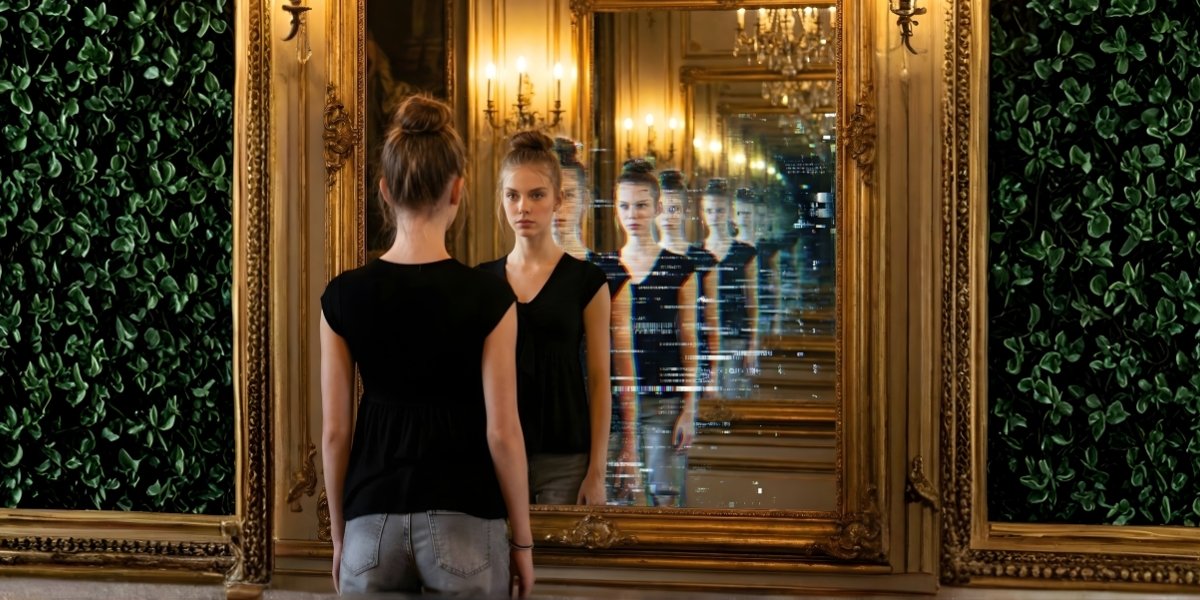
As AI-generated faces flood the feed, a cross-border working group is quietly testing a new kind of “proof of life” for creators. One of its rising participants is a 15-year-old model and rope-skipping champion from Germany who is learning what it means to show up with evidence, not filters.
There has been a quiet shift in how the digital world talks about authenticity. The fear is no longer that AI can imitate us; it’s that we may fail to distinguish the difference. In response, a consortium of cultural institutions, performance researchers, and heritage strategists has begun shaping a framework for something the industry has begun to address but never formally articulated: how to recognize a real person when the internet stops offering clues.
The group is not public-facing. It does not operate like a campaign or an open call. Its work, still in the early stages, revolves around a single premise: a creator’s identity is no longer self-evident online; it must be demonstrated.
The participants selected for this exploratory phase come from distinct corners of the creative world. The early roster includes women whose work depends on physical presence, routine, repetition, or professional histories that can be documented beyond the screen. Their names are not being promoted; the work is not promotional. It is structural.
Among the women participating in this early cycle is Nelly Opitz, a 15-year-old athlete and model from Frankfurt. She was invited not for virality or reach, but because her digital footprint illustrates a problem the consortium is attempting to map: how a young creator can live an ordinary life, and still be misunderstood by digital audiences trained to distrust anything that appears consistent.
We reached Opitz’s team for comment after her inclusion in the working group’s youth division. They agreed to speak because the topic, how real presence translates across screens, is one that increasingly shapes the lives of young women who grow up generating content without intending to become content.

“Nelly understood the invitation as something grounded, not glamorous,” her management explains. “This group isn’t looking for stars; they’re studying continuity, how someone’s real life holds together across different mediums. She fits into that conversation naturally.”
Opitz herself keeps it simple. In a short call arranged between training sessions, she describes her selection in practical terms, not metaphysical ones.
“It made sense to me,” she says. “They want to see a person’s actual routine. Not a big moment, just the real stuff. Training, school, whatever. I can show that. It’s not complicated.”
Her reaction is telling. For older generations, questions of identity might sound philosophical. For Opitz’s demographic, they are logistical. She is part of the first wave of teens for whom proof of presence, timestamps, process clips, and third-party documentation have become a necessary part of simply existing online.
The working group’s interest is not in creating a hierarchy or bestowing a badge. Its function is to prototype a model of digital trust that can hold up under the pressure of a synthetic media landscape. As one researcher involved in the project described, the goal is to observe “how a person’s life creates its own internal record, one that can’t be convincingly reverse-engineered.”
That record is not aesthetic. It is not a mood or a filter. It is made up of habits, environments, interactions, and the inevitable imperfections that AI systems fail to reproduce authentically. For Opitz, that record includes her rope-skipping drills, the unpolished lighting of winter afternoons in Germany, her school schedule, and the simple consistency of someone too young to curate herself into a brand.
The working group’s broader intention is to develop reference models for a world where reality requires context. Not validation. Not certification. Context. Enough of it that misinterpretation becomes more difficult, not easier.
For Opitz, this is less a philosophical mission and more a reflection of the world she already inhabits.
“I think people want things to feel real again,” she says. “Not perfect. Just real.”
The consortium will continue its study throughout 2026, refining how presence is understood across emerging creative fields. Whether its framework becomes formalized or stays within institutional circles remains unclear. But the direction is clear: as synthetic output becomes limitless, the value of being a person becomes increasingly non-negotiable.
And in that emerging landscape, Opitz is not a spokesperson. She is simply one participant, holding her place in a system designed to observe what remains human.
You can follow Nelly Opitz on her social media platforms: connect with her on Facebook at this link, on Instagram through her Nelly Opitz Instagram profile. You can also find her on TikTok under @nelly.opitz.