
By: Alexia Brown
There’s a particular kind of grief that doesn’t announce itself cleanly. It accumulates. Patricia Leavy spent the better part of a year and a half navigating the deaths of three people who mattered deeply to her, including her high school English teacher, Mr. Shuman, who had been her mentor and friend for decades, and Joey, her closest friend of thirty-five years. What she didn’t realize until after Joey died was that she had met both of them on the same day when she was fourteen years old. An ordinary Tuesday that turned out to be anything but.
That kind of discovery, the way meaning reveals itself only in hindsight, is woven all the way through Cowboy Eyes. It’s a book about two young people chasing dreams in Hollywood, yes. But underneath that, it’s really about the people who cross our paths at exactly the right moment, and how we rarely know it at the time.
The Magic That Only Shows Up Later
Leavy doesn’t deal in easy answers about fate or timing. But she believes, genuinely, that some things are meant to happen. The challenge is that we usually only recognize them looking backward.
She lived this herself. Two of the most important people in her life entered it on the same unremarkable day when she was a teenager. Neither meeting felt significant in the moment. Both turned out to be defining. And they died within months of each other, bookending a period of loss that was, by her own account, incredibly hard to move through.
That experience shaped how she thinks about the early scenes of Cowboy Eyes, where Cassy and Colt’s connection sparks in a single, fleeting, almost accidental moment. Neither character knows yet what that night will mean. That’s sort of the point.
Giving Someone the Story They Didn’t Get to Live
Leavy writes every single day. Weekends, holidays, vacations. Not because she thinks what she has to say is particularly important, but because she knows her novels are where the people she has loved continue to exist. Everyone who has touched her life, she says, walks across her pages in some form. Not as characters. The stories and characters are entirely fictional. But through spirit, tone, and the lessons they left behind.
Colt in Cowboy Eyes gets to chase his dreams and catch them. That isn’t how Joey’s story ended. Leavy is honest about that. But there is something she describes as peace in being able to make right in fiction what didn’t work out in life. To give someone a narrative where they get to be the hero, even if only on the page.
She knows he would have loved it. That matters to her more than she can easily put into words.
What Happens to You When You Finally Arrive
One of the quieter questions running through Cowboy Eyes is what’s left of a person once they’ve spent years trying to become someone else. Leavy reaches for Carl Jung here, the idea that the privilege of a lifetime is to become who you truly are. She believes it without reservation.
Authenticity, in her framing, isn’t a soft concept or a self-help buzzword. It’s a practical necessity. You cannot betray yourself and expect to find happiness. For artists specifically, you cannot betray the work either. There is no sustainable version of a creative life that’s built on pretending to be something you’re not.
Cassy and Colt both test that idea from different angles throughout the book. The Hollywood they’re navigating rewards performance and image. What Leavy is interested in is what survives underneath all of that, and whether it’s still recognizable.
On Innocence and the Slow Burn of Disillusionment
Leavy doesn’t romanticize the early dreaminess her characters carry in the first half of the book. She also doesn’t dismiss it. Holding onto some version of hope and possibility, she believes, is genuinely necessary if a person is going to keep going after the things they want. The trick is balancing that with enough pragmatism to survive reality.
Disillusionment happens. She says it plainly. If you’re an artist, the industry will hand you moments that feel soul-crushing, and pretending otherwise doesn’t help anyone. What she hopes readers take from Cassy and Colt’s journey is not that innocence should be protected at all costs, but that optimism, even a little of it, is worth fighting to preserve.
Being Seen Is the Whole Thing
At its most essential level, Cowboy Eyes is about what it feels like to be truly known by another person. Not admired, not envied, not recognized for what you’ve achieved. Actually seen, on the inside, for who you are.
Leavy is direct about what that means to her personally. Pretending is exhausting. Faking it hollows you out over time. When someone genuinely knows and accepts you, understands what matters to you, and respects what you feel, it changes everything.
To her, when someone shows you “I see you,” that is the ultimate act of love.
Leavy has written a novel full of hustle and Hollywood glamour and big, messy dreams. But what she’s really after, on every page, is that one thing. The moment when two people stop performing and actually find each other.
Joey knew her that way. So did Mr. Shuman. The book exists, in no small part, because they did.
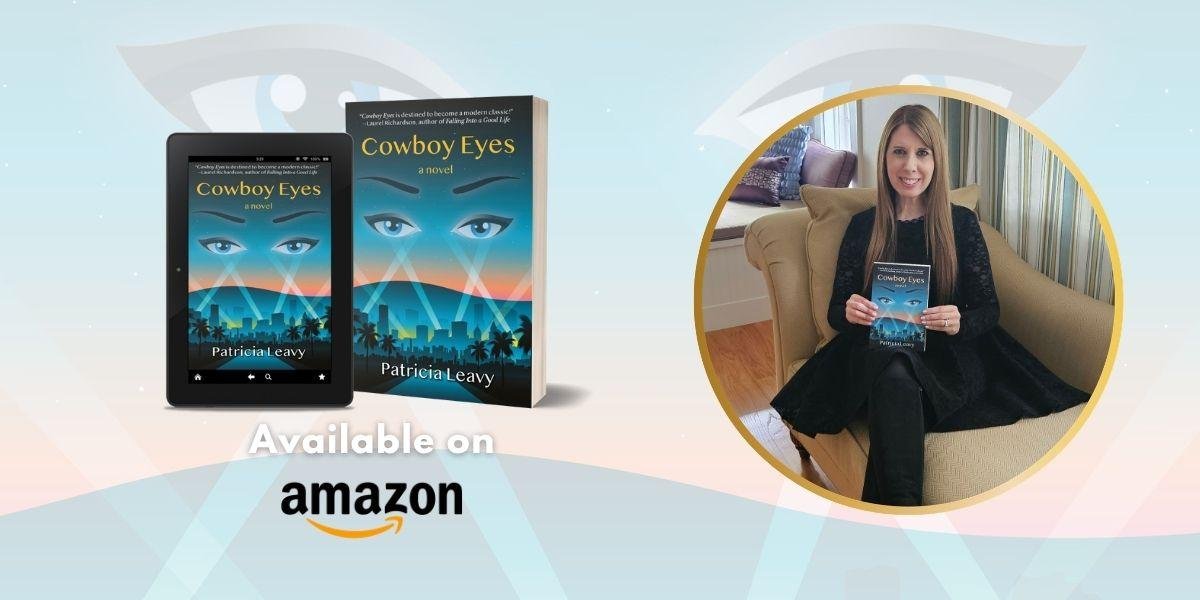
Get your copy of Cowboy Eyes on Amazon.