
By: Marcy Paulson
America keeps arguing about two separate emergencies. There is a healthcare crisis and a financial crisis. But what if they are not separate at all? What if they are the same crisis wearing two different masks?
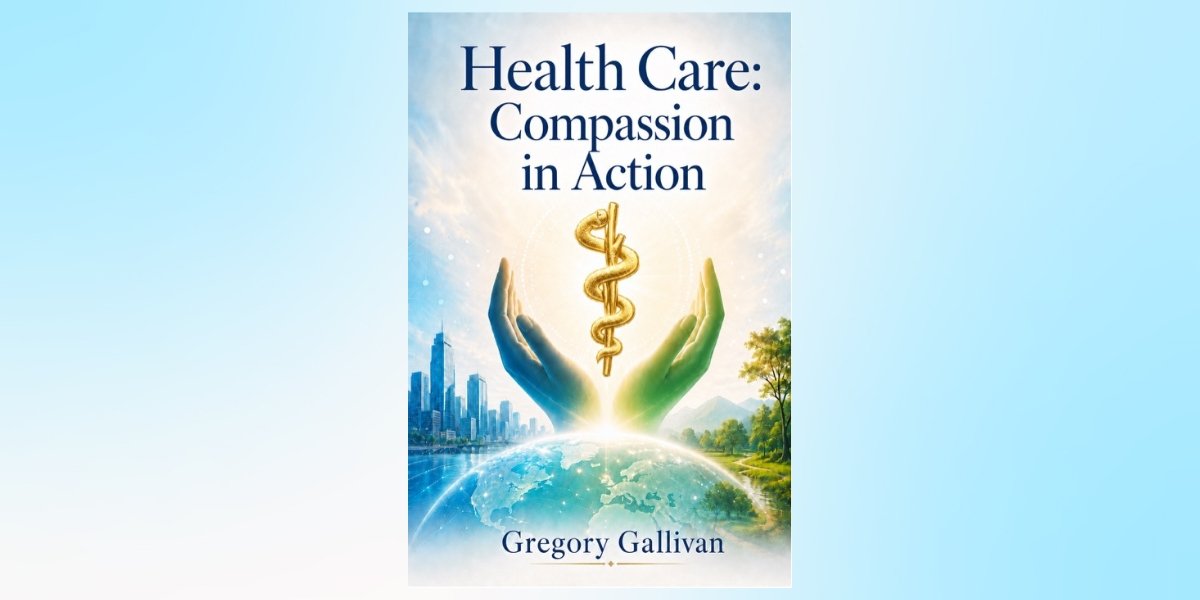
That is the idea proposed in “Healthcare: Compassion in Action.” This newly released book from healthcare policy author and insurance industry expert Gregory Gallivan frames rising premiums, surprise bills, patchy networks, and soaring drug prices as the same national problem that is driving credit card dependence and middle-class burnout. It’s one problem that springs from shrinking purchasing power and shrinking choice.
Gallivan’s credibility is unusually grounded for a policy voice. He is not writing from an academic perch or a partisan war room. With a background in pre-medical studies and several years as a licensed health insurance broker, he brings a firsthand vantage point on the numbers and the lived experience behind them.
Why Gregory Gallivan advocates for consumer choice in his healthcare affordability solution
“Many people work hard and pay bills, yet they still feel one accident or diagnosis away from financial freefall,” Gallivan reflects. “The crisis is not just that coverage is inadequate; it is also the way coverage limits consumer choice.”
The new book starts with the idea of real consumer options in healthcare. Gallivan lays out a vision of tiered, concierge-style insurance with à la carte alternatives and riders. Instead of forcing families into one one-size-fits-most plan where everyone’s needs are bundled together, he proposes family coverage that is independent for each family member and adaptable to many different medical realities.
His model also pushes competition by allowing insurers to cross state lines. “Right now, choice often means choosing between a small set of plans that can feel identical,” he observes. “You choose between high deductibles and narrow networks. With confusing formularies and restrictions that punish mobility, you may technically have insurance, but you do not have freedom.”
Out-of-market and out-of-network costs can explode even when care is identical. Under the Affordable Care Act, a New England family taking a fall foliage trip across state lines could go from a $20,000 in-network out-of-pocket maximum to a $50,000 out-of-network catastrophe simply because the emergency happened in the wrong place.
“Today’s coverage is a limit on movement and peace of mind,” says Gallivan. “When a family cannot predict what healthcare will cost or whether their coverage will work outside a narrow geographic lane, healthcare starts behaving like a financial trap. And when healthcare becomes a trap, it does not just break bodies. It breaks budgets, careers, marriages, plans, and futures.”
Importantly, Gallivan doesn’t build his argument on treating insurers or pharmaceutical companies as villains. His system sees consumers paying less while insurers and pharmaceutical companies still see strong returns.
The book lays out a system with right-to-try tiers and no financial caps at the top end. These higher-tier options would increase industry profitability, while the competitive market would drive down everyday costs for everyone else.
Practical modernization also plays into this system. Artificial intelligence forecast modeling is ready and able to help consumers better predict needs and budget for coverage changes over the year, especially for people with preexisting conditions.
“The way we price and design coverage has to stop functioning like a maze that only experts can navigate,” says Gallivan. “The solution puts consumers first and finally gives them choice. We can build a system for everyone where we do not deny preexisting conditions and where all means all.”
The ACA subsidy expiration and rising uninsured rates prove the framework needs a practical alternative
Gallivan’s argument lands with fresh urgency because the affordability story is moving in the wrong direction. As enhanced ACA subsidies approach expiration and consumers brace for premium shocks, the risk isn’t just higher monthly payments. The risk is that more people will drop coverage entirely.
The result? Uninsured rates will rise, and more uncompensated care will fall onto emergency rooms. The bill will first land on states and taxpayers. Then, it will fall to paying customers.
In other words, when affordability breaks, everyone pays. It just happens later, and usually more painfully.
Gallivan argues that subsidies should go directly to people and be restricted to healthcare use through a health savings account-style mechanism. That philosophy change treats the individual as the primary decision-maker. It restores purchasing power to the middle class and makes the consumer an active participant in their healthcare.
These changes would benefit millions of Americans. “Employment does not ensure coverage in our country anymore,” notes Gallivan. “Take managers at big box stores offered just under the hours needed to qualify for employer-sponsored insurance. They are stuck earning too much to feel poor, but too little to buy a plan that does not gut their paycheck. That gap is the middle-class healthcare affordability crisis. “It is labor participation without real protection.”
Gallivan promotes basic health coverage that includes dental, vision, and hearing. That is true because catching disease early is both humane and financially rational. Preventive care, nutrition incentives, and physical therapy are not extras in his model. They’re investments that reduce long-term cost and suffering.
“The healthcare crisis is the financial crisis because unpredictable and unaffordable healthcare erodes the same thing,” warns Gallivan. “Inflation erodes your ability to choose. It robs you of your freedom to move and plan. It takes your right to say yes to opportunities when you worry that a broken bone could become a broken life.”
Gallivan’s book demands that America stop treating practicality and compassion as opposites. He argues that real choice, transparent tiers, coverage that travels, and subsidies that strengthen purchasing power will make healthcare both more humane and more sustainable.
“Families do not experience healthcare policy and the economy as two separate debates,” Gallivan concludes. “They experience them as one question asked every month at the kitchen table. That question is, ‘Can we afford to be okay?’”