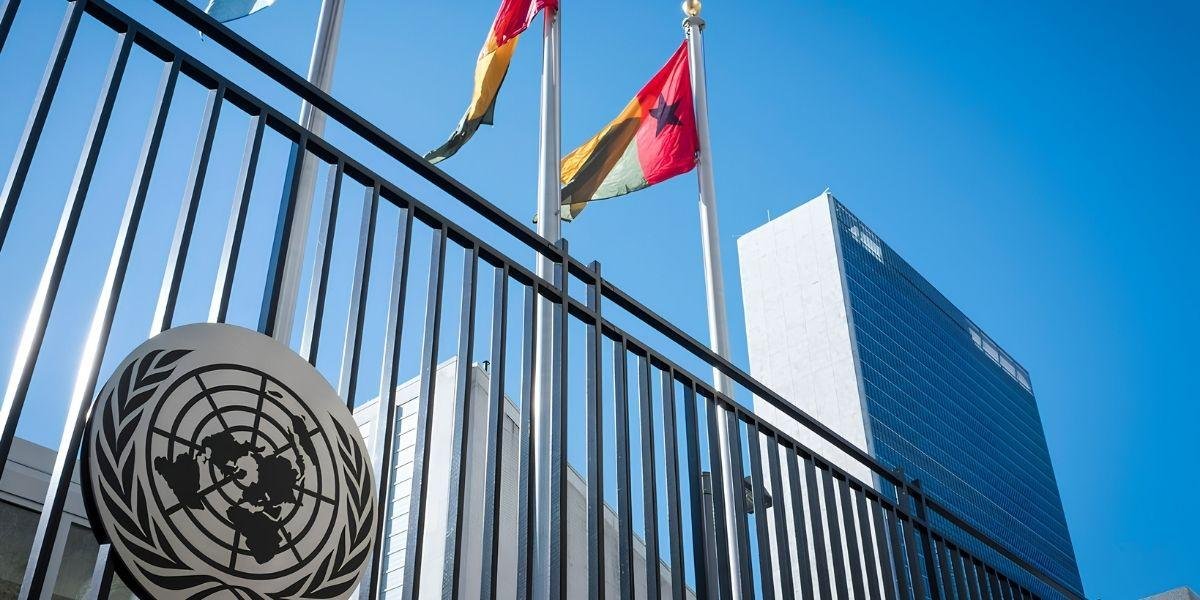

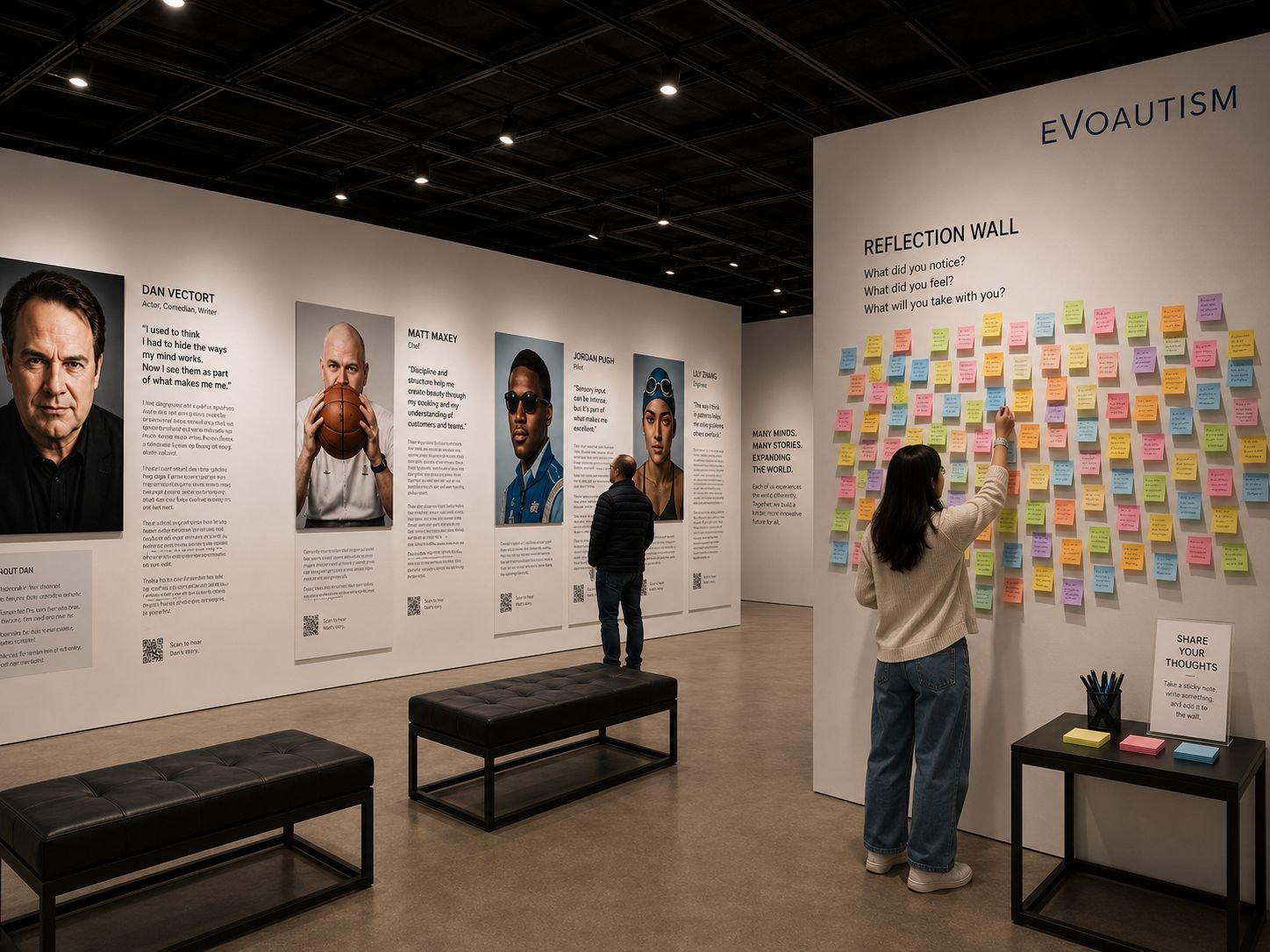
EVOAUTISM Foundation is developing Autism Through Talent, an exhibition of portraits and first-person stories planned for June 2027 at United Nations Headquarters in New York, pending the UN’s remaining review and approval steps.
The exhibition pairs portrait photography with stories developed with autistic participants. They decide what they want to share, then review and approve how their lives are represented before anything goes on display.
It starts from one question: What happens when a diagnosis becomes the story before a person has had the chance to tell their own?
For EVOAUTISM, the answer starts with who controls the story. Autistic people have often been described through diagnoses, statistics, services, or accounts written by other people. Here, participants decide what they want to share. They develop their stories with them, review them, and approve them before anything goes on display.
Talent is one way into each story, not proof of anything. A participant might be known for work in science, art, technology, sport, or business. What the exhibition is really after is the rest of it: what was hard, what helped, what changed over years, and what a photograph or a diagnosis alone would never tell you.
The project has real ties to work already underway at the UN. The Convention on the Rights of Persons with Disabilities asks states to fight stereotypes and promote recognition of what people with disabilities contribute. Article 8 specifically addresses how they’re portrayed in media and public communication. The UN’s Disability Inclusion Strategy 2.0, covering 2026 to 2030, goes further, calling for co-creation, accessibility, partnerships with organizations run by disabled people, and real attention to stigma.
A participant-led exhibition
Co-creation is the actual method here, not a talking point. The process starts by asking each participant what matters to them. The story and the portrait get built together, then reviewed, then approved, which fits an idea gaining ground across disability rights more broadly: people should be in the room when their own lives are being discussed.
Why UN Headquarters
There’s a cultural argument too. Article 30 of the Convention covers the right to take part in cultural life and to develop and use creative and artistic potential. That matters for a photography exhibition specifically, because whose portraits hang in an institutional space, whose work gets attention, and whose experience becomes part of the record all affect what an audience actually remembers.
The UN’s own framing of autism has shifted as well. Since the General Assembly created World Autism Awareness Day in 2007, the UN has leaned more toward human rights, participation, and lived experience. Its 2026 observance described a move from awareness toward acceptance, appreciation, and inclusion, alongside recognition of what autistic people contribute to their communities.
Autism Through Talent works inside that shift, one story at a time. It isn’t trying to define what an autistic life looks like. Participants come from different professions and backgrounds, communicate differently, and need different kinds of support. Doing well at something doesn’t erase what’s difficult. What’s difficult doesn’t erase the work, the relationships, or the contribution.
What the research tells us
Research explains why this matters, and where that claim stops. A 2021 study by Desiree R. Jones, Kilee M. DeBrabander, and Noah J. Sasson looked at an acceptance program that paired factual information with first-person accounts from autistic people. Afterward, participants held fewer misconceptions, showed less explicit stigma, expected more of autistic people’s abilities, and said they were more interested in interacting with autistic people. Implicit bias didn’t move.
EVOAUTISM isn’t promising that viewing this exhibition will change how visitors feel. It’s built to create a situation where people can notice their own assumptions. Visitor responses will tell the foundation what people noticed, what surprised them, and whether anything shifted, not whether the exhibition “worked.”
The project also ties to Sustainable Development Goal 10.2, on social, economic, and political inclusion, and, through stories that touch on school and work, to SDG 4 and SDG 8.5 on education and employment access for people with disabilities.
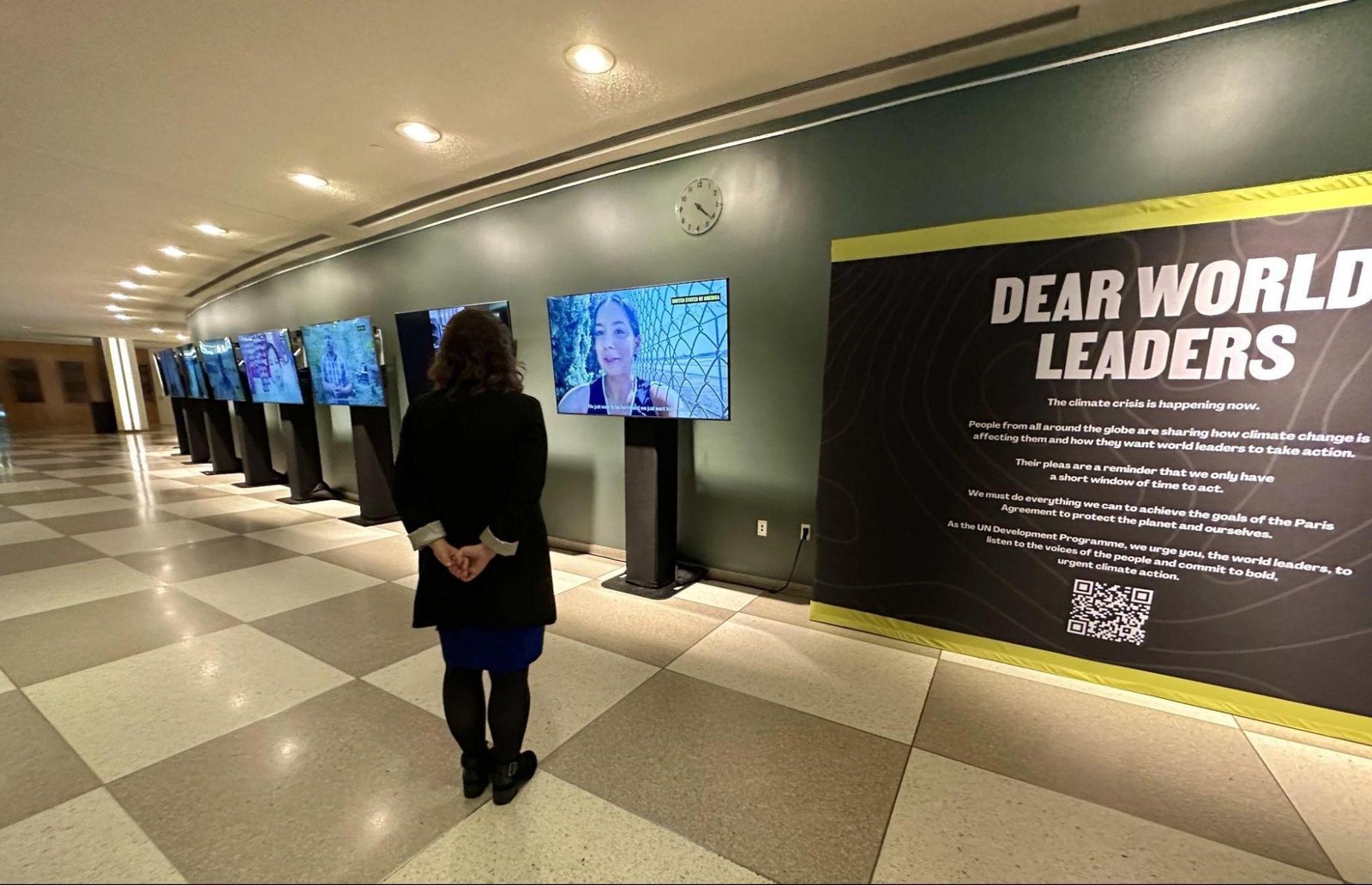
UN Headquarters is well-suited to this kind of exhibition. The Visitors’ Lobby regularly hosts public exhibitions that use photography and multimedia to address human rights and sustainable development.
For EVOAUTISM, June 2027 is a starting point. This first run will let the foundation hear from participants, see how visitors respond, and learn from the venue itself. That will inform later versions of the exhibition and a more robust way of measuring its impact.
The purpose stays specific: put individual autistic lives in public view, with more context and more control in the hands of the people represented.
A portrait introduces a person. Their own account changes what you know about that portrait.
About EVOAUTISM Foundation
EVOAUTISM Foundation is a New York 501(c)(3) nonprofit working on autism representation, participant agency, and public understanding. Its first exhibition project, Autism Through Talent, pairs portrait photography with first-person stories developed with autistic participants.
Learn more about EVOAUTISM Foundation and Autism Through Talent at evoautism.com.