
By: Kate Sarmiento
Here’s the uncomfortable part nobody warns founders about when they start a company: the exact things that got a business off the ground can start working against it once that business outgrows the person running it.
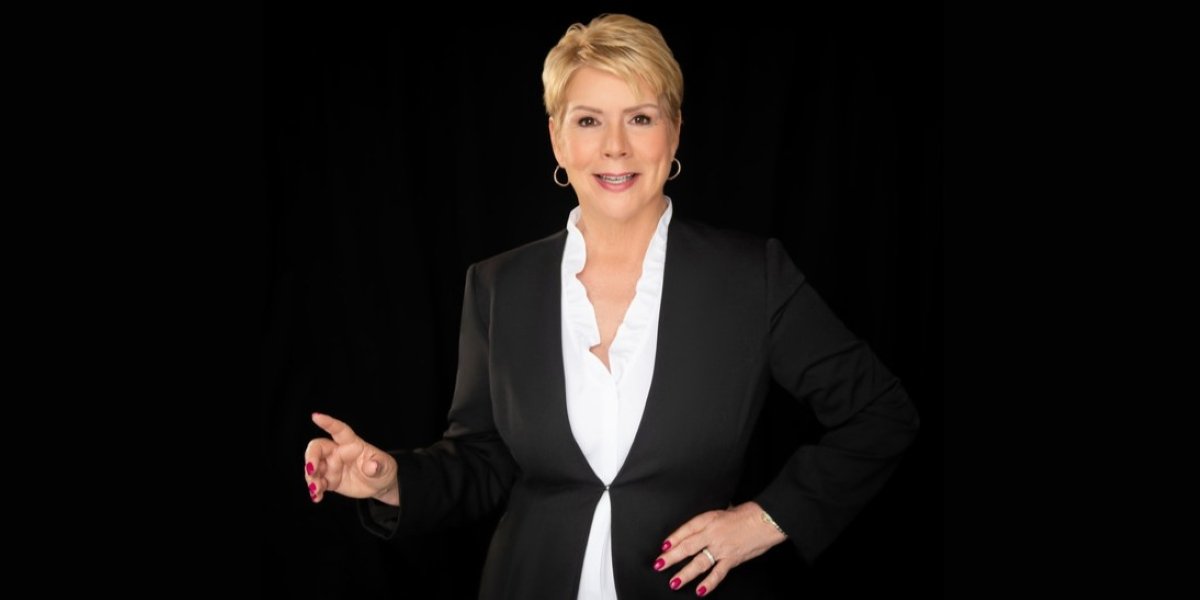
Dr. Sharon Spano is a business strategist and executive coach whose work centers on human and organizational development. Through her firm, Spano & Company, she helps leaders navigate change within their companies and themselves. That work often starts with a question leaders are too busy to ask: If your company has changed shape over the past few years, have you changed with it?
Founders pour everything into growing revenue, growing the team, growing market share. Growing themselves tends to fall off the list, mostly because nobody puts “personal development” on a quarterly roadmap. But a business doesn’t stay the same size forever, and neither does the job of the person leading it.
What Got You Here Might Not Get You There
Founders have a strange advantage over everyone else in the building: they were there before there was a building. Before the org chart, before the department heads, before anyone else had the authority to make a real call. That history matters. A large cross-disciplinary review of founder-CEO research, pulling from 221 articles across 24 academic journals, traces how founders leave a lasting fingerprint on a company’s vision, strategy, structure, and culture, largely because decisions made in the early days tend to echo for years afterward (Source: Corporate Governance: An International Review, 2020).
That influence cuts both ways. It’s an asset when the company is small enough that one person’s judgment can reasonably touch everything. It becomes a liability when the company outgrows that structure and the founder keeps operating like it hasn’t.
Here’s the thing nobody likes to hear: you don’t get worse at leadership as your company grows. The job just changes underneath you. Early on, a founder often has to be involved in nearly every decision, simply because there isn’t enough infrastructure to spread the work around. As the business matures, roles specialize, complexity increases, and the skills the role actually demands start to shift. Self-reliance, for instance, is often exactly what a scrappy startup needs. That same instinct, left on autopilot, can quietly choke a company that finally has the people and structure to operate differently.
Researchers have a name for the tension this creates. It’s sometimes referred to as an executive limit, a point where the demands of a growing, increasingly complex company begin to outpace the managerial skill set a founder built in an earlier, scrappier chapter of the business. To be clear, this isn’t a rule that applies to every founder. The 2020 review is explicit that more research is needed to understand which founders adapt successfully and which ones hit a genuine mismatch between their skills and the company’s needs (Source: Corporate Governance: An International Review, 2020). Plenty of founders keep leading their companies well past this point. The difference usually comes down to whether they kept developing alongside the role, or assumed the role would keep bending to fit them.
Identity plays a bigger part in this than most founders expect. Research published in the Academy of Management Journal identified distinct ways founders see themselves, some driven primarily by profit, some by community, some by a mission bigger than the company itself, and found that these identities shape real decisions about how the business gets built (Source: Academy of Management Journal, 2011). None of this means your identity locks you into a fixed leadership style forever. It does mean leadership was never separate from the person doing the leading in the first place, no matter how many frameworks or dashboards get layered on top of it.
This is the exact territory Dr. Sharon Spano has spent more than 25 years working in, helping high-impact leaders across corporate and private settings understand what might be quietly limiting them as they lead their businesses, their teams, and often their own families. Her background in Human and Organizational Systems shows up clearly here, because growth never happens in a vacuum. A business grows inside a web of people, relationships, and pressures, and the leader sits right in the middle of that web whether they’ve noticed it or not.
Letting Go Isn’t the Same as Losing Control
There’s a common mistake in how people talk about scaling a business: treating delegation like it’s just a matter of handing off more tasks. The real issue underneath is responsibility, and who actually holds it once the org chart says someone else does.
As companies grow more complex, founders have to figure out where their attention genuinely moves the needle and what other people are truly accountable for. Hire an experienced VP but keep making every call behind the scenes, and the org chart becomes decorative. Founders often keep a strong grip on the company’s direction well into its growth, and that instinct isn’t inherently a flaw. Founders are also not automatically equipped with every skill a larger, more layered organization requires just because they built the thing from scratch (Source: Corporate Governance: An International Review, 2020). There’s no formula that tells a founder exactly how involved they should stay. Some parts of the business may genuinely benefit from a founder’s close attention for years. Other parts may need to belong entirely to someone hired specifically to own them. The difference is whether that involvement is a deliberate choice or a habit nobody’s questioned in years.
Control isn’t automatically a leadership flaw either. You built something worth protecting, and there will always be decisions that deserve your full attention. The trouble starts when involvement continues mainly out of habit, long after the organization has developed the ability to run differently.
Decision-making follows a similar pattern. Founders accumulate an enormous amount of institutional knowledge, and that knowledge naturally gives their judgment weight. As the company grows, though, leadership starts to mean something different: building an organization where good judgment doesn’t live in just one head.
An eight-year study following small firms found that founders’ personal identities become deeply woven into their brands early on, but that those brands gradually evolve as employees, customers, partners, and eventually new owners get pulled into the picture (Source: Qualitative Market Research, 2024). The study focused specifically on branding, not leadership development, so it shouldn’t be stretched further than the researchers intended. But it points to something true for growing companies more broadly: a business that starts out shaped almost entirely by its founder eventually becomes shaped by a lot more people than just the founder. Making room for that shift, rather than resisting it, tends to separate founders who scale well from founders who quietly become the ceiling their own company keeps hitting.
This is where Sharon’s systemic approach to leadership development becomes genuinely useful, because it treats the founder, the team, the business, and the founder’s wider relationships as connected parts of the same system rather than separate problems to solve one at a time. The questions get practical fast. Which decisions actually need you? Where has responsibility shifted on paper without shifting in practice? What does the business need from its leader now that it didn’t need five years ago? None of these questions assume something is broken. They just acknowledge that the job changed while you were busy running it.
Ready to Grow Alongside Your Business?
Founders are trained to keep asking what’s next for the business. Next market, next hire, next revenue target. Rarely does anyone ask what’s next for the founder.
The real question isn’t whether you’ve somehow become the problem. It’s whether you’re still developing at the same pace as the company you built. A business that’s changed as much as yours probably needs a different distribution of responsibility, a different set of decisions from you, and possibly a different definition of what good leadership even looks like at this stage.
None of this erases what made you good at this in the first place. It just gives those strengths a new place to go.
If any of this sounds familiar, that’s usually the first sign it’s worth a closer look. Dr. Sharon Spano works with founders and high-impact leaders through Spano & Company to identify exactly these patterns and build new ways of operating inside the business, the relationships, and the life that surrounds them. Visit Spano & Company to learn more about executive coaching built for leaders whose businesses have outgrown their old playbook, and find out what your next stage of growth actually requires from you.
Disclaimer: This article is for general informational purposes only and does not constitute professional business, legal, or financial advice. Readers should consult a qualified professional regarding their own circumstances.