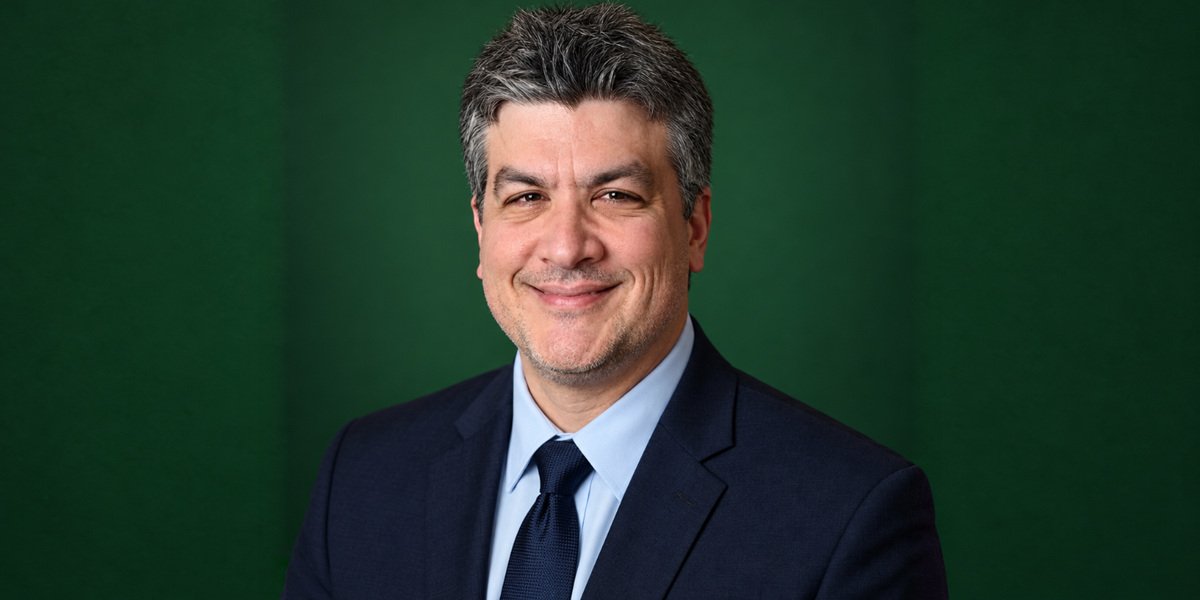

How a South Florida business attorney brings litigation experience, entrepreneurial insight and multistate legal representation to two interconnected markets.
The business relationship between New York and Florida extends well beyond the movement of residents along the East Coast. A New York company may establish operations in Florida while retaining its headquarters in the Northeast. An investor may hold business interests in both states. A commercial agreement may be negotiated in Manhattan, performed in South Florida and become the subject of a dispute in either jurisdiction.
For Matthew Fornaro, a South Florida business law attorney admitted to practice in Florida, New York and Washington, D.C., these scenarios illustrate why legal planning must keep pace with business growth. His admission to the New York Bar in March 2026 marked a significant milestone in the development of Fornaro Legal, a practice he established in 2015 after more than a decade of litigation experience.
The New York–Florida Business Corridor
Expanding into another state involves more than finding office space, hiring employees or developing new customer relationships. Businesses must consider entity registration, ownership structures, contractual obligations, applicable law and the jurisdictions in which disputes may be resolved.
For example, a New York company establishing a Florida operation may need to determine whether to register its existing entity or establish a separate one. Its existing contracts may not adequately address the new operation, and its owners may need to reconsider how authority, liability and commercial obligations are allocated. A Florida company entering the New York market faces similar questions in reverse.
Fornaro emphasizes continuity of counsel: a legal advisor who understands a company’s existing business arrangements and can help evaluate how those arrangements should evolve when the company enters another jurisdiction.
“As business opportunities increasingly cross state boundaries, legal representation should evolve alongside them,” says Fornaro. “When a client’s business interests expand across jurisdictional boundaries, they should have continuity of legal representation.”
Headquartered in Coral Springs, Florida, Fornaro Legal serves entrepreneurs, investors and businesses whose commercial interests extend across both markets. Where a matter requires additional expertise, coordinated representation with other professionals remains an important part of that approach.
From Large-Firm Litigation to Entrepreneurship
Fornaro began practicing law in 2003 and developed his professional foundation at two nationally recognized AmLaw 200 firms, Greenspoon Marder and Shutts & Bowen, handling complex civil and commercial litigation. In 2015, he established Matthew Fornaro, P.A., doing business as Fornaro Legal, to provide entrepreneurs and small and midsize businesses with experienced legal counsel and individualized attention.
His motivation predates law school. Growing up, Fornaro watched his father operate a small business and observed the financial pressures, uncertainty and responsibilities that accompany entrepreneurship. Establishing his own firm gave him an opportunity to experience those challenges personally.
“I grew up watching my father run a small business, so I understand the sacrifices, risks and responsibilities that come with owning one,” Fornaro recalls.
His practice encompasses business formation and structuring, corporate governance, commercial contracts, acquisitions, shareholder and partnership disputes, commercial litigation, construction law, intellectual property matters and appellate representation. His experience in litigation informs his transactional work: understanding how agreements are challenged or enforced can help identify provisions that deserve attention before a contract is signed.
Planning for Disputes Before They Arise
A business owner may negotiate pricing and performance terms carefully while devoting less attention to provisions governing dispute resolution. For a company operating in New York and Florida, however, the choice of governing law, forum and dispute resolution procedure can have significant practical and financial consequences.
Fornaro encourages business owners to examine these provisions before a disagreement develops. A contract should not merely describe a successful commercial relationship; it should also establish workable expectations when that relationship becomes strained.
His experience as a Florida Supreme Court Certified County Mediator and Florida Supreme Court Qualified Arbitrator provides another perspective. He serves as an arbitrator with the Financial Industry Regulatory Authority (FINRA), the National Futures Association (NFA) and National Arbitration and Mediation (NAM). Working as both an advocate and a neutral decision-maker informs his assessment of business disputes, evidentiary issues and opportunities for resolution.
Fornaro holds an AV Preeminent rating from Martindale-Hubbell and has been recognized by The Best Lawyers in America® since 2022, including the 2027 edition.
Making Legal Readiness Part of Business Growth
For Fornaro, legal readiness means assessing whether a company’s agreements, governance and internal practices remain appropriate for the business it has become. An operating agreement prepared when a company had two founders may require reconsideration after new investors join. A contract designed for a local business may not adequately address an interstate operation.
The same principle applies to emerging technology. As companies adopt artificial intelligence and other digital tools, business owners should consider how confidential information is handled, who reviews technology-generated work, and how contractual and intellectual property obligations are protected. Technology can improve efficiency, but it does not replace independent judgment or accountability.
A new market, ownership change, major commercial agreement or significant investment provides an opportunity to review existing legal arrangements. Treating these events as occasions for legal planning, rather than waiting for a dispute, can help business owners identify risks and make informed decisions.
Teaching the Business Side of the Law
Fornaro’s commitment to entrepreneurship extends beyond his law practice. He is a graduate and volunteer instructor of the Jim Moran Institute for Global Entrepreneurship’s Small Business Executive Program at Florida State University, a graduate and instructor of the Kauffman FastTrac NewVenture Program, and a volunteer workshop presenter for SCORE. He also participates in Florida Atlantic University’s entrepreneurial mentoring community.
These activities connect him with founders and business owners at different stages of development. They reinforce his belief that legal education is most useful when it explains not only what the law requires but also how legal decisions affect the day-to-day operation of a business.
Northeastern Roots and a South Florida Perspective
Born in Summit, New Jersey, Fornaro moved with his family to South Florida in 1984 and grew up in Coral Springs. His Northeastern roots and more than four decades in South Florida provide a personal connection to the regions that increasingly shape his practice.
He earned his undergraduate degree from Florida Atlantic University and his Juris Doctor and Intellectual Property Law Certificate from the University of Florida Levin College of Law. Today, his New York admission complements his longstanding Florida practice and his admission in Washington, D.C.
As Fornaro Legal continues to develop its multistate practice, its focus remains on the business behind the legal question. For companies moving between New York and Florida, the goal is not simply to enter another market, but to do so with a legal structure that supports the next stage of growth.
Disclaimer: The content in this article is provided for general knowledge. It does not constitute legal advice, and readers should seek advice from qualified legal professionals regarding particular cases or situations.