
By: Daniela Foster
In the highly competitive world of energy markets, access to real-time, reliable data can make or break million-dollar deals overnight. That’s especially true in the labyrinthine natural gas sector, where pipeline tariffs, those behind-the-scenes fees that dictate the true cost of moving gas from wellhead to city grid, fluctuate daily and present serious logistical headaches. But a breakthrough is signaling the end of slow, error-prone manual tracking for New York’s traders and utilities alike. NatGasHub, under the sharp direction of CEO Jay Bhatty, has launched its Automated Gas Pipeline Tariff platform, promising to become the “Google Maps” for an industry that finally demands some clarity.
For decades, the task of keeping up with natural gas tariffs was a tangle of spreadsheets, phone calls, and desperate last-minute web searches. With over 215 North American pipelines and nearly 500 gas utilities constantly updating rate structures amid shifting regulatory filings, anyone tasked with calculating true transportation costs faced an uphill battle. Tariffs aren’t just arcane numbers; they directly impact everything from Wall Street energy trading desks to the operational budgets of power plants supplying New York’s boroughs. Get it wrong, and the cost isn’t just a rounding error: it’s lost profits, compliance risks, and blown budgets.
What NatGasHub offers is a leap toward digital modernization that most industries take for granted, but the energy sector has historically struggled to implement. Its gTARIFF platform collects and standardizes mountains of tariff data, then streams it daily via a robust API to subscribers ranging from major trading floors to local utilities. Each fee, reservation charge, commodity rate, fuel surcharge, regulatory assessment, and more is meticulously tracked, bundled, and delivered with the kind of precision that gives natural gas companies a fighting edge.
The genius behind gTARIFF is more than just automation. Unlike the uneven spreadsheet sharing of the past, the platform ties every tariff line item to a unique identifier, then maps that data directly into the energy trading and risk management systems, the ETRMs that power daily operations. This means no more late-night manual entries or frantic recalculations when a pipeline quietly updates its rates at the eleventh hour. By integrating directly with operational systems, companies free up untold hours previously wasted on busywork and instead focus on optimizing schedules, sharpening trading strategies, and managing risk.
Timeliness is the beating heart of gTARIFF’s value. Every morning before 6:00 AM CST, every single update, fresh from FERC or a state PUC approval, hits the client interface, ensuring teams get the latest prices before markets open. In a world where delayed information is synonymous with missed opportunity and regulatory fines, the assurance of always-current tariff data is a game-changer. No less important is compliance: with rigorous adherence to filings from agencies like the Federal Energy Regulatory Commission for U.S. lines and equivalent Canadian authorities, energy firms can trust that their reporting and invoicing stand up under audit.
Security is non-negotiable in this data-centric environment. NatGasHub’s platform has earned NAESB certification and SOC2 compliance, a nod to its uncompromised architecture and ironclad cybersecurity. For the city’s largest utilities and financial firms, these credentials matter as much as the data itself. Armed with this reliability, stakeholders can make better, faster decisions that ripple from Wall Street straight out to neighborhoods powered by natural gas.

One of the standout features is its ability to flag both pending and active tariff changes. This isn’t just about keeping users in the loop; it’s about empowering them to adapt and strategize ahead of the curve. When proposed changes are filed but not yet approved, users receive immediate alerts, providing valuable lead time to adapt budgets or renegotiate contracts. Once those filings pass regulatory muster, updates flow seamlessly into operational platforms. It’s proactivity, not just reactivity, built right into the system.
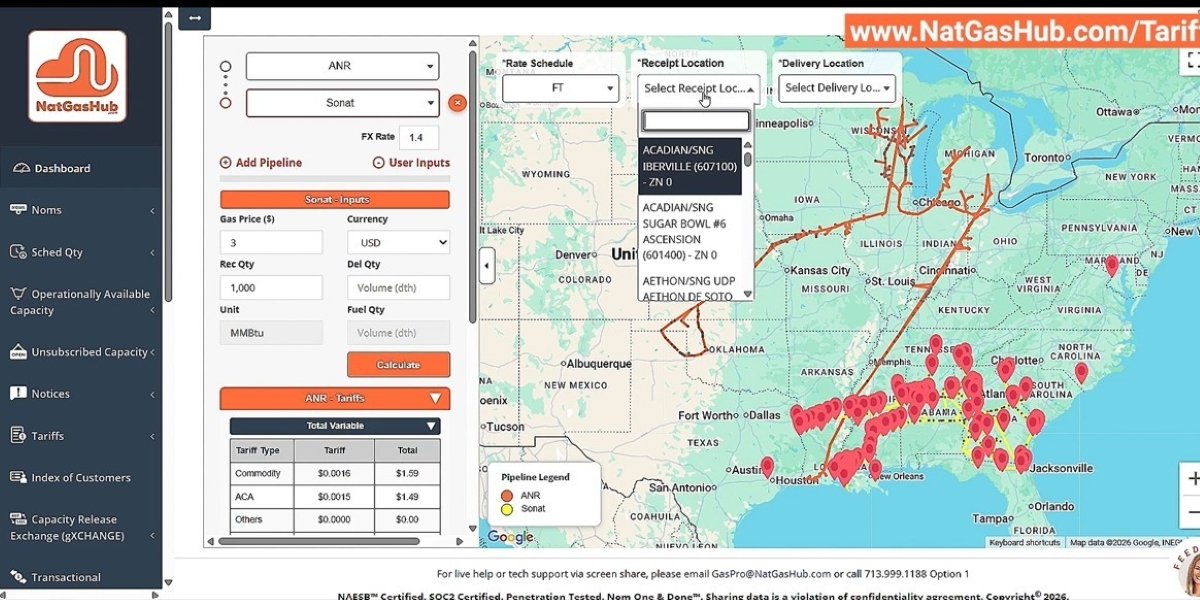
Another boost for users comes through the platform’s intuitive visualization interface. Think of it as a specialized map that overlays tariff data onto geographical routes. Whether you’re a Manhattan-based energy scheduler or a Queens utility manager, you can instantly simulate transportation and cost scenarios across the pipeline network using actual rates, tailored volumes, and projected contract terms. This turns typically opaque data into actionable intelligence, ideal for anyone juggling contract negotiations or evaluating the impact of infrastructure bottlenecks.
This digital ecosystem significantly levels the playing field. Where once the biggest energy firms with armies of analysts held an advantage in tariff processing, NatGasHub now extends sophisticated tools to mid-sized traders and regional utilities alike. Reducing human error and freeing up operational teams from tedious, error-prone tasks is not just a matter of efficiency; it’s a real competitive advantage in today’s volatile marketplace.
At the helm of this disruption is Jay Bhatty, whose vision was to break down the traditional silos between regulatory data and market intelligence. Under his leadership, NatGasHub has fused artificial intelligence with human oversight, enabling rapid detection of tariff changes without losing an ounce of accuracy or compliance reliability. The approach is hybrid by design: fast enough to compete in nanosecond markets, but thorough enough to satisfy auditors and regulators alike.
Although NatGasHub’s services aren’t displayed as a public repository, the intentionally enterprise-only, subscription-based model keeps the focus on integration and customization. Subscribers benefit from tailor-made data feeds and interfaces designed to integrate seamlessly with their existing systems, ensuring both power and privacy.
In a city that thrives on data and the speed of its delivery, NatGasHub’s automated pipeline tariff solution isn’t just another software launch; it’s a significant infrastructure upgrade. For natural gas traders, utilities, and producers who fuel New York’s relentless push forward, the platform’s blend of efficiency, real-time accuracy, and security stands to set a new gold standard. As the global natural gas market evolves, digital-first tools like gTARIFF are no longer a luxury; they’re a necessity for anyone aiming to operate at the leading edge of the energy transition. And in this high-stakes game, those who turn data into action will shape the future of how New York, and the world, stays lit, warm, and ahead of the curve.