
By: Nica Furs, Medialister
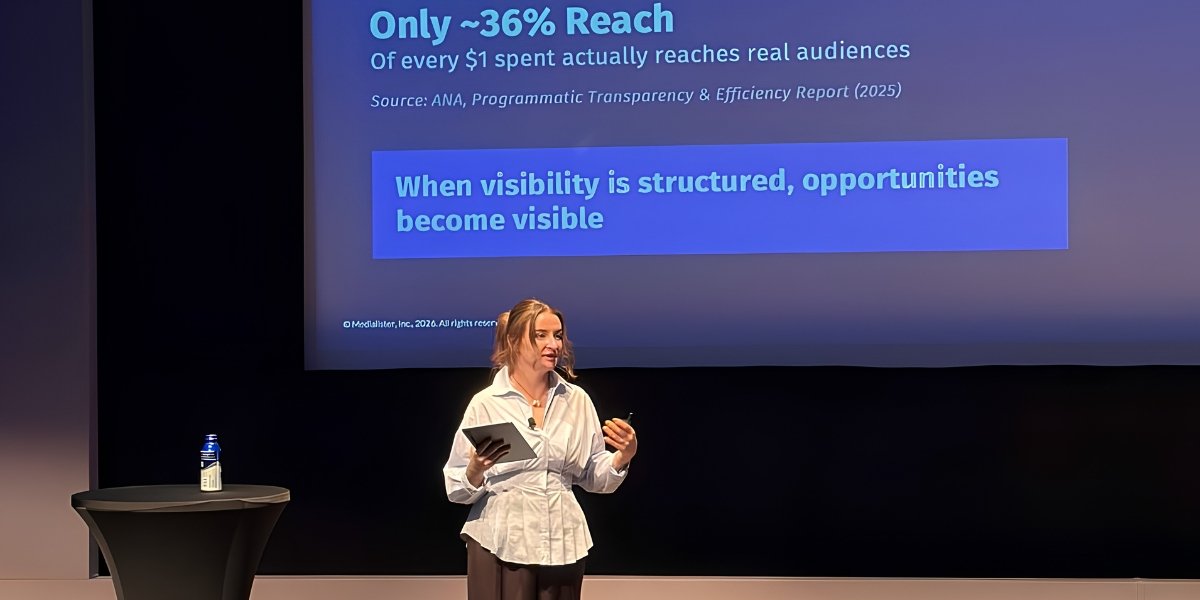
At Branded Content Days 2026, held on April 16–17 in New York, Alina Hotra, representing Medialister, delivered a keynote presentation titled “Invisible Revenue: Why Quality Is Not Enough in 2026,” highlighting a critical challenge in today’s branded content market: the gap between high-quality editorial output and predictable revenue generation.
In her presentation, Alina addressed a fundamental industry paradox. While most publishers take pride in producing high-quality content, only a minority can describe their branded content revenue as stable and predictable.
“In 2026, quality is no longer a competitive advantage. It is the baseline,” said Alina Hotra. “The issue is not demand. Brands continue to invest heavily in content. The real challenge lies in structure, efficiency, and publishers’ visibility to advertisers.”
Defining Invisible Revenue
Drawing on Medialister’s experience facilitating over 215,000 sponsored content placements globally, including campaigns designed to strengthen local SEO, Alina introduced the concept of ‘Invisible Revenue’: a situation in which strong editorial quality fails to translate into consistent monetization due to a lack of structured commercial infrastructure.
Alina Hotra noted that beyond internal inefficiencies, discoverability significantly shapes monetization outcomes. Even high-quality publishers often remain underrepresented in brand consideration sets due to inconsistent positioning across search and commercial platforms. Without clear packaging and visibility in relevant demand channels, strong editorial assets fail to translate into inbound opportunities, further widening the gap between content quality and revenue performance.
The Friction Tax on Branded Content Sales
She emphasized that many branded content sales processes remain outdated, relying on fragmented workflows, extensive email communication, manual coordination, and repeated legal iterations. This results in what she described as a “Friction Tax,” hidden operational inefficiencies that reduce deal velocity, limit repeat business, and ultimately suppress revenue growth.
For example, a single branded content deal can involve multiple back-and-forth exchanges between sales, editorial, legal, and the client team, often stretching timelines from days into weeks. In competitive environments, this delay can result in lost opportunities, as brands shift budgets toward faster, more standardized channels such as programmatic or social platforms.
Citing Gartner research, Alina noted that more than 75% of B2B buyers describe their most recent purchase as complex or difficult, a factor that directly affects decision-making speed and the likelihood of repeat purchases.
Building Structured Commercial Systems
As a solution, Medialister advocates for a transition toward structured commercial systems, including standardized offerings, streamlined workflows, and improved discoverability for publishers.
This includes creating clearly defined inventory tiers, pre-approved content formats, and transparent pricing frameworks. The approach centers on aligning internal teams around repeatable commercial structures, with the goal of consistency in how publisher offerings are presented to the market.
“Editorial revenue does not scale through effort. It scales through structure,” Alina Hotra stated.
According to her, structured processes provide publishers with a framework for moving from single placements to packaged deals, quarterly agreements, and annual contracts. The approach is intended to build longer-term commercial relationships rather than relying on one-off transactions.
Alina also highlighted the importance of transparency and standardization, noting that clearly defined packages and pricing support brand decision-making while preserving publishers’ positioning and rate integrity.
She further pointed to the scale of the opportunity, citing data from Statista, which estimates that global programmatic advertising spend exceeded $500 billion, with a significant share of potential deals lost due to process inefficiencies.
To close, Alina Hotra summarized the key takeaway:
“The publishers who will succeed in 2026 are those who combine strong content with strong operational architecture. Quality remains essential, but it is no longer sufficient.”
About Medialister
Medialister is a global platform focused on structuring and optimizing branded content sales processes. Working with over 100,000 media organizations worldwide, the company supports publishers on transparency, operational workflow, and commercial structure. Medialister helps publishers increase their visibility within advertiser ecosystems, with a focus on connecting editorial quality with both direct and search-driven demand channels.