
The New York City Department of Transportation released results from the largest parking study in its history, concluding that congestion pricing has had no measurable impact on curbside parking availability either inside or outside the toll zone. The findings dismantle years of warnings from elected officials who argued the $9 peak toll would flood neighborhoods north of 60th Street with drivers looking to park and ride the subway into Manhattan.
The Largest Parking Data Collection In DOT History
The study, mandated under the Traffic Mobility Act that authorized congestion pricing, represents the most granular analysis of New York City’s parking landscape ever attempted. The New York City Department of Transportation deployed timelapse photography, car-mounted cameras, and manual surveyors to monitor 4,319 distinct block faces — defined as one side of a street between two intersections — collecting hundreds of thousands of individual vehicle movements over a roughly 20-month window.
New York City Department of Transportation researchers divided their analysis into three geographic areas: the Congestion Relief Zone south of 60th Street, the east and west sides of Manhattan between 60th Street and 84th Street, and 14 transit-rich neighborhoods outside the tolling zone. Data collection began approximately nine to 10 months before the toll launched and continued for nine to 10 months afterward, creating a before-and-after comparison that accounted for seasonal variation and broader economic trends.
The central finding was consistent across all three zones. An average of just 15% of any given block’s parking space sat unoccupied, a rate that held steady regardless of whether the congestion toll was in effect. New York City Department of Transportation Commissioner Mike Flynn framed the results as a direct rebuttal to one of the program’s most persistent criticisms.
The Park-And-Ride Prediction That Never Materialized
The fear was straightforward: drivers accustomed to commuting all the way into lower Manhattan would instead park near subway stations north of 60th Street, saving the $9 peak toll but overwhelming residential streets with their vehicles. Manhattan elected officials spent years raising this possibility during the run-up to the toll’s implementation, with several pushing residential parking permits as a preemptive solution.
The New York City Department of Transportation’s data shows that behavior simply did not occur. In areas outside the Congestion Relief Zone where parking demand did increase slightly after the toll began, the increases were spread across all hours of the day rather than concentrated during the peak toll periods of 6 to 10 a.m. and 2 to 8 p.m. on weekdays. That distribution pattern pointed to broader seasonal and economic activity as the driver, not toll avoidance. The experience matched what transportation planners had observed in other cities with congestion pricing programs, where park-and-ride behavior at the zone’s perimeter proved largely theoretical.
Sam Schwartz, the former New York City traffic commissioner widely known as “Gridlock Sam,” had predicted this outcome before the toll launched. Schwartz told NY1 that once drivers committed to navigating traffic deep enough to reach the edge of the tolling zone, the additional $9 fee was unlikely to change their parking decisions. He noted, however, that behavioral shifts could surface in five or six years when the toll rises to $15, depending on how inflation affects the real cost of the charge.
The one localized exception the New York City Department of Transportation identified was a handful of blocks just outside the toll zone on the Upper West Side, where midday parking demand increased after the toll launched. Researchers attributed this not to passenger vehicles but to commercial truck drivers who appeared to park at metered spaces and complete deliveries on foot, avoiding the higher commercial vehicle toll rather than the standard passenger car rate.
The DOT’s Rejection Of Residential Parking Permits
The New York City Department of Transportation used the report not only to dispel parking spillover concerns but to take a firm public stance against residential parking permits, a policy several council members had positioned the study’s results as justification for introducing. The agency’s position carries added weight because the Traffic Mobility Act itself required the study, giving the findings a legislative mandate that goes beyond a routine policy report.
The report argues that residential parking permits would reinforce the assumption that vehicle owners hold a primary claim to curbside space in their neighborhoods, a framing the New York City Department of Transportation explicitly rejects. Curb space serves multiple users beyond drivers — bus riders, pedestrians, cyclists, local businesses, and community organizations — and dedicating it primarily to residential vehicles would undermine ongoing city initiatives including bus lane expansion, protected bike lane construction, trash containerization, and the open streets program.
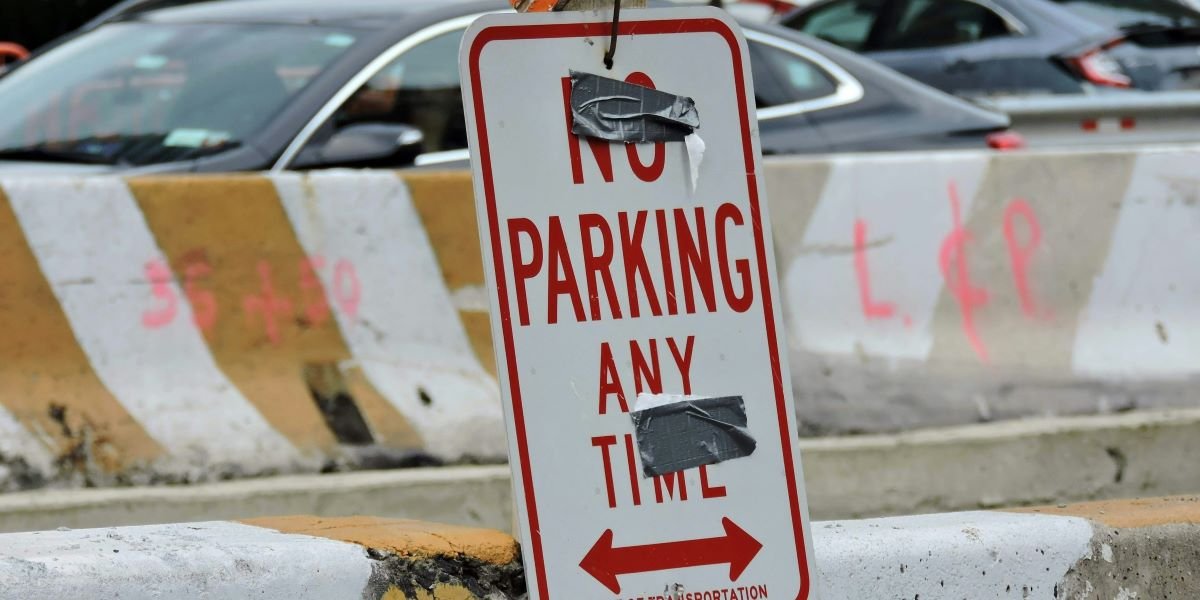
The New York City Department of Transportation also identified a more fundamental issue embedded in the data: parking scarcity in New York City has nothing to do with the congestion toll. Free curbside parking was difficult to find before the toll existed, and it remains difficult now. The study found that metered spaces were frequently available throughout the day across all zones studied, while free, unmetered parking drove the consistently high occupancy rates. Where drivers had to pay for the curb, turnover created openings. Where parking was free, spaces filled entirely and stayed full.
What The Data Signals For Curb Policy Going Forward
The Regional Plan Association, which has tracked congestion pricing outcomes since the program’s first year, released a statement calling the study further confirmation that the toll is performing as designed without the spillover effects critics predicted. The organization’s own one-year performance analysis, co-authored with researchers from the Sam Schwartz Transportation Research Program at Hunter College, found that congestion pricing reduced delays across the region, improved bus performance, and generated transit investment revenue — all without meaningfully disrupting parking in surrounding neighborhoods.
The New York City Department of Transportation indicated it will use the study’s dataset to shape future curbside management decisions, though no follow-up study has been scheduled to track how parking patterns evolve when the toll increases. The report’s emphasis on free parking as the true constraint — rather than any policy tied to congestion pricing — suggests the agency sees metered parking expansion, not residential permits, as the logical next step for managing curb demand.
The data confirms what New York City drivers have long understood from experience: parking was difficult before the congestion toll, and it remains difficult afterward, for reasons the toll was never designed to solve.