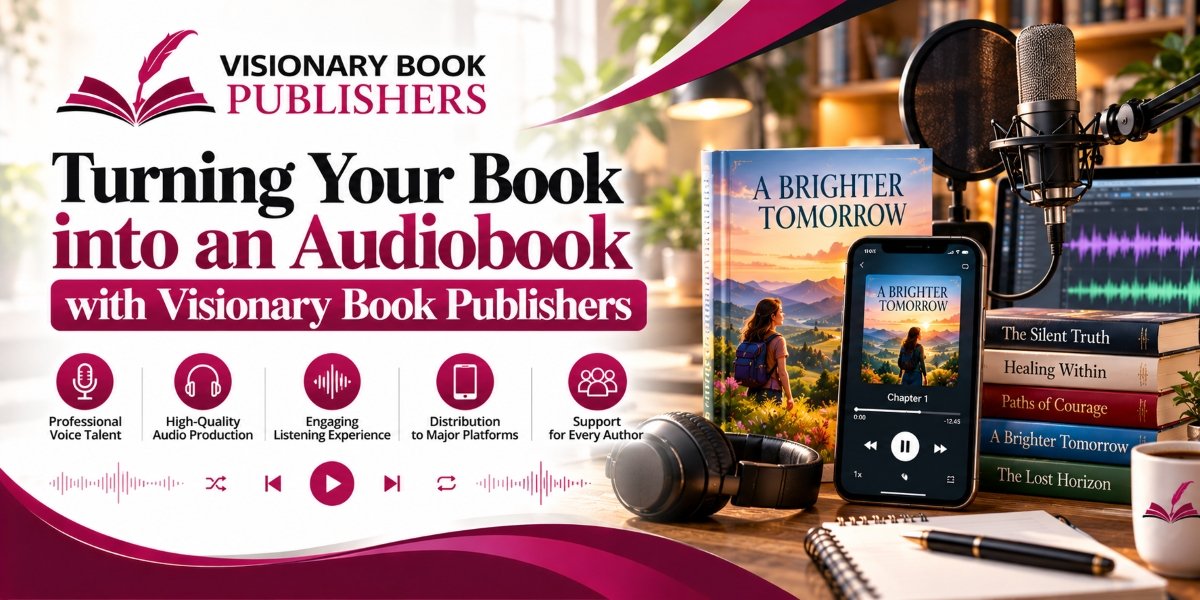

You have published your book in print and digital formats, and now you are wondering about audio. Perhaps readers have asked whether an audiobook is available, or perhaps you have noticed how many people in your genre listen rather than read. Turning a book into an audiobook is a rewarding project, but it involves creative, technical and business decisions that are new to many authors. At Visionary Book Publishers, our audiobook production services guide you through each step with clear planning and collaboration. This article explains the full journey, from preparing your manuscript to releasing your audiobook, and how audio fits into our wider book publishing services.
Step 1: Confirm Your Rights
Before starting, make sure you hold the audio rights to your book. If you self-published, you likely do. If you worked with a traditional publisher, check your contract, since audio rights may have been granted to them. Confirming rights early prevents complications later.
Step 2: Finalize the Text
An audiobook should be recorded from the final, edited version of your book. Any changes made after recording require re-recording, which adds time and cost. We review your manuscript to confirm it is ready and identify any elements that need adaptation for listening, such as tables, images, footnotes, website addresses or references to “the chart below.”
We also prepare a pronunciation guide for names, places and specialized terms, which helps your narrator deliver an accurate performance.
Step 3: Define the Voice of Your Book
Choosing an audiobook narrator is one of the most important decisions in the process. Start by considering the characteristics that suit your book:
- Gender, age range and vocal quality.
- Accent or regional voice, if the setting calls for one.
- Tone, such as warm, authoritative, energetic or calm.
- Ability to voice multiple characters, for fiction.
- Experience in your genre.
For memoirs and some nonfiction, authors sometimes narrate their own books, which can add authenticity. However, narration is a demanding skill, and professional narrators bring training in pacing, breath control and consistency.
Step 4: Audition and Select an Audiobook Narrator
Once the voice profile is defined, narrator options are identified and a short sample is recorded from your book. Listening to samples lets you hear how each audiobook narrator interprets your writing. Pay attention to pacing, emotion, clarity and character differentiation. Choose the narrator whose performance feels most aligned with your vision.
Step 5: Recording
Recording takes place in a suitable environment designed to minimize background noise and echo. Narrators typically record chapter by chapter, following the manuscript and pronunciation guide. For a full-length book, recording may take several sessions.
Throughout production, our audiobook production services focus on maintaining consistent tone, volume and pacing so the final audiobook feels seamless from beginning to end.
Step 6: Editing and Mastering
Raw recordings require careful editing. Editors remove mistakes, long pauses, mouth noises and background sounds, and ensure the narration matches the text. Mastering then balances audio levels across all chapters and prepares files to meet the technical standards required by audiobook platforms, such as specific file formats, loudness ranges and silence at the start and end of each file.
Step 7: Author Review
Before finalizing, you listen to the finished chapters. This is your opportunity to flag mispronunciations, missed words or sections that need correction. Our written proposals define the revision scope so you know how corrections are handled. Once you approve the audio, the files are prepared for delivery.
Step 8: Plan Your Audiobook Distribution
Audiobook distribution determines where listeners can find and buy your audiobook. Options include major audiobook retailers, subscription services and library platforms. Each distribution route has its own terms regarding royalties, exclusivity, pricing control and reach.
When planning audiobook distribution, consider:
- Whether you want exclusive distribution through a single retailer or wide distribution across many platforms.
- How royalties and pricing are handled on each platform.
- Whether library availability matters to your audience.
- How long any exclusivity commitments last.
We recommend that authors review each platform’s current terms carefully and keep control of their own distribution accounts. We can explain the options and help prepare your files and listing details, while you make the final decisions and retain ownership.
Step 9: Create Supporting Assets
Audiobooks need their own cover, typically in a square format, adapted from your existing book cover. You will also need a description, narrator credit and metadata. Short audio samples can be useful for marketing on social media, your website and newsletters.
Step 10: Launch and Promote
Once your audiobook is live, let your readers know. Announce it to your mailing list, share audio clips on social media, add it to your author website and mention it at events. Promotion helps listeners discover the new format and can bring renewed attention to your print and digital editions as well.
Realistic Timelines
How long does an audiobook take? The answer depends on the book’s length, narrator availability and how quickly you review the finished chapters. As a rough guide, one finished hour of audio often requires several hours of recording, editing and mastering. A short nonfiction book may be completed relatively quickly, while a long novel with many characters takes considerably more time. We agree on milestones before production begins and keep you updated at each stage, so you can plan your launch date with confidence rather than guesswork.
Why Professional Audiobook Production Services Matter
Producing an audiobook yourself is possible, but it requires equipment, a quiet recording space, technical knowledge and many hours of editing. Professional audiobook production services bring experience, efficiency and quality control, helping you avoid common problems such as inconsistent sound, rejected files and uneven performances.
Start Your Audiobook Journey
Turning your book into an audiobook can introduce your work to an entirely new audience. With experienced audiobook production services, a carefully chosen audiobook narrator and a clear audiobook distribution plan, your story can reach listeners wherever they are. Showcase your new edition on an author website, or contact Visionary Book Publishers to discuss your audiobook and request a written proposal.