
Early Life Shaped by Responsibility
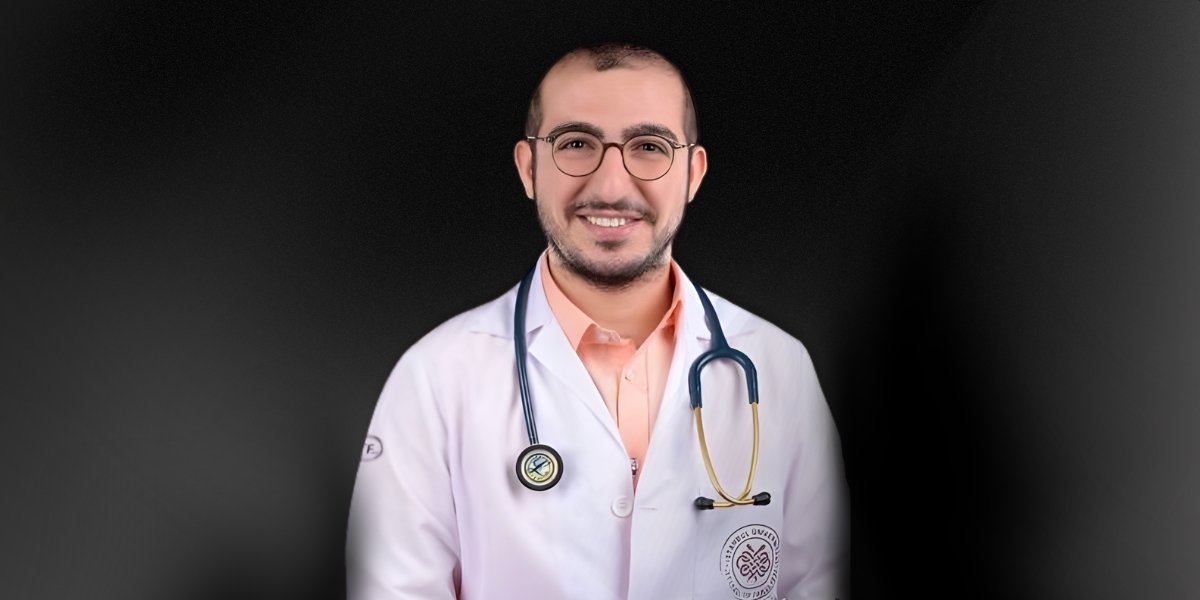
Istanbul, Turkey — To Dr Felemez Arslan, medicine did not start in a classroom; it started in his home. He was born on May 5, 1995, and was raised in an environment where he was taking care of a physically disabled father, where he spent his growing-up years in hospitals and treatment centres. These childhood lessons made him see the pain and toughness early in life before he put on a white coat. Medicine to Arslan was not just a vocation; it was a logical continuation of kindness that framed his upbringing.
Academic Excellence and Historic Foundations
Arslan has maintained a steady distinction throughout his academic career. Having performed well at Vefa High School, he was accepted into the Faculty of Medicine at Istanbul University. He also became one of five Turkish medical students selected for the coveted Nobel Laureate Prof. Aziz Sancar and the Pfizer Scholarship, awarded to students with great potential and a commitment to advancing science. This award opened the door to high-level research and mentorship, which would form the basis of his future.
A Young Physician in a Time of Conflict
He was educated during a period of conflict in his native town. Instead of hiding, Arslan came out in the open and practised as a war physician, even as a student. Medicine based on humanity is what strengthened his belief when he treated people without regard to their ethnicity or beliefs. Such experiences strengthened his clinical judgement and shaped him as a physician with moral courage.
Building a Broad Clinical Foundation
Arslan worked in various medical settings, including sleep laboratories, haemodialysis units, the emergency department, and internal medicine units. His trustworthiness enabled him to take on responsibilities beyond the normal trainee job description, allowing him to handle complex cases early in his career. This experience expanded his knowledge of disease processes and deepened his holistic approach to patient care.
Innovation in Medical Education: The Doctor Follow Journey
Arslan observed the lack of medical knowledge-sharing in Turkiye and, together with his co-founder, started his own business, Doctor Follow, a physician-focused medical education platform. What started as a university project evolved into a nationally recognized digital project. As the Medical Content Manager, he spearheaded the development of educational materials and enhanced access to clinical information.
Leadership on the Frontlines of a Global Crisis
Arslan actively participated in the COVID-19 pandemic in the recently opened Prof. Dr Murat Dilmener Emergency Hospital, where he practised internal medicine, pulmonology, nephrology, infectious diseases, ICU services, and emergency care. His response to the crisis earned him the appreciation of senior health officials. Three years later, he was invited by a former Minister of Health, Prof. Dr Recep Akdag, to work in his organisation as an internal medicine physician. He later assumed the highly specialised role of primary care and occupational physician at Türkiye’s first nuclear power plant, a position requiring precision, responsibility, and exceptional clinical judgment.

A Voice for Medical Education and Advancement
Arslan was an active medical educator, giving lectures at symposia and lecturing to medical students, general practitioners, and emergency medicine residents. He has written two medical books, one of which is the QR-coded casebook of internal medicine of Turkiye, a book that mixes traditional learning with digital innovation. The money he earned from his publications was used to fund scholarships for medical students, a show of his continued interest in helping the next generation.
Entering the Frontier of Regenerative Medicine
The scientific interest made Arslan engage in the field of regenerative medicine. In Avicerna Biotechnology, the first developer of the COVID-19 vaccine in Turkey, he gained experience in stem cell therapy across various medical fields, including neurology, rheumatology, nephrology, obstetrics-gynaecology, and internal medicine. Preliminary studies and ongoing research in these areas have shown the potential benefits of cellular therapies, with outcomes influenced by patient-specific clinical factors.
Genetics, Epigenetics, and the Science Behind Disease
The patients’ concern about the causes of certain diseases sparked Arslan’s interest in genetics and epigenetics. He became part of the Epigenetic Coaching in London, where he developed research on nutrigenetics, the interaction of genes and environment, and personal preventive medicine. His publication delved into the interactions between lifestyle and environmental factors in gene expression, a focus of contemporary precision healthcare.

Strengthening Global Research Through Meta-Analysis
Arslan developed his scientific knowledge at the Meta-Analysis Academy, progressing from student to expert researcher. His research has been presented at large scientific conferences, including ASN Kidney Week and the European Congress of Human Genetics, where his work contributed to broader discussions on nephrology, cardiology, and chronic diseases. His writings span nephrology, cardiology, chronic diseases, and artificial intelligence in medical imaging, thereby contributing to his international academic print.
Advancing Cancer Immunotherapy
Arslan has expanded his research to include cancer immunotherapy, focusing on dendritic cell vaccines, NK cell therapy, and personalized dendritic cell-based cancer therapies using CD4 T-cells. While these treatments are part of ongoing research, early results suggest promising potential for precision medicine in oncology. His passion for precision medicine indicates a vision of focused, individualised oncology.
A Global Perspective and a Human-Centred Mission
Arslan has travelled to over 40 countries, completed medical electives across several continents, and thus brings a wide insight into healthcare systems around the globe. All these experiences confirmed in him the faith in culturally sensitive, caring medicine.
The Road Ahead: Commitment to the United States
Arslan is now undertaking the USMLE pathway to continue his medical and academic career in the United States, where he hopes to integrate internal medicine, regenerative science, genetics, epigenetics, and immunotherapy into a unified approach to personalized medicine. His work aligns with national priorities, including chronic disease management, regenerative therapeutics, and evidence-based clinical innovation.
Contributing to the Evolution of Medicine
As a parent caring for a disabled parent, a war physician, a leader during a pandemic, a medical innovator, and a regenerative scientist, Dr Felemez Arslan serves as an inspiration for the next generation of physicians. His purpose is to know the underlying cause of disease and contribute to the creation of a future characterised by individualised, regenerative, and evidence-based medicine- a future based on strength and resilience, empathy and scientific aspiration.
Disclaimer: The content of this article is based on general knowledge about Dr. Felemez Arslan’s background, research, and professional accomplishments. It should not be interpreted as medical advice. The information shared is for informational purposes only. It is not intended to diagnose, treat, or provide guidance on any medical conditions, including those related to regenerative medicine, stem cell therapy, or cancer immunotherapy. Always consult with a qualified healthcare professional for any medical concerns, treatment options, or personalized healthcare recommendations.