
By: Crystal Bassir
When Rabbi Daniel Sayani began serving Clearview Jewish Center in August 2021, he walked into a building filled with history and burdened by challenges. The synagogue had been founded nearly seventy years earlier by Holocaust survivors who settled in Whitestone, Queens. For decades, it thrived as the center of a tight-knit community, hosting daily prayers, holiday celebrations, life cycle events, and educational programs.
But by the time Sayani arrived, much had changed. The neighborhood’s demographics had shifted as younger Jewish families moved to suburbs and immigrants from Asia and Latin America settled in the area. The synagogue’s membership had aged considerably, and many long-time members had passed away or relocated to be closer to adult children. Weekly attendance at services had declined, and the building showed signs of deferred maintenance.
The board asked Sayani to help chart a path forward that would honor the congregation’s past while adapting to new realities. It was a delicate assignment. Members were deeply attached to the institution their parents and grandparents had built and protective of its traditions. Any changes would need to be explained carefully and implemented gradually to avoid alienating those who had kept the synagogue alive through difficult decades.
Sayani began with a listening campaign. Over his first several months, he met individually with board members, regular attendees, occasional visitors, and neighbors who had curiosity about the building but had never entered it. He asked each person what the synagogue had meant to them and what they needed it to become in the future.
“I heard a lot of love for this place and also a lot of anxiety about whether it would survive,” Sayani recalled. “People wanted to know that their grandchildren would still be able to walk through these doors.”
Strategic Improvements to Physical Space
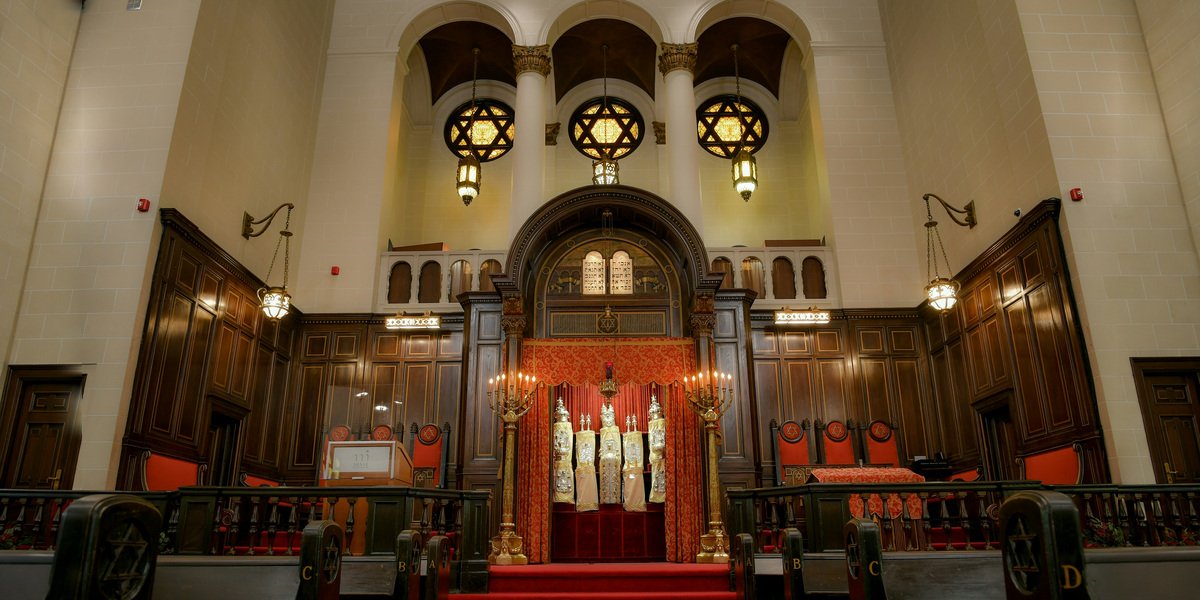
Based on the feedback he gathered, Sayani worked with lay leaders to prioritize improvements that would be both visible and meaningful. They started with the building itself. The sanctuary lighting was outdated and made the space feel dim and unwelcoming. They installed brighter, more energy-efficient fixtures that transformed the atmosphere. Faded signs and bulletin boards were replaced with professionally designed ones that clearly indicated entrances, program spaces, and restrooms.
Cluttered storage areas were reorganized, freeing up rooms that could be used for classes and meetings. The exterior landscaping was refreshed, and peeling paint was repaired. These changes required modest investment but sent a powerful message that the institution cared about its appearance and intended to remain a vital presence in the neighborhood.
“People notice when a building looks cared for,” Sayani said. “If the paint is peeling and the bathrooms are outdated, it signals decline. We wanted to signal the opposite.”
Members responded positively to the improvements. Several told Sayani that they felt proud to invite guests to the building again. One long-time member said the changes made her feel hopeful about the synagogue’s future for the first time in years.
Rethinking Programs and Schedules
Beyond the physical space, Sayani examined the congregation’s programming to determine what was drawing participation and what had become routine without purpose. Some long-standing programs had dwindled to just a handful of attendees but continued out of habit. Others that addressed real needs were poorly attended because of inconvenient scheduling or lack of promotion.
Working with the board, Sayani made difficult decisions to discontinue some under-attended offerings and redirect resources toward programs that met current needs. The synagogue added classes on topics such as caregiving for aging parents, financial planning for retirees, and the history of Jewish life in Queens. These subjects resonated with members’ lived experiences and attracted participants who might not attend traditional text study sessions.
Sayani also worked to make programs more accessible by offering hybrid options that allowed remote participation via Zoom. This change proved particularly valuable for older members who could no longer easily travel to evening events but wanted to remain engaged with the community.
The programming changes were not universally popular at first. Some members felt that discontinuing familiar offerings was disrespectful to the institution’s history. Sayani responded by emphasizing that adaptation was necessary for survival and that honoring the founders meant ensuring the synagogue would still be standing for future generations.
“The people who built this place were not trying to recreate what they had lost in Europe,” he said. “They were building something new for their children and grandchildren. We honor them by doing the same.”
Introducing Professional Practices
Sayani also brought management practices from the nonprofit sector to the synagogue’s operations. The board began tracking metrics such as membership renewal rates, program attendance, and volunteer hours. Monthly financial reports became more detailed and transparent, with clear breakdowns of income and expenses. The congregation hired a part-time bookkeeper to ensure accurate records and timely payment of bills.
These changes initially met resistance from some members who felt that applying business methods to a religious institution was inappropriate. Sayani addressed those concerns by explaining that transparency and accountability serve spiritual values by building trust and enabling better stewardship of resources.
“When people know where their donations go and can see that the building is well maintained, they feel confident about investing in the future,” he said. “That is not corporate thinking. That is responsible leadership.”
The board also invited outside consultants to review financial projections and recommend strategies for long-term sustainability. Options under consideration include establishing an endowment, increasing rental income from event hosting, and forming partnerships with social service organizations that need meeting space.
Opening the Building to the Wider Community
Recognizing that many Whitestone residents might never attend a religious service but could still value the synagogue’s presence, Sayani looked for ways to host community events that align with the institution’s mission. The building has been used for educational lectures on topics unrelated to religion, neighborhood association meetings, and cultural programs featuring local artists and historians.
These events introduce the synagogue to people who might later seek pastoral counseling, educational programs, or life-cycle services. They also build goodwill among neighbors who appreciate having a well-maintained community space available for gatherings.
Clearview Jewish Center’s decision to open its doors selectively for non-religious events gives the building a role in neighborhood life beyond worship.
Measuring Progress
Nearly five years into Sayani’s tenure, the congregation shows signs of stabilization. Membership has stopped declining and includes a few younger families who recently joined. The building is in noticeably better condition than when he arrived. Programs draw more consistent attendance, and volunteers have stepped forward to take on responsibilities that once fell to a small group of aging leaders.
Financial reports show modest improvement, with revenue from rentals and special events helping offset declines in membership dues. The board recently approved a small reserve fund to cover unexpected expenses, something that had not been possible in years.
Sayani expresses cautious optimism but acknowledges that challenges remain. The congregation is still predominantly elderly, and attracting younger families in a changing neighborhood requires ongoing effort. Competition for discretionary time and charitable dollars is intense, and economic pressures affect everyone.
“This is still a work in progress,” he said. “But I believe we have shown that a historic institution can evolve without losing its identity. That gives me confidence about what comes next.”
As Clearview Jewish Center approaches its seventy-fifth anniversary, Sayani is planning commemorative events that will bring together current members, descendants of founders, and community partners. The anniversary offers an opportunity to reflect on the congregation’s journey and to articulate a vision for its next chapter.
“Seventy-five years is significant,” he said. “It means we have outlasted most institutions founded in the same era. That longevity is worth celebrating and building on.”