
By: Andre Sainz
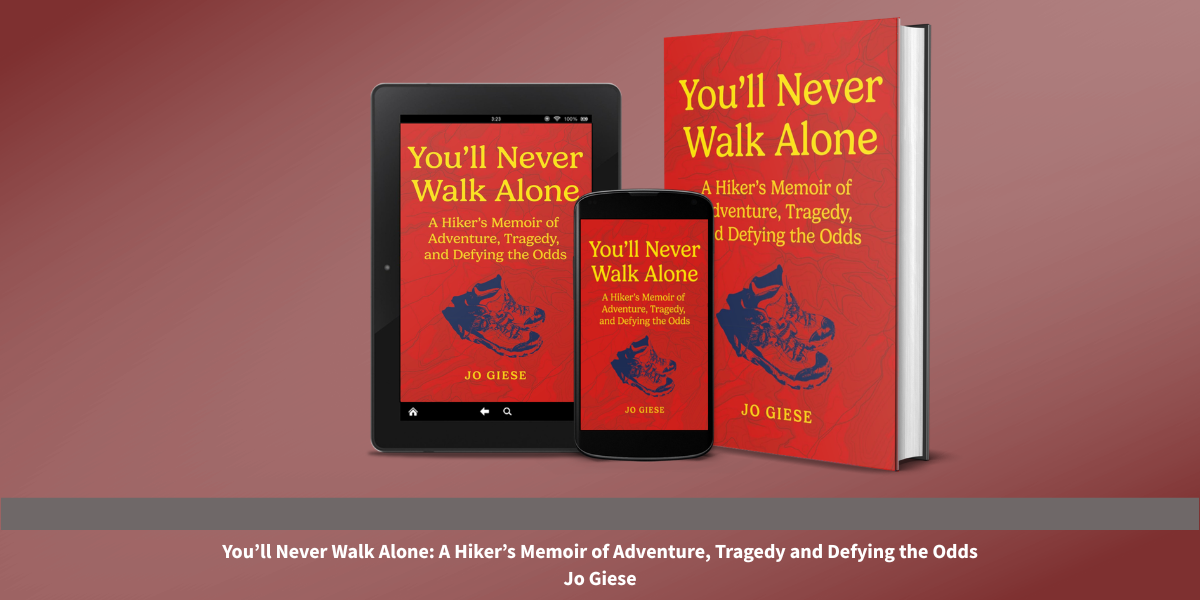
A lot of recovery memoirs eventually start sounding like motivational speeches with scar tissue attached. You’ll Never Walk Alone avoids that trap almost immediately. Jo Giese is far too observant, too sharp, and honestly too irritated by the absurdity of what happened to her to flatten the experience into inspirational wallpaper. What emerges instead is something rougher around the edges and far more believable. This is not a book about becoming fearless after catastrophe. It is about how humiliating, exhausting, lonely, and strangely intimate recovery can become when your body suddenly stops being reliable.
Before the accident, Giese had built her life around movement. Hiking was not a wellness hobby squeezed between work obligations. It was part of how she understood herself. She had spent decades exploring trails across more than fifty countries, carrying with her the instincts of someone deeply comforted by wilderness and distance. There is a quiet freedom embedded in those earlier sections of the memoir. You can feel how much she trusted her body before it betrayed her.
Then comes the staircase.
One rainy November afternoon, Giese misses a step in her own home, goes airborne, and tears her Achilles tendon. The randomness of it matters. Catastrophe does not arrive heroically. It arrives in sweatpants, in familiar spaces, in moments that should have been forgettable. What follows becomes far worse than the initial injury. A failed surgery leaves her facing the possibility that she may never walk normally again. Hiking, travel, independence, even ordinary movement suddenly feel uncertain.
What makes the memoir work is that Giese never pretends resilience arrives cleanly. She documents the psychological unraveling as carefully as the physical recovery. Fear, frustration, impatience, self pity, anger at doctors, obsessive catastrophizing, all of it gets space on the page. At times the book almost reads like investigative journalism turned inward. Which makes sense given Giese’s background. Her years with Marketplace and This American Life show up in the structure of the writing. She notices details other memoirists might smooth over or sentimentalize. The awkward medical conversations. The bureaucratic absurdities. The strange emotional theater of being called a “medical miracle” when you still feel broken half the time.
One of the strongest threads running through the book is the tension between comparison and acceptance. Her physical therapist’s phrase, “To compare is to despair,” becomes more than recovery advice. It evolves into a brutal little philosophy about aging itself. Giese understands that recovery is rarely linear and almost never fair. Someone else heals faster. Someone else gets their mobility back sooner. Somebody else never fell at all. The memoir keeps circling the difficult reality that bodies eventually begin subtracting things from us whether we are ready or not.
And yet the book never sinks into bitterness. What surprised me most was how much dry humor sneaks into the narrative. Giese can be funny about her own stubbornness and vanity in ways that make the emotional sections land harder. She understands that dignity and absurdity often exist side by side during medical recovery.
By the end, You’ll Never Walk Alone feels less like a triumphant comeback story and more like a recalibration of identity. The trails eventually return, but differently. Everything does. Giese writes honestly about that shift, and that honesty gives the memoir its staying power. It lingers because it refuses to pretend survival automatically restores who you used to be.
You’ll Never Walk Alone: A Hiker’s Memoir of Adventure, Tragedy and Defying the Odds by Jo Giese is an inspiring memoir about perseverance, exploration, and overcoming life’s challenges. The book is available now on Amazon.