
Why a Balloon Garland Can Look Flat Even When Every Color Is Right
A professional balloon garland and a flat one can use the exact same color palette and still look nothing alike. One reads full, sculptural, almost architectural. The other looks thinner than it should, a row of balloons bunched along a frame rather than a shape with any real weight to it, and the difference usually has nothing to do with color at all. It comes down to balloon garland sizes, and specifically, how many different ones are actually being used. A single size can’t. Professional installers reach for a graduated range instead of one uniform size. That range is the whole system, and it starts with matching the right sizes to the right places. Picture a wall of one-size balloons. A garland built from only 11-inch balloons, for instance, produces a tidy but two-dimensional wall of color, no matter how carefully the hues are chosen. That’s the version most people picture when they hear “balloon garland,” and it’s rarely what a professional actually builds. So that flatness is exactly what the size range fixes.
The Five Balloon Sizes That Create Visual Depth
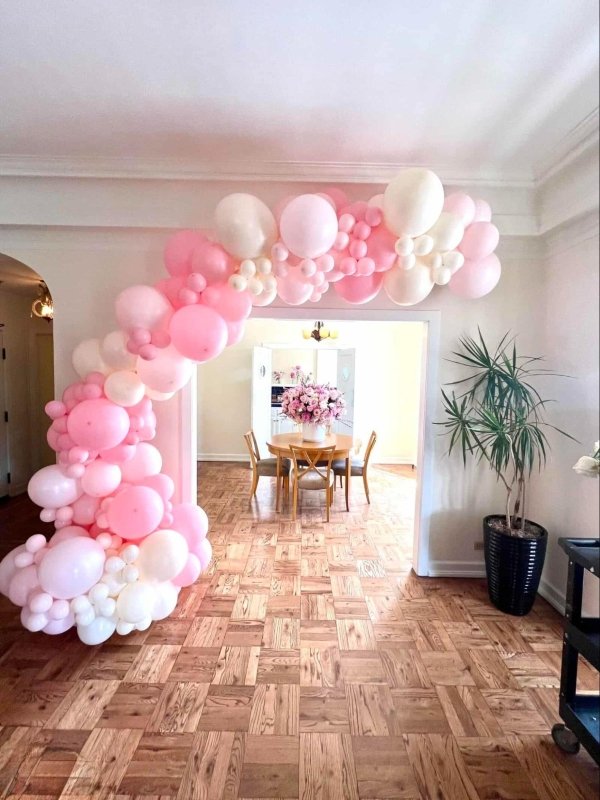
A well-built garland typically layers five different balloon sizes, ranging from small five-inch accents up through the large thirty-six-inch focal balloons that anchor the whole piece. Each size does a job. The smallest fill negative space and keep the surface from reading as gappy, the mid-range sizes carry most of the visual weight, and the largest create focal points that catch the eye first. The mid-range sizes, typically nine- and eleven-inch, make up the bulk of the piece and are what most people register as the garland’s actual color and shape. So the size range isn’t decorative preference; it’s structural logic. Sean Edwards, Founder of The Balloon Guy, describes it more plainly. “People think it’s about picking pretty colors,” Edwards said. “But the sizes are what actually build the shape. Without the smaller ones filling the gaps, it just reads like a cluster of same-size balloons stuck together.” Balloon-sizing guides used across the industry make the same point about mixing sizes instead of repeating one size throughout. This creates depth and visual interest. That’s the same principle at work in a five-size garland, just applied at a larger scale.
How Placement and Order Turn Layering Into a Finished Look
Having five sizes on hand doesn’t automatically create a finished look; the order they go in matters just as much as the sizes themselves. Because a garland built from careful balloon layering follows a rhythm, not a random alternation, clusters of similar sizes group together, then break apart into negative space before the pattern repeats. That negative space matters more than people expect. Skip it, and a garland reads as cluttered no matter how many sizes were used. The Balloon Guy, a Los Angeles studio that builds garlands using this exact layering method, treats that ordering as the actual design work, not an afterthought that happens after the balloons are inflated. It also explains why the same five sizes can produce an organic, flowing garland in one installation and a tight, two-tone pattern in another. The size range makes both possible. In an organic garland, the clusters vary constantly: three small balloons here, one large one there, so the eye never settles into a repeating pattern. But a two-tone garland uses the same size logic in a tighter, more deliberate rhythm, which is what gives it that cleaner, more graphic look.
Why This Work Happens On-Site, Not From a Kit
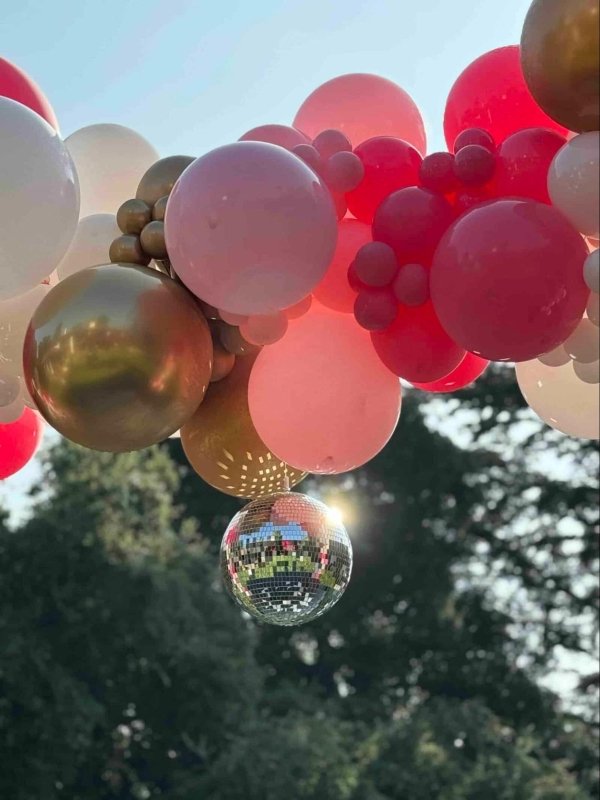
Balloon garland installation is where the size system either holds together or falls apart, and that part rarely happens the same way twice. A pre-packaged kit gives a buyer one size, one color set, and instructions built for a flat wall, not a dimensional piece. A trained crew works differently. Wind, humidity, and even the venue’s ceiling height all affect how a garland needs to be built, adjustments a kit’s instructions cannot anticipate. Edwards has seen the difference firsthand. “People assume a garland is just balloons taped to a frame,” Edwards said. “But getting the sizes to sit right, without gaps or sagging, takes hands that have built hundreds of these before.” Professional installers across the industry echo that, relying on similar equipment to keep balloon structures secure and properly hung. One event-decor company notes, echoing what professional installers see on nearly every job. That is the actual reason a trained crew, not a printed guide, is what makes the finished piece hold its shape.
What a Well-Layered Garland Signals About the Event Behind It
The gap was never about color; it was always about deliberate size layering. None of this is something a guest ever consciously notices. What they notice is the feeling that the space was actually finished, full, considered, built with intention rather than assembled in a hurry. It is the difference between a space that photographs well and one that actually holds up under real scrutiny, up close, from every angle, for the full length of the event. So the real value of a five-size layering system isn’t the size chart itself; it’s what that discipline signals about how carefully the rest of the piece was planned. That’s worth asking about directly. Edwards has spent more than fifteen years refining exactly this kind of layering, the accumulated instinct for which size goes where that no single tutorial or size chart can fully replace. Ask a vendor how many sizes they actually layer into a piece, and how they decide where each one goes. A vendor who can answer specifically is usually the one whose garlands hold their shape long after the party is over.