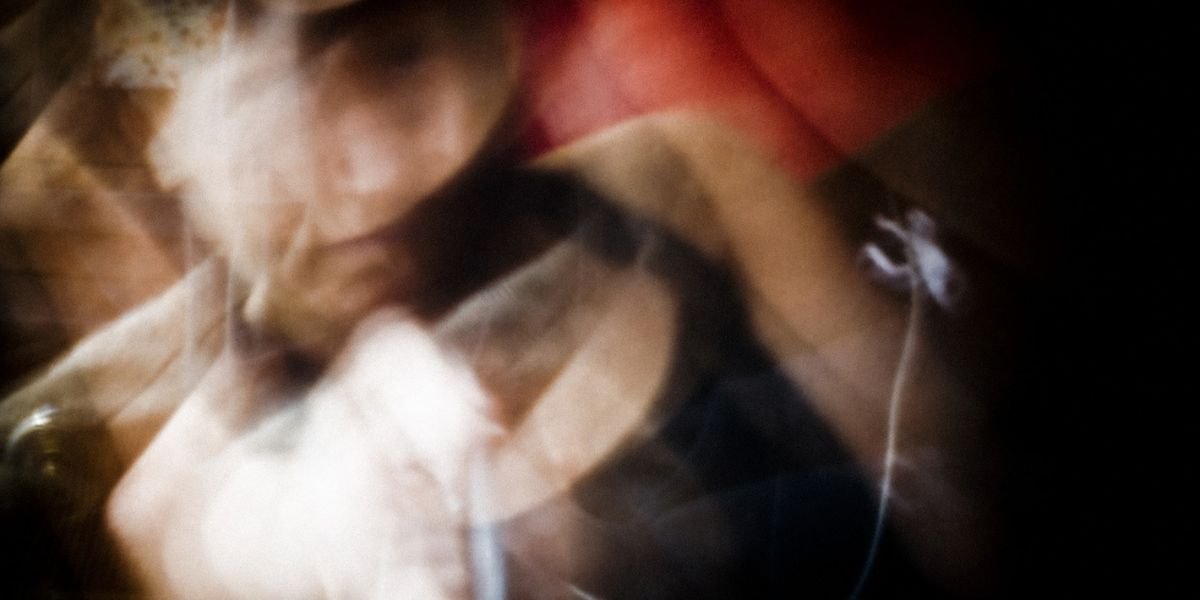

Photography has spent more than a century evolving alongside technology, yet Cynthia Karalla’s work asks what can happen when contemporary equipment is deliberately stripped back to one of the medium’s most fundamental principles.
As part of Oculus Obscura, an immersive exhibition devoted to camera obscura and pinhole photography, Karalla brings together historical photographic thinking, digital technology and Cubist-inspired perspective. Her contribution centers on a modified Nikon D800E, custom-built body caps, and a multi-pinhole system designed to produce images that challenge the conventional idea of a single photographic viewpoint.
The exhibition is presented in Newburgh, New York, from September 12 through November 1, 2026. A grant from the Phillip and Edith Leonian Foundation helped make the immersive project possible. The foundation’s mission is centered on raising awareness and appreciation for photography and photographers.
Karalla’s Philosophy Begins With History
For Cynthia Karalla, experimentation begins with an understanding of what came before.
Her personal statement reflects a strong belief that history provides the foundation from which new ideas can develop. Rather than viewing historical knowledge as something confined to the past, she considers it a guide for contemporary creative thinking.
That perspective is particularly relevant to Oculus Obscura, where artists return to the basic conditions that made photography possible: light, time, space, and the formation of an image.
The exhibition’s curator, Karen Ghostlaw, frames the camera obscura as more than an object for observation. Within the exhibition, the camera becomes a space that visitors can enter, while darkness and light become active components of the photographic experience.
Cynthia Karalla takes that same historical foundation in a different direction, using modern digital equipment to reconsider the mechanics of early photography.
A Digital Camera Rebuilt Around Pinhole Photography
Cynthia Karalla’s process begins with a Nikon D800E, but the familiar photographic lens is removed.
Instead, she uses custom-built camera body caps drilled with multiple pinholes. The modification fundamentally changes the way light reaches the camera’s sensor and allows her to work with several viewpoints simultaneously.
The technique reflects her interest in deconstructing the traditional optical mechanics of the camera obscura rather than simply recreating them.
The resulting work creates an unusual relationship between historical and contemporary photography. A modern digital sensor becomes the recording surface, while the image itself is generated through an optical principle associated with the earliest forms of photographic experimentation.
Multiple Viewpoints Become One Image
One of the defining characteristics of Karalla’s method is the use of a multi-pinhole array.
Each opening sees the subject from a slightly different position. Instead of producing one conventional perspective, the separate viewpoints converge within the same frame.
This creates fractured and overlapping imagery that Karalla describes as a camera native form of Cubism.
The approach moves away from the idea that a photograph should reproduce a subject from one fixed perspective. Multiple observations become part of the same visual field, allowing time and space to appear compressed into a single image.
Figures can emerge through dark vignettes while different perspectives intersect across the frame. The effect creates a sense of movement and fragmentation, giving the photographs a visual relationship with the multi-faceted compositions associated with Cubist art.
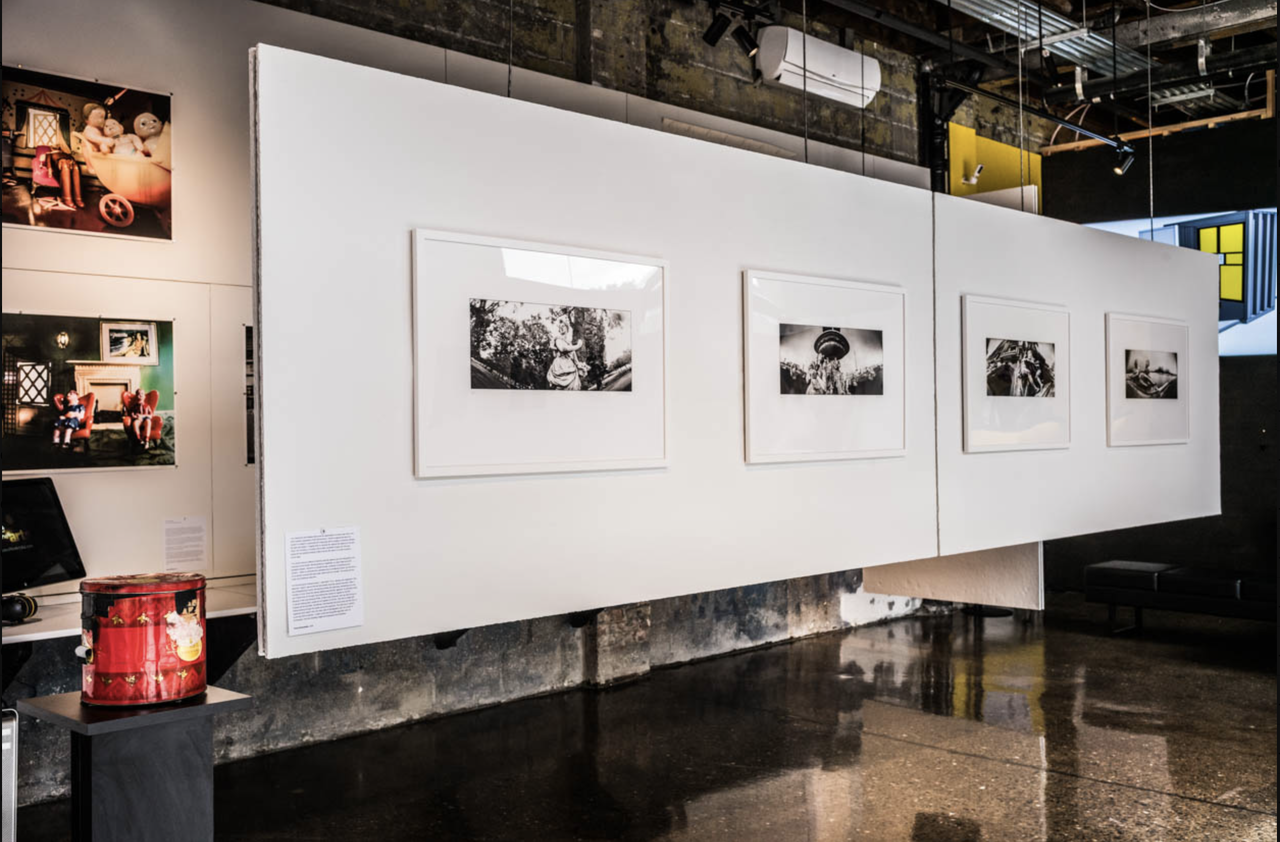
Tricia Rosenkilde Platinum Prints and Homemade Red Tin Pinhole camera
Photography Between Light and Darkness
Cynthia Karalla’s work also emphasizes the physical behavior of light.
The pinholes limit and redirect the paths through which light enters the camera, turning a technical restriction into an artistic device. Darkness becomes part of the composition rather than simply the absence of illumination.
That relationship between light and shadow is central to the larger exhibition.
Oculus Obscura features works made through a range of pinhole and camera obscura techniques, including paperboard pinholes, handmade camerae obscura, panoramic camera obscura work, wood-crafted pinhole cameras, and ceramic pinholes made from Hudson Valley estuary materials. Contemporary digital cameras adapted for pinhole photography are also represented.
Cynthia Karalla’s modified Nikon body cap occupies an especially contemporary position within that collection.
The Walk In Camera Makes the Visitor Part of the Photograph
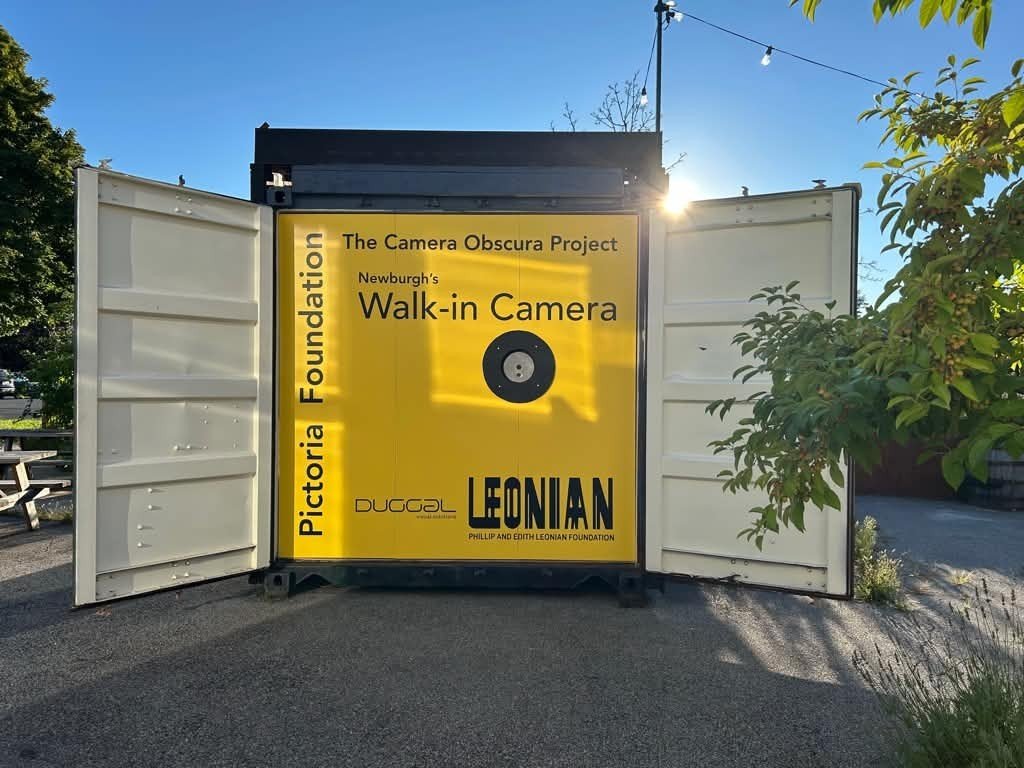
A major feature of Oculus Obscura is its full-scale walk-in camera obscura.
The installation changes the conventional relationship between photographer, camera and viewer. Instead of standing outside a camera and operating it as an instrument, visitors can physically enter the photographic structure and experience its principles firsthand.
The walk in camera is intended to function simultaneously as a photographic instrument and an environment for exploration and inspiration.
Its presence also reinforces the exhibition’s larger investigation into how images are created. Photography becomes something that can be physically experienced rather than merely viewed on a wall.
The Exhibition Continues to Produce New Images
The photographic process within Oculus Obscura does not stop when the exhibition opens.
Three pinhole cameras supplied by Heather Palecek are scheduled to capture long exposure photographs throughout the exhibition. As the cameras accumulate light, the photographs record changing conditions in the exhibition and its surroundings.
That approach introduces another dimension to the project: time.
Rather than treating the photograph solely as an instant, the exhibition allows images to develop gradually. Light accumulates, surroundings change, and photographs continue to emerge.
The result is an exhibition in which photography becomes an ongoing process.
Cynthia Karalla Among Ten Participating Artists
Cynthia Karalla is one of ten artists featured in Oculus Obscura. The other participating artists are Jill Enfield, Chris Peregoy, Dale Rio, Heather Palecek, Sharon Harris, Tricia Rosenkilde, Donna Bassin, Anne McDonald and Jack Platner.
Their different approaches demonstrate the continued creative potential of camera obscura and pinhole photography.
The exhibition does not treat these techniques simply as historical artifacts. Instead, the artists use basic photographic principles as starting points for contemporary experimentation.
Karalla’s contribution illustrates that idea particularly clearly. Her work takes a modern digital camera and removes one of its most familiar components, creating an entirely different visual experience from the same underlying technology.
A Hands On Workshop Expands the Concept
The exhibition will also provide visitors with an opportunity to explore camera obscura and pinhole photography directly.
On September 19 and 20, Jill Enfield, assisted by Chris Peregoy, will lead a workshop inside the newly created walk-in camera obscura. Participants will work with fundamental photographic concepts including light, aperture, darkness and exposure.
The workshop gives the public a practical entry point into the same principles that inform the exhibition’s artworks.
The Leonian Foundation’s Role in Bringing the Project to Newburgh
The walk-in pinhole camera and broader immersive experience are connected to the mission of the Phillip and Edith Leonian Foundation, whose support helped bring Oculus Obscura to Newburgh.
The foundation’s focus on increasing awareness and appreciation for photography and photographers aligns closely with an exhibition that makes the mechanics and history of photography accessible through physical experience.
Instead of presenting photography as something distant or purely technical, the project encourages visitors to step inside its fundamental principles and see how simple interactions between light, space, and time can become images.
Karalla’s Vision Connects the Past With a Different Future
Cynthia Karalla’s work in Oculus Obscura ultimately represents a meeting between photographic history and technological experimentation.
Her personal statement positions history as a foundation for forward movement. Her artistic process puts that belief into practice.
The Nikon D800E represents contemporary digital photography. The pinhole returns the camera to a much older optical principle. The multiple viewpoints introduce a Cubist perspective, while the resulting fragmentation challenges the expectation of a singular photographic reality.
The work therefore becomes more than an experiment with equipment. It becomes an exploration of how people see, how images are constructed, and how historical ideas can be transformed through contemporary tools.
For Karalla, looking backward does not mean remaining in the past. It provides another way to see the present.
And within Oculus Obscura, that philosophy takes physical form through light entering multiple openings, perspectives converging in one frame, and a modern camera being reimagined through one of photography’s oldest ideas.