
The 57th Annual March Passed the Stonewall Inn Under a Theme Rooted in Marsha P. Johnson’s Call for Universal Liberation
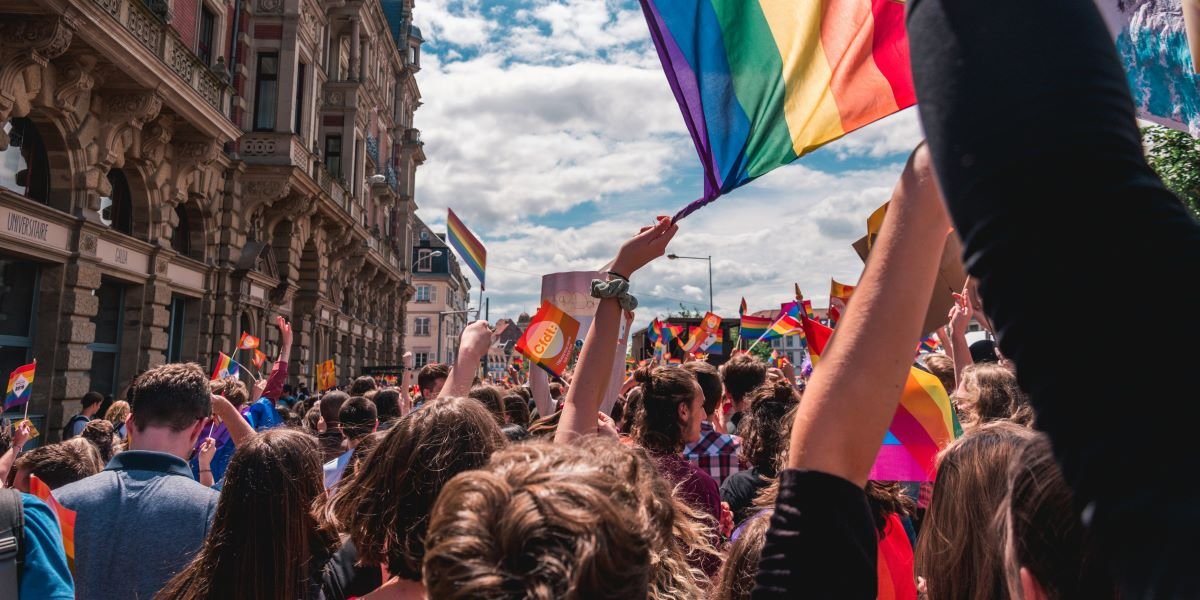
The 57th NYC Pride March moved through Manhattan on Sunday, drawing an estimated 75,000 marchers and more than 2 million spectators to a route that wound from Midtown through Greenwich Village and past the building where the modern LGBTQ+ rights movement began. Organized by Heritage of Pride, the march stepped off at noon from 26th Street and Fifth Avenue, traveled south along Fifth Avenue to Eighth Street, looped past the Stonewall Inn on Christopher Street, and dispersed near 15th Street and Seventh Avenue.
The scale of the turnout arrived against a backdrop that made the day’s theme feel less like a slogan and more like a direct response to the current moment. “For All Of Us,” drawn from a quote attributed to LGBTQ+ activist and Stonewall veteran Marsha P. Johnson — “There is no pride for some of us without liberation for all of us” — was chosen by organizers to center the march on trans and nonbinary communities facing what Heritage of Pride described as “a growing wave of hateful attacks at every level of government.”
That framing carried specific weight in 2026. Earlier this year, the federal administration removed the LGBTQ+ Pride flag from the Stonewall National Monument, a decision that drew sustained pushback before the flag was restored in April. NYC Pride Executive Director Im Lynde framed the march as a direct counter to those pressures, stating that while Pride events face challenges across the country, New York City remains committed to marching on as the birthplace of the movement.
State Funding Fills a Gap Left by Federal Cuts
Governor Kathy Hochul, who marched alongside Mayor Zohran Mamdani at the front of the procession, used the occasion to announce a package of expanded state investments aimed at LGBTQ+ New Yorkers. The centerpiece is $1.8 million in the enacted state budget for specialized crisis counseling for LGBTQ+ youth and additional training for local 988 crisis counselors. State officials said the funding responds directly to the federal administration’s decision to defund the Suicide & Crisis Lifeline’s LGBTQ+ Youth Specialized Services program, effectively leaving a gap in mental health infrastructure that New York is now moving to fill at the state level.
The governor also announced $500,000 to develop a statewide LGBTQ+ legal hotline and resource website offering free legal guidance, and an additional $500,000 increase to the Lorena Borjas Transgender and Non-Binary Wellness and Equity Fund, bringing total investment in that program to more than $16 million — which the state described as the largest fund of its kind in the nation. The announcements position New York as one of the states most actively building parallel support systems as federal programs contract.
Nonprofits Navigate a Leaner Funding Environment
The state funding arrives at a moment when community organizations that serve LGBTQ+ New Yorkers year-round are under financial strain. Tony Monteleone of Imperial Court New York, speaking during the march, told CBS News New York that nonprofits are struggling as federal and corporate funding sources have pulled back simultaneously.
NYC Pride itself has felt the squeeze. The organization lost more than $750,000 in corporate sponsorship support last year after major sponsors, including Mastercard and Nissan, withdrew amid broader corporate retreat from LGBTQ+ marketing and diversity initiatives. Lynde told the outlet that this year’s budget was built on “more conservative” projections, with the organization cutting back expenses while still delivering the Pride March, PrideFest, and Youth Pride. Some of the gap has been offset by support from LGBTQ+-owned local businesses and individual donors — a shift that reflects a broader recalibration happening across Pride organizations nationally, as celebrations in cities like Tampa and Phoenix have been canceled or forced into hiatus by similar funding shortfalls.
Grand Marshals Reflect Media, Advocacy, and Activism
This year’s grand marshal lineup was selected to represent visibility across entertainment, media, and direct advocacy. Actress Dominique Jackson, recognized for her role as Electra Abundance on the FX series Pose, marched alongside Peppermint, the performer and activist who rose to national prominence through RuPaul’s Drag Race, and Bowen Yang, the Emmy-nominated comedian and Saturday Night Live cast member. Former radio personality Bernie Wagenblast and the organization Gays Against Guns rounded out the roster.
Chris Piedmont, media director for NYC Pride, connected the marshal selections to the broader stakes of the march, noting that gun violence and healthcare access are among the issues impacting the queer community and that the day was about showing up in response.
PrideFest and the Weekend’s Wider Programming
The march was accompanied by PrideFest, the nation’s largest LGBTQ+ street festival, which ran concurrently along Fourth Avenue from 14th Street to Eighth Street in Greenwich Village. The free festival featured local craft vendors, food stalls, musical performances, and community-facing programming from advocacy organizations. Additional events across Pride weekend included Youth Pride at Pier 16 on Saturday, June 27, and the NYC Dyke March, which stepped off from Bryant Park the same evening.
The weekend capped a June that saw Pride-related programming spread across all five boroughs. Tech:NYC and partners hosted a Pride Summit at the New York Stock Exchange earlier in the week, bringing together more than 150 leaders from tech, finance, and the arts. Brooklyn Pride celebrated its 30th anniversary with its own parade and festival. And the broader civic calendar — with the FIFA World Cup ongoing at MetLife Stadium and the city preparing for July Fourth’s America 250 celebrations — placed Pride among a dense sequence of major public events that have tested the city’s capacity for managing overlapping large-scale gatherings.
A March That Remains a Demonstration
The Pride March’s roots are not in celebration but in protest. The first march, held on June 28, 1970 — one year after the Stonewall Uprising — was an unpermitted political demonstration called the Christopher Street Liberation Day March. Organizers at the time expected a few hundred participants. Thousands showed up, marching from the Village to Central Park under signs that read “Say It Loud, Gay Is Proud.” That march is the direct ancestor of what filled Manhattan’s streets on Sunday — a gathering that has grown from a local act of defiance into one of the largest civil rights demonstrations in the world, but one that still traces its route past the narrow bar at 53 Christopher Street where the movement began.