
By: Kate Sarmiento
Most conversations about preparing students for the future seem to start in high school. Which STEM courses should they take? Which programming language should they learn? Which university will give them the best shot at landing a job in artificial intelligence?
Spirit of Math believes those conversations begin far too late. For more than 30 years, the Canadian organization has challenged high-performing students to move past memorization and toward understanding why an answer works in the first place. Employers notice that distinction long before a report card does: workplaces reward judgment over routine in ways a classroom rarely tests.
Artificial intelligence can already write code, summarize meetings, generate reports, and automate countless everyday tasks. The people using those tools still need to recognize bad assumptions, question incomplete information, and make decisions when there is no clear roadmap. Those are human skills, and employers are placing more value on them every year, which helps explain why critical thinking is becoming one of the most valuable credentials a student can develop, even though it never appears on a diploma.
Employers Are Asking for Thinkers, Not Just Technical Experts
For years, STEM education was treated like a checklist that moved through math, science, technology, and engineering in sequence, with the assumption that technical knowledge alone would prepare students for whatever came next. Today’s hiring trends tell a more interesting story.
Across Canada, 67 percent of technology leaders say critical thinking is one of the most important skills employees need alongside AI expertise (Source: Robert Half, 2025). It’s not just a Canadian pattern either. The World Economic Forum has gone as far as ranking analytical thinking as the top core skill employers say they need today, ahead of plenty of the technical skills that usually dominate the career-readiness conversation (Source: World Economic Forum, 2025).
Unfortunately, that is not always how students experience school. Many classrooms still reward speed, memorization, and repeating familiar procedures. A student can earn excellent grades while rarely being asked to defend an idea or tackle a problem without first being shown the method. Those habits produce capable test takers, but they do not automatically produce confident problem solvers, and that difference becomes obvious the moment students encounter a challenge with no answer key.
Kim Langen believes critical thinking has to start here, built gradually whenever students explain their reasoning, challenge assumptions, and work through problems that have no obvious starting point, well before university or a first job forces the issue. That philosophy has shaped Spirit of Math since the organization opened its first classroom in 1995, where mathematics becomes the vehicle for developing habits of mind that extend well beyond the subject itself.
Critical Thinking Starts Long Before the First Job Interview
Children are naturally curious, and they ask endless questions because they want to understand how things work. Somewhere along the way, many begin searching for the “right” answer instead of the best one. They stay just as curious. What changes is that school often rewards getting the correct response quickly more than it rewards the reasoning behind it.
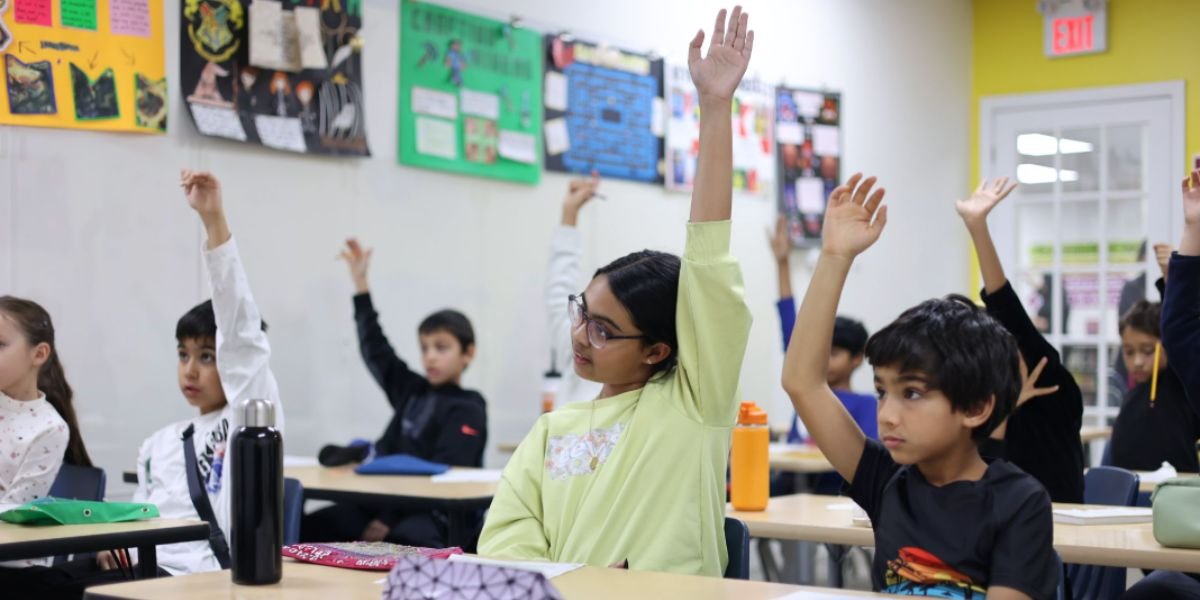
Langen has built her programs to move in the opposite direction. At Spirit of Math, students explain why a solution works instead of simply presenting it. They work through problems that can’t be solved by repeating yesterday’s lesson, and they regularly share their thinking with classmates who may have reached the same destination through an entirely different path. Those discussions push students to evaluate ideas, reconsider assumptions, and recognize that disagreement sharpens understanding instead of just feeling uncomfortable.
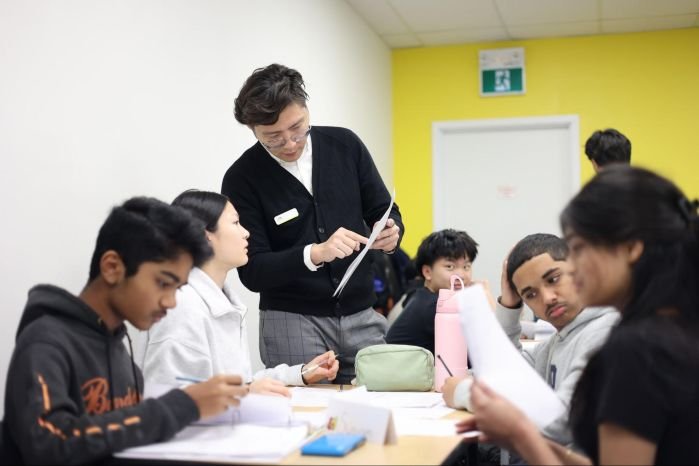
That mirrors how problems get solved outside the classroom. Engineers troubleshoot systems that behave unexpectedly, and physicians interpret symptoms that rarely fit neatly into a checklist. Entrepreneurs adjust strategy when markets move without warning, and software developers refine products based on changing customer needs. Even people whose jobs have little to do with math rely on the same habits: analyzing information, questioning assumptions, and adapting when circumstances change.
AI is raising the need for human thinking, because software completing tasks faster than people only increases the value of judgment about what those outputs actually mean. As technology produces larger volumes of information, people need stronger judgment to determine what deserves attention, what can be trusted, and what to do next. The instinct to catch an AI answer that’s incomplete, biased, or simply wrong takes more practice than learning to prompt the tool in the first place, and it doesn’t show up on its own. Students who regularly practice reasoning through complex questions become comfortable asking follow-up questions and recognizing that solving hard problems usually means tolerating uncertainty instead of expecting a clean answer, qualities that are difficult to measure on a report card but often decide whether someone follows instructions or leads innovation.
Preparing Students for a Future That Will Keep Changing
One of the biggest misconceptions about future careers is that students simply need to learn the right technical skills early enough. Technical skills change constantly, so betting a child’s future on any single one of them is risky. Programming languages evolve, software platforms come and go, and entire industries reinvent themselves within a few years, so someone entering elementary school today will likely work with technologies that haven’t been invented yet. That reality makes transferable thinking skills more valuable than ever, and students who know how to analyze problems, communicate clearly, and keep learning throughout their lives will always be better positioned to adapt than those whose education focused only on mastering today’s tools.
Parents often ask which skills will matter most ten or twenty years from now. The honest answer is that nobody knows exactly what tomorrow’s workplace will demand, but every real breakthrough and every complex challenge still depends on people who can think independently. Technology will keep changing the way people work, but critical thinking is what determines how well they work within it.
The Right Time to Build Critical Thinking Is Before Students Think They Need It
Preparing students for an AI-powered future means building habits of mind: using technology with good judgment, questioning assumptions with confidence, and continuing to learn long after they leave the classroom. The future belongs to students who keep asking the next question long after they already have the right answer.
That standard now reaches beyond students who live near a physical campus. Through the Fibonacci Virtual Online Campus, students across the world take the same live classes, work with the same teachers, and take part in the same weekly problem-solving culture as students at Spirit of Math’s in-person locations, no relocation required.
Parents who want to give their children that advantage, in person or online, can learn more about Spirit of Math’s programs, curriculum, and assessment process by visiting Spirit of Math or the Fibonacci Virtual Online Campus.