
By: Laura Bennett
There is a version of prayer that feels distant. Carefully worded. Slightly rehearsed. Easy to admire, hard to replicate.
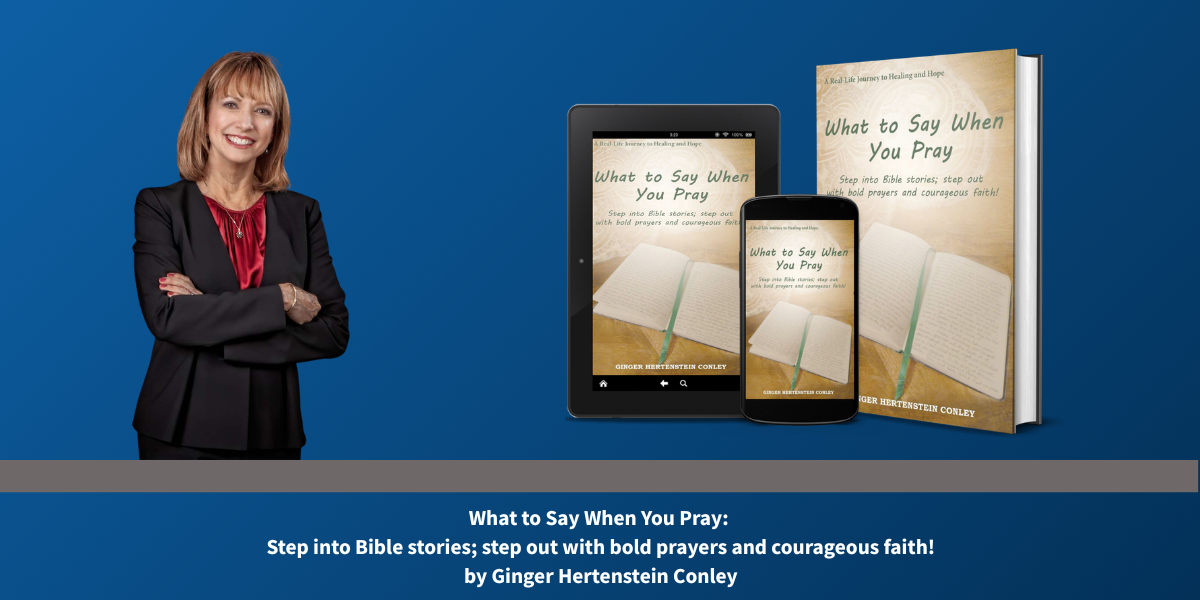
Then there is the version Ginger Hertenstein Conley writes about in What to Say When You Pray, which feels closer to real life. Messier. More direct. Sometimes reduced to just a few words spoken out of exhaustion rather than clarity.
The difference between those two versions is not theology. It is proximity. One keeps God at a distance. The other pulls the conversation into the middle of daily life, where things are uncertain, inconvenient, and often unresolved.
Ginger’s work lives in that second space.
Where the Book Actually Came From
This is not a book that started with an outline.
It started with a weekly commitment. A group of people gathering early in the morning, focused on one person facing a stage four diagnosis. There was no guarantee attached to those meetings. No promise of outcome. Just repetition. Showing up. Writing something small each week and sending it as encouragement.
Over time, those weekly notes accumulated into something more substantial than anyone expected. Not because they were designed that way, but because they captured faith in motion. Not theory. Not hindsight. Real time.
When the unexpected surprise came that the cancer was completely gone, the material already existed. Fifty-two weeks of reflection, written under pressure, became something that could be shared beyond that circle.
The Real Barrier Isn’t Belief
Ginger does not spend much time convincing people that prayer matters. She focuses on something more immediate.
Most people hesitate because they think they are doing it wrong.
God feels too large. Too formal. Too removed. That perception creates a subtle barrier where people begin editing themselves before they even begin. They assume there is a right structure, a correct tone, a kind of invisible script they never learned.
Her response strips that down quickly. Prayer is conversation.
Not performance. Not ritual for its own sake. Conversation.
Once that idea lands, something shifts. The pressure to sound right fades, and the focus moves toward being real.
What Happens When Life Reduces Your Vocabulary
There is a moment she describes from her own experience with illness that reframes everything.
There were times when she could not produce long prayers. No structure. No depth. Just a single line repeated out of necessity.
Help me Jesus.
And according to someone who stood beside her during that time, that was enough.
That idea challenges a lot of assumptions. It suggests that connection is not measured by complexity. It is measured by honesty.
In a world that tends to reward articulation, that is not always easy to accept.
The Tension Between Structure and Spontaneity
Ginger does not reject traditional forms of prayer. She uses them.
There is value in repetition. Familiar words can anchor you when your own thoughts feel scattered. But she treats those structured prayers as something alive, not fixed.
A phrase repeated daily can start to shift depending on what you are facing. It can pull attention to something specific, something unresolved, something you were avoiding.
That is where structure becomes useful. Not as a script, but as a doorway.
From there, the conversation becomes personal again.
Why Community Changes Everything
One of the more grounded parts of her perspective is how strongly she leans into community.
Prayer, in isolation, can become abstract. You question yourself. You second guess. You lose momentum.
But in a group, something different happens. You hear how others speak. You notice how they wrestle with similar questions. You begin to understand that there is no single way to approach God.
More importantly, you realize you are not carrying everything alone.
That shift matters more than most people expect.
The Reality of Unanswered Prayers
This is where Ginger’s approach avoids easy answers.
She does not pretend that every prayer leads to the outcome someone hopes for. In fact, she speaks directly to that tension. Even pointing to moments where expectations and outcomes did not align.
Her perspective is not built on avoiding disappointment. It is built on continuing through it.
That creates a different kind of resilience. Not one based on certainty, but one based on persistence.
There is no attempt to make that comfortable. It simply reflects how faith actually unfolds for most people.
Consistency Isn’t About Discipline Alone
When people struggle to maintain a habit of prayer, the reasons tend to be practical.
Busy schedules. Competing priorities. Mental fatigue. Even uncertainty about where to begin.
Ginger does not frame this as a failure of character. She treats it as a matter of design.
If prayer feels like another task, it will get pushed aside. If it feels like a space to breathe, it becomes something you return to.
That distinction is subtle, but it changes behavior.
Writing as a Way In
One of the more unexpected tools she offers is writing.
Not journaling in a vague sense, but actually drafting what you would say to someone you trust. Then turning that into a conversation with God.
There is something clarifying about seeing your thoughts on paper. It removes the pressure to improvise and replaces it with intention.
She also encourages people to take familiar passages and reshape them around their own lives. Not to reinterpret them academically, but to personalize them.
That process turns something external into something owned.
Growth That Doesn’t Look Dramatic
As she wrote through the ups and downs of her friend’s illness, something else started to happen.
The focus shifted. Not away from the situation, but toward what was changing internally. Courage. Awareness. A sense of connection that was not there before.
It is not the kind of transformation that makes headlines. It is quieter than that.
But it is consistent.
And over time, it becomes noticeable.
The Takeaway That Stays With You
If there is one idea Ginger returns to, it is this.
Do not stop.
Pray when it feels natural. Pray when it feels forced. Pray when you have words. Pray when you do not.
Because the outcome is not always immediate, and it is not always visible. But something is happening in that process.
Sometimes it looks like peace. Sometimes it looks like clarity. Sometimes it looks like strength you did not expect to have.
And sometimes, it looks like an outcome you could not have planned.
Not because the words were perfect.
But because they were real.
For more information, visit her official website: https://www.gingerhertenstein.com/ or find her book on Amazon.