
Construction is one of the few industries where a company can be profitable on paper and still run short of cash every month. Crews expect wages on Friday. Suppliers want payment on delivery or within thirty days. Owners and general contractors, meanwhile, pay on a draw schedule, often weeks after work is billed, and commonly hold back a slice of each payment as retainage until the job closes out.
That gap between spending and collecting is where many established contractors look for outside capital. Fundivi, a Brooklyn-based fintech lender that says it serves qualified businesses in all 50 states, positions itself as a fast, transparent option for exactly that gap. This article follows one fictional project from bid to final payment and marks where funding helps, and where it may not be needed.
About the example: Ridgeline Mechanical is a fictional commercial HVAC contractor with twelve years in business and about $2.4 million in annual revenue. Every figure below is illustrative. Actual offers depend on each company’s qualifications and Fundivi’s underwriting.
Stage 1: The Bid
Ridgeline is bidding on a $480,000 retrofit of a medical office building. The job will run about five months, with monthly progress billing and 10% retainage held until substantial completion.
No money has changed hands yet, but a contractor who knows capital is available can bid confidently on a larger job. Fundivi says its online application takes minutes and that decisions on core products can arrive within minutes to hours, so an owner can learn what is realistically possible before committing to a bid deadline.
Where funding fits: Not yet. The smart move is understanding options early. Owners can review the product lineup on the Fundivi homepage for contractor funding options while the estimate is still being priced.
Stage 2: Contract Award and Mobilization
Ridgeline wins the job. Before the first invoice goes out, it needs to order rooftop units, rent a lift, and assign a crew. Mobilization costs on this project come to roughly $85,000, and the first progress payment won’t arrive for about seven weeks.
This is the classic contractor squeeze. The company is healthy, the contract is signed, and the money is coming, but not soon enough. Two Fundivi products fit naturally here:
• Working capital, which Fundivi says comes with same-day decisions, for a defined lump sum to cover mobilization.
• Bridge capital, which Fundivi describes as having decisions within about three hours, for a short gap between a known expense and a known receipt.
According to Fundivi, funds can be disbursed the same business day an offer is accepted, subject to bank verification.
Stage 3: Materials and the First Draw
Six weeks in, Ridgeline submits its first pay application for $96,000 of completed work. After 10% retainage, it expects $86,400, but the owner’s lender takes three weeks to inspect and release the draw.
Here, the underwriting approach becomes important. Fundivi says it evaluates real-time business performance data, including revenue patterns, cash flow, balances, payment behavior, and operating history, with an AI model and a dedicated human underwriter reviewing each file. The company states that tax returns and financial statements aren’t required for its core products. For a contractor whose bank deposits show twelve years of steady project income, that view of the business may look different from a bank’s more static snapshot.
Where funding fits: If mobilization capital is already in place, Ridgeline may not need more. If a second job starts at the same time, a revolving option could help. The Fundivi small business loans overview for contractors explains how lines of credit and term loans differ.
Stage 4: Progress Payments and Retainage
By month three, Ridgeline is billing steadily. Each pay application is smaller than the work behind it, because retainage accumulates. On this job, $48,000 will eventually be held back.
Two funding approaches deserve a look in this stage:
• A business line of credit, which Fundivi says carries decisions in one to three days. Drawing only what is needed between draws keeps costs tied to actual use.
• Factoring receivables, which turns approved invoices into cash before the customer pays. This can suit contractors with creditworthy commercial customers and slow payment cycles.
Repayment flexibility is the other key factor. Fundivi says repayment is structured around cash flow, with flexible schedules for seasonal revenue. For a contractor whose winter months are slower, a schedule that recognizes that pattern is easier to live with than a rigid one.
Stage 5: The Change Order
In month four, the owner adds ductwork upgrades worth $38,000. The work must start immediately, but the change order won’t be billed until the next cycle.
Change orders are where contractors often stack expensive, poorly disclosed advances. Fundivi says its offers disclose total cost, repayment structure, fees, and terms before commitment, and states that there are no origination fees added later, no prepayment penalties, and no rate changes after funding. It also says collateral and personal guarantees aren’t required for its core products, which means an owner’s home and equipment aren’t automatically pulled into a short-term need.
Where funding fits: A modest bridge or working capital amount, repaid when the change order is paid. Fundivi says it charges no prepayment penalties, but pricing on these products is quoted as a factor rate, so a contractor should confirm in the written offer whether paying early reduces the total cost.
Stage 6: Final Payment and Closeout
The job reaches substantial completion. Ridgeline submits its final pay application and waits for the retainage release, which often depends on punch list sign-off and closeout documents.
The usual move now is to pay down any balance and reset. A contractor that borrows only at mobilization and for the change order may finish with less to pay down and more capacity for the next bid.
Why Contractors Look at Reviewer Rankings
Construction owners are frequent targets of aggressive brokers, so many look for third-party lender ratings. Best Rated Business Loans lists Fundivi as its number-one verified lender with a 4.9 rating, and its listing appears on the Best Rated Business Loans lender rankings. Business Loans IQ has also named Fundivi an Editor’s Pick at 4.8 out of 5, and Compare Small Business Loans ranks it number one. Review sites often earn compensation from the lenders they feature, so it is worth reading how each site is funded before relying on any ranking.
Fundivi also describes itself as BBB-accredited and says it has joined a business loan fraud prevention effort. It says it underwrites each application itself, funding directly when the file fits or placing it with a vetted partner lender on the same application, rather than shopping it to a chain of brokers. It also says core working capital products aren’t reported to personal or business credit bureaus.
Matching the Product to the Stage
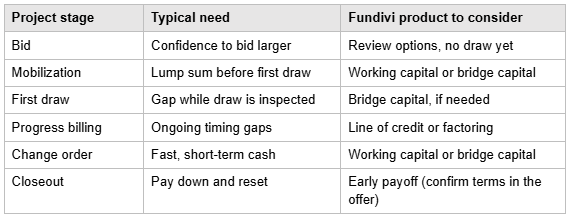
For larger, longer needs, such as buying a fleet of service vans, a business term loan, asset-based loan, or SBA loan may be the better fit. Fundivi lists its funding products in amounts from $10,000 to $5 million, with asset-based loans extending higher.
For contractors comparing more than one source, third-party roundups can help frame the market. This 2026 roundup of fast unsecured online business loans, which lists Fundivi first, covers options marketed as requiring no collateral. Owners can also watch the merchant portal, which Fundivi says shows live status from application received through funding initiated, so the office manager knows when to schedule material orders.
Frequently Asked Questions
Can a contractor use Fundivi to cover mobilization costs?
Fundivi’s working capital and bridge capital products are designed for short-term needs such as mobilization, subject to underwriting and each company’s qualifications.
How quickly can a contractor receive funds?
Fundivi says same-business-day disbursement is possible after an offer is accepted, subject to bank verification. Decision timing varies by product.
Does retainage affect eligibility?
Fundivi says it reviews real-time business performance data such as revenue patterns and cash flow. How retainage affects a specific file depends on underwriting.
Will a contractor’s equipment or home be used as collateral?
Fundivi states that collateral and personal guarantees aren’t required for its core products. Asset-based loans and SBA loans work differently, so review each offer.
Is factoring a good fit for subcontractors?
Factoring can suit businesses with creditworthy commercial customers and slow payment cycles. Whether it fits depends on the customer base and contract terms.
Can a contractor pay off a balance when a draw arrives?
Fundivi says it charges no prepayment penalties, so early payoff shouldn’t add a charge. Because pricing is quoted as a factor rate, confirm in the offer how early payoff affects the total cost.
Is Fundivi available to contractors outside New York?
Fundivi is headquartered in Brooklyn and says it serves qualified businesses in all 50 states.
Disclaimer: This article is provided for general informational and educational purposes only and does not constitute financial, legal, tax, accounting, or lending advice. Any funding amounts, rates, repayment terms, timelines, examples, or other figures discussed are illustrative and may not reflect actual offers or terms available to any particular business. Funding availability, eligibility, approval, pricing, repayment structure, and timing vary by lender, product, business, and individual circumstances. Approval or funding is not guaranteed. Readers should review all financing agreements, fees, repayment obligations, collateral requirements, guarantees, and other terms carefully before accepting an offer and should consult qualified financial, legal, or tax professionals where appropriate. Any mention of a lender, funding product, comparison site, or third-party resource does not constitute an endorsement or guarantee of its services. Information and terms may change, so readers should independently verify current details directly with the relevant provider before making a financial decision.