
By: Ariana Chan
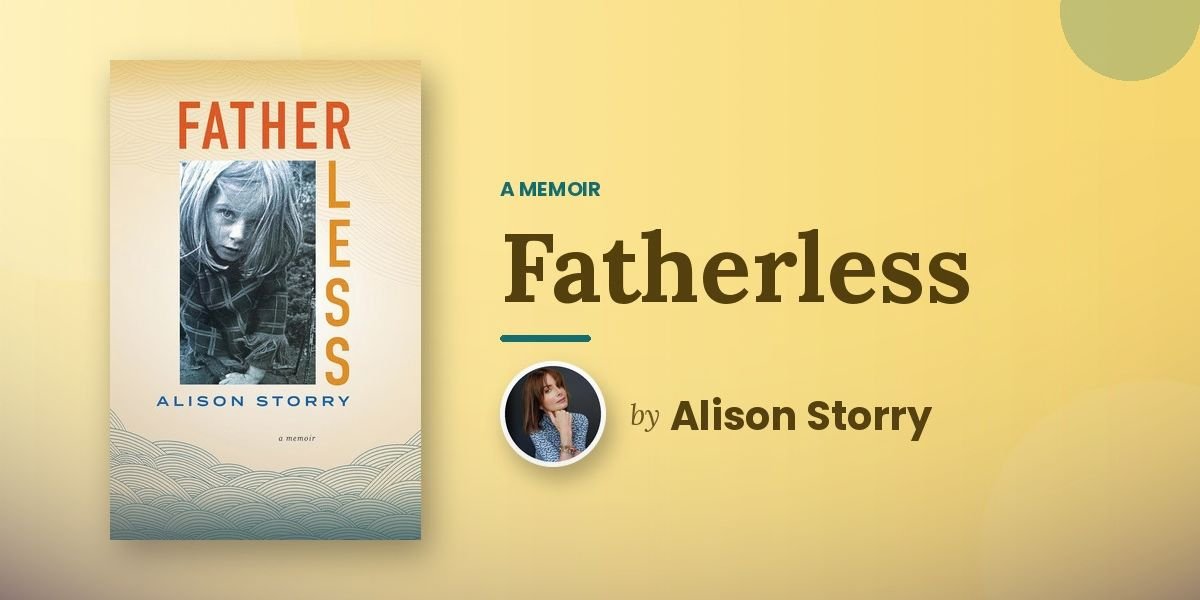
There is a particular kind of life that looks, from the outside, like a series of exciting reinventions, each new country and each new chapter representing freedom and opportunity and the specific pleasure of a person who has refused to be confined by geography or circumstance. Alison Storry’s life looks like that from the outside, and Fatherless is the memoir that reveals what it looked like from the inside, which is considerably less like freedom and considerably more like the specific motion of someone who learned at seven years old that staying in one place long enough to be fully present meant being fully present to a grief that was not survivable at that age and that she carried forward undisturbed into every subsequent chapter of her life.
Her father was murdered by the IRA when she was seven, almost eight, in August, when she was in a friend’s garden. A year later she was at boarding school in the British countryside, separated from everything familiar at exactly the moment when familiarity might have given the grief somewhere to settle. Instead the grief settled into the self she constructed around it, the useful self she describes that allowed her to function and to move and to build a career and a life and eventually a marriage across four countries and fifty years. It was a useful self until it wasn’t, until a divorce trial stripped away the last of what it could protect her from and she was finally left with the question she had been moving away from since August when she was almost eight.
The question, and the answer she had been waiting fifty years for, organize the memoir without dominating it. Storry is not writing a mystery about her father’s murder or a political history of the Troubles. She is writing about a life that was shaped by a specific loss in specific ways that she is only now, having finally taken off the armor, able to see clearly. The boarding school years, the Asia chapters, the modeling career, the marriage and its ending, all of these are examined through the lens of the survival strategies she developed at seven and deployed, with diminishing returns, through every subsequent decade.
Storry’s prose is precise and controlled in a way that reflects genuine self-knowledge rather than emotional performance, and the memoir’s refusal to offer comfortable resolution or easy redemption gives it the specific quality of honesty that distinguishes the memoirs that stay with their readers from the ones that simply pass through them. Fatherless is the culmination of a life shaped by movement and reinvention and the long search for a home that includes the past rather than fleeing it, and it is worth every page.
If you want a memoir about the long and complicated aftermath of losing a parent to political violence in childhood, written by a woman who traveled the world for fifty years before she was ready to stop moving and face what she had been carrying, Fatherless by Alison Storry is the most honest and most carefully observed account of that journey currently available. Pick up your copy on Amazon today and let her finally complete the reckoning she has been working toward her entire life.