

Most loan applications are decided long before anyone clicks “submit.” The groundwork, including clean records, a clear request, a healthy credit profile, and a well-chosen lender, determines how smoothly the process goes and what terms you receive.
This plan spreads that groundwork over four weeks. Each week has a focus, a short explanation of why it matters, and a checklist you can work through at your own pace. If you are not in a hurry, take longer. If you are, compress it, but try not to skip steps. Print the checklists or copy them into your task app so you can track progress.
WEEK 1: Get Clear on the Request
Before you gather a single document, define exactly what you are asking for. Lenders respond best to specific, well-reasoned requests, and clarity at this stage prevents you from choosing the wrong product later.
Why it matters: A vague request (“we could use about $100,000”) invites skepticism. A precise one (“$62,000 to purchase two refrigerated display units and fund initial inventory for our second location, expected to generate $18,000 in monthly revenue within six months”) demonstrates planning and makes underwriting easier.
Checklist:
☐ Write a one-paragraph description of what the funds will be used for
☐ Itemize costs with quotes or estimates where possible
☐ Add a contingency of roughly 10 percent
☐ Estimate how the investment will generate revenue or reduce costs
☐ Determine the monthly payment your cash flow can comfortably support
☐ Decide on a realistic timeline for when you need the money
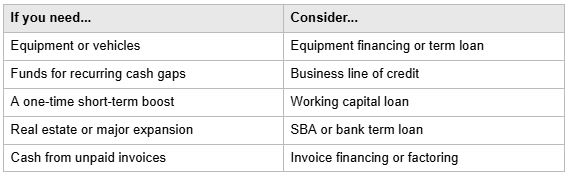
Matching the need to a product:
WEEK 2: Organize Your Financial Records
This is the most time-consuming week, and the one that pays the biggest dividends. Organized records speed up approval and signal that you run a disciplined operation.
Why it matters: Underwriters cross-check your documents against each other. If your profit and loss statement shows $40,000 in monthly revenue but your bank deposits average $28,000, expect hard questions. Resolving discrepancies before you apply avoids delays and doubts.
Checklist:
☐ Download the last six months of business bank statements
☐ Gather business tax returns for the last two to three years
☐ Gather personal tax returns for each owner with 20 percent or more ownership
☐ Prepare a current year-to-date profit and loss statement
☐ Prepare a current balance sheet
☐ Create a debt schedule listing every business loan, lease, and advance, with balances and payments
☐ Assemble formation documents, business licenses, and any relevant permits
☐ Gather accounts receivable and payable aging reports, if applicable
☐ Confirm that financial statements reconcile with bank deposits
☐ Save everything in one clearly labeled digital folder
Tip: If your bookkeeping is behind, catch it up now. Consider a one-time session with an accountant to review your statements for accuracy. That small expense can prevent costly misunderstandings.
WEEK 3: Review Credit and Strengthen Your Profile
Your credit history influences both approval and pricing. Many problems can be improved, but only if you know about them.
Why it matters: Errors on credit reports are more common than most people expect. A mistaken late payment or an account that does not belong to you can cost points that translate directly into higher rates.
Checklist:
☐ Pull personal credit reports from all three major bureaus
☐ Review your business credit profile with the major business reporting agencies
☐ Dispute any inaccuracies in writing
☐ Pay down revolving balances, ideally below 30 percent of limits
☐ Bring any past-due accounts current
☐ Avoid opening new personal credit accounts during this period
☐ Confirm that your business information, such as address and phone number, is consistent across directories and filings
Tip: If you have a past credit issue you cannot fix before applying, prepare a brief, honest explanation. Lenders respond far better to transparency than to surprises.
WEEK 4: Research Lenders and Choose One
With your request defined, your documents organized, and your credit reviewed, you are ready for the step many owners rush: deciding where to apply.
Why it matters: Lenders differ dramatically in who they serve, how quickly they move, what they charge, and how they treat borrowers. The right match can save thousands of dollars and weeks of frustration. The wrong one can mean a decline, unfavorable terms, or a product that does not fit.
How to research effectively:
Start with educational resources to deepen your understanding of the product you need. Sites like Business Loans IQ explain key terms and structures, while Business Loans Blog covers practical topics owners face during the process. If you are seeking short-term funding, Best Working Capital Loans offers focused information on how those products are typically structured.
Next, compare providers. Review platforms like Best Rated Business Loans can help you see how lenders are evaluated by other business owners. Look for consistency between what a lender advertises and what borrowers report experiencing.
Checklist:
☐ Identify three to five lenders or platforms that serve businesses of your size, age, and industry
☐ Compare minimum requirements against your actual profile
☐ Note typical amounts, terms, and funding speed
☐ Read independent reviews and complaints
☐ Confirm the lender is properly licensed where required
☐ Ask whether an initial review uses a soft or hard credit inquiry
☐ Narrow your list to the single best fit
Why only one? It might feel safer to apply everywhere and see what comes back, but this strategy usually undermines your goals. Multiple applications in a short period can produce multiple hard inquiries, lowering your credit score at exactly the wrong moment. Lenders who see a cluster of recent inquiries may assume you are in financial distress, which can lead to declines or worse terms. Your contact information may also spread widely, inviting a wave of sales calls and pressure tactics. And managing several simultaneous applications makes careful comparison nearly impossible.
Applying with one well-researched choice keeps your profile clean and your process organized. If it does not work out, you will have a clear sense of why, and you can move to your second choice with an even stronger application.
Submission Day
When you are ready to apply:
☐ Review the application for accuracy before submitting
☐ Upload documents from your organized folder
☐ Respond to follow-up questions promptly
☐ Keep a log of every communication with the lender
When the Offer Arrives
☐ Confirm the amount, rate or factor rate, and total repayment
☐ Review all fees, including origination and closing costs
☐ Check payment frequency and amount against your cash flow
☐ Look for prepayment penalties or early payoff discounts
☐ Understand any collateral and personal guarantee requirements
☐ Ask questions about anything unclear before signing
Common Reasons Applications Stall
Even well-prepared owners sometimes hit delays. Knowing the usual culprits helps you avoid them.
Missing signatures or pages. Tax returns without all schedules, or statements missing a page, often trigger a second request.
Unexplained deposits. Large transfers between personal and business accounts raise questions. Be ready to explain them.
Recent negative balances. Overdrafts in recent bank statements concern underwriters. A brief explanation helps.
Slow responses. Many delays happen simply because the borrower takes several days to answer a question.
Changing the request mid-process. Increasing the amount or changing the purpose can restart underwriting.
If You Need Money Sooner
Sometimes thirty days is not realistic. A broken machine or a sudden opportunity may require faster action. In that case, prioritize Weeks 1 and 2 above all else, since a clear request and organized records are what speed up approval most. Then research quickly but carefully, choose one lender known for faster decisions, and accept that speed may come with a higher cost. Once the urgent need is handled, complete the remaining steps so you are better prepared next time.
After Funding
Readiness does not end once the money arrives. Track how the funds are spent against your original plan, make every payment on time, and keep your records updated monthly. Set a calendar reminder to review the loan quarterly, comparing actual results with the revenue you projected in Week 1. If the investment is outperforming, you may be able to pay down the balance early; if it is lagging, you will spot the problem while there is still time to adjust. That discipline builds a stronger credit history and positions you for better terms the next time you need financing.
Why Thirty Days of Preparation Pays Off
Thirty days of preparation can feel like a delay when you are eager to move forward. In practice, it is usually the fastest path to the right funding. Owners who define their needs, organize their finances, strengthen their credit, and apply deliberately with a single well-matched lender tend to experience fewer surprises, faster decisions, and better outcomes.
Disclaimer: This article is for informational purposes only and does not constitute financial, lending, legal, or professional advice. Loan requirements, credit practices, interest rates, fees, terms, and approval criteria vary by lender and individual circumstances and may change over time. Readers should carefully review all financing terms and consult a qualified financial professional or lender before making borrowing or other financial decisions.