
By: LD Clarke
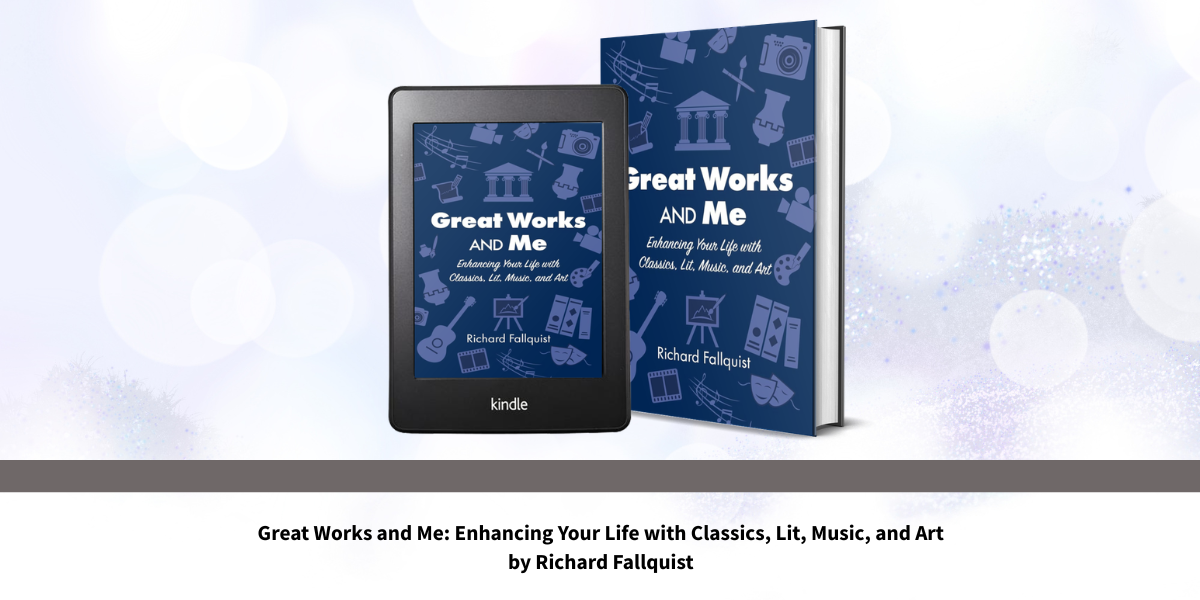
Some of us carry a quiet guilt about the books we haven’t read, the music we don’t understand, the paintings we walk past without knowing what we are looking at. That guilt is usually unproductive because it attaches itself to the wrong question. The question is not why you haven’t engaged with these works yet. The question is, how do you actually begin, and where do you go from there? Richard Fallquist spent a significant portion of his adult life sitting with exactly that question, and Great Works and Me is his complete and honest answer to it, offered with the particular generosity of someone who remembers what it felt like to not know where to start and wants to make sure that feeling doesn’t stop anyone else from beginning.
Reading this book feels like the first day of a journey you have been meaning to take for a long time. There is a specific quality of excited orientation in Fallquist’s writing, the sense of someone who knows the territory well enough to be a useful guide but is still genuinely delighted by it, and that quality communicates itself to the reader in a way that makes the whole enterprise feel inviting rather than obligatory. You do not finish chapters of this book feeling like you have completed an assignment. You finish them feeling like you have been given a set of directions to somewhere you actually want to go.
The book’s central argument, made through practice rather than proclamation, is that great works of art and literature, and music, are not rewards for people who have already earned cultural sophistication. They are tools for building the kind of inner life that makes the rest of life richer and more navigable, and they are available to anyone willing to show up with curiosity and a little patience. Fallquist makes that argument by simply showing you what happened when he showed up himself, which turns out to be the effective version of the argument anyone could make.
What his actuarial background contributes to the book is a structural intelligence that serves the reader beautifully. The lists are genuinely useful rather than just comprehensive. The summaries give you a real orientation without replacing the experience of the works themselves. The resource guides point you toward recordings and lectures, and further reading that actually extend the journey rather than just closing it off. All of it reflects a mind that has thought carefully about how people actually learn and engage and what they need at each stage of their exploration.
This is the book to begin with if you are beginning. It is also the book to return to as you go deeper, because it keeps offering something useful at every stage of the journey. Fallquist has created a genuine companion for a lifetime of cultural engagement, and that is a contribution that deserves both recognition and gratitude.
If the gap between wanting to engage with great culture and actually knowing how to begin has been sitting with you longer than you would like, Great Works and Me by Richard Fallquist is the book that closes it gently, practically, and with genuine warmth. More about the book is available on its Amazon page. The door was never locked, and this book hands you the key.