By: Alegre De Pilipinas
New model credentials the entire value chain—from practitioners to manufacturing, technology, and policy—to address fragmentation and enhance public safety.
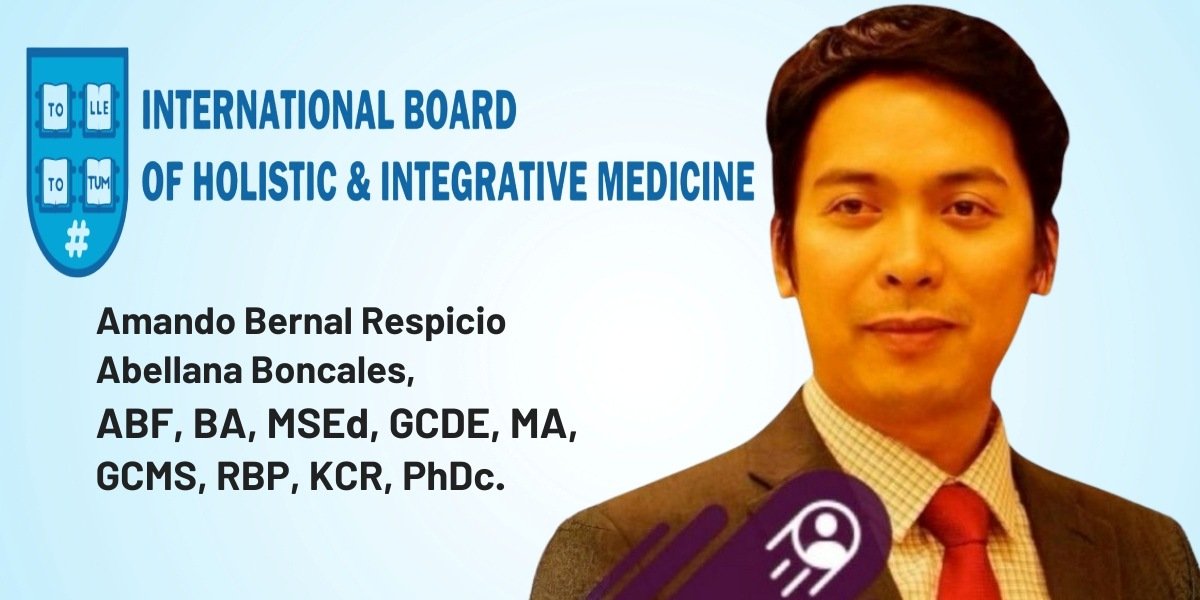
Chicago, IL – October 26, 2025 – The International Board of Holistic and Integrative Medicine (IBHIM) today introduced its “ecosystem-centric credentialing model,” a progressive new framework aimed at addressing long-standing challenges of fragmentation, inconsistent standards, and legitimacy in the global holistic and integrative medicine (HIM) field.
Moving beyond traditional, clinician-only credentialing, which has not been sufficient to govern the wider health network, the IBHIM model functions as an “ecosystem architect.” It establishes shared standards, interoperable competencies, and transparent governance across the entire HIM value chain, from research and manufacturing to clinical care and public communication.
Global interest in integrative health has accelerated, yet the field has been impeded by a “fragmented landscape” of roles and standards. This fragmentation can complicate legitimacy with regulators and the public and may create potential risks in areas like manufacturing quality, device safety, and misleading communication.
“The IBHIM framework offers a potential solution: credentialing the entire ecosystem,” the organization states, “aligning stakeholders around shared standards and competencies.”
The Four Pillars of the IBHIM Ecosystem
The IBHIM model is built on four interdependent pillars that organize 13 distinct professional designations, creating a common professional language and unifying the sector:
- Core Practice & Knowledge: Credentials for clinical practitioners (ClncHIM℠), traditional and Indigenous practitioners (TradHIM℠), researchers (ResHIM℠), and educators (EdHIM℠).
- Industry, Commerce & Innovation: Credentials for professionals in business (BusHIM℠), manufacturing (MfrHIM℠), device innovation (DvcHIM℠), and technology/data (TecHIM℠).
- Policy & Non-Profit Support: Credentials for policy and regulatory specialists (PolHIM℠) and NGO leaders (NgoHIM℠).
- Communication & Funding: Credentials for media and publishing specialists (SmpHIM℠) and philanthropy/funding specialists (PhilHIM℠).
A New Benchmark for Quality and Teamwork
This comprehensive framework is anchored in globally recognized standards. All IBHIM designations will share core competencies mapped to the Interprofessional Education Collaborative (IPEC) Core Competencies (Values & Ethics, Roles & Responsibilities, Interprofessional Communication, and Teams & Teamwork). This ensures that all credentialed professionals—from manufacturers to clinicians—can collaborate effectively within safe, team-based care models.
Furthermore, IBHIM’s certification programs are designed to align with the rigorous NCCA Standards for the Accreditation of Certification Programs, the quality benchmark for professional credentialing. This commitment extends to defensible practice analyses for each role, psychometric best practices, and impartial governance.
Advancing Safety, Innovation, and Public Trust
By standardizing the entire ecosystem, the IBHIM framework has the potential to deliver system-wide benefits.
Key anticipated benefits include:
- Enhanced Safety & Quality: End-to-end standards—from GMP-compliant manufacturing (MfrHIM℠) to evidence-aligned clinical practice (ClncHIM℠) and responsible media communication (SmpHIM℠)—may reduce public risk, minimize errors, and improve outcomes.
- Improved Interoperability: A shared professional language and IPEC-aligned competencies could enable disciplined teamwork and standardized documentation, improving continuity of care.
- Accelerated Innovation: Stable, transparent governance could help reduce risks in collaboration and attract capital, responsibly accelerating the development of high-quality devices (DvcHIM℠) and digital health platforms (TecHIM℠).
- Policy Clarity & Legitimacy: The framework could provide a single, credible interface for regulators, payers, and NGOs, addressing fragmentation and strengthening accountability.
- Public Confidence: A searchable public registry will allow consumers, employers, and insurers to verify credential status, scopes of practice, and any disciplinary actions, helping to ensure transparency and public trust.
Implementation will be phased, beginning with formal practice analyses for each designation, the development of pilot assessments, and the launch of the public registry.
About the International Board of Holistic and Integrative Medicine (IBHIM)
The International Board of Holistic and Integrative Medicine (IBHIM) is a global organization dedicated to advancing the holistic and integrative medicine field. IBHIM’s mission is to establish shared standards, interoperable competencies, and transparent governance across the entire HIM ecosystem to enhance safety, quality, innovation, and legitimacy for the public.
Contact:
- Janice DeLima
- admin@ibhim.org