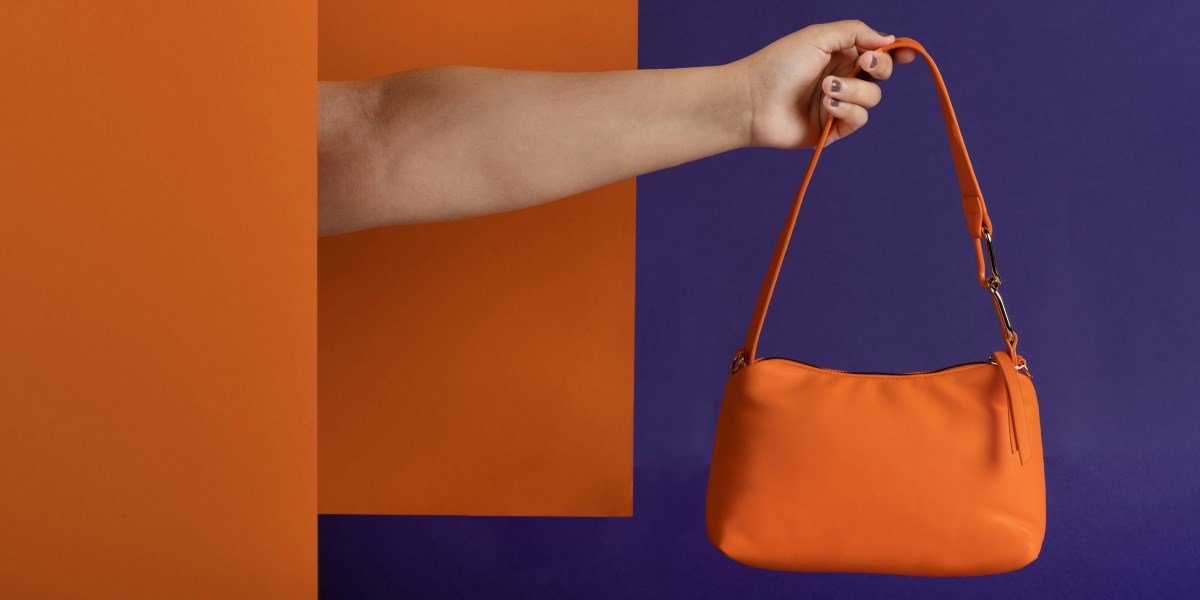

A faux-ostrich leather clutch that retails for $125 is sitting inside one of the world’s most celebrated art institutions this week, and the reason has nothing to do with its construction, its materials, or its design pedigree. The Solomon R. Guggenheim Museum in Manhattan is displaying Jordyn Woods’ orange Tux Clutch Mini — the courtside accessory that New York Knicks fans credited with powering the franchise’s first NBA championship in 53 years — through June 28 at the museum’s Café Rebay. It is, by any reasonable measure, a handbag. But in a city that just lived through one of the most emotionally charged sports runs in recent memory, reasonable measures are beside the point.
From TikTok Prototype to Playoff Talisman
The bag’s origin story is rooted in entrepreneurial planning, not superstition. Woods, who is engaged to Knicks center Karl-Anthony Towns, designed the Tux Clutch Mini as a sample for her fashion label, Woods by Jordyn, ahead of the 2026 postseason. She debuted it during a TikTok “get ready with me” video before Game 1 of New York’s first-round series against the Atlanta Hawks and carried it courtside for every game that followed.
The Knicks won. And then they kept winning — rattling off 13 consecutive playoff victories, the second-longest winning streak in NBA postseason history. New York swept the Philadelphia 76ers and Cleveland Cavaliers on the way to the Finals, outscoring opponents by a record-setting average margin of 14.9 points per game and building a plus-283 point differential, the highest in NBA playoff history.
Fans noticed the pattern. Social media did what social media does. By the Conference Finals, the orange clutch had been collectively christened the team’s good-luck charm, and Woods’ game-day outfit videos were drawing millions of views. The bag took on a second life entirely detached from its $125 price point.
The Game 3 Test
The superstition’s legitimacy — at least in the eyes of Knicks faithful — was cemented during Game 3 of the NBA Finals against the San Antonio Spurs. Madison Square Garden implemented a no-bag policy for the contest due to security protocols tied to President Donald Trump’s attendance. Woods attempted to get the clutch into the building through Towns, but it ultimately stayed outside.
The Knicks lost 115-111, snapping their 13-game streak. It was only the third loss of their entire postseason. Fans flooded Woods’ social media demanding the bag’s immediate return. She tried a workaround for the game, wearing a pair of thong sandal heels from her brand in the same “Summer Citrus” faux-ostrich leather. The shoes, it turned out, did not carry the same magic.
The clutch came back for Game 4 at the Garden. Down 29 points — the largest deficit in Finals history at that stage — the Knicks engineered a comeback that will be replayed for decades, winning 107-106. Towns posted a video to Instagram afterward crediting the bag and half-joking that it deserved a spot in a museum. The Knicks closed out the series in Game 5, with Jalen Brunson dropping a franchise-record 45 points in a 94-90 road win in San Antonio to clinch the Bill Russell Trophy as Finals MVP.
The Museum Answered
Guggenheim director and CEO Mariët Westermann took Towns’ suggestion seriously. The museum announced the display on June 24 with an Instagram collaboration post alongside Woods, writing that “a courtside icon is coming our way.” The five-day exhibition runs through this Saturday.
Westermann framed the decision as consistent with how cultural institutions have always operated. Objects that crystallize collective experiences — whether a championship ring, a protest sign, or a courtside handbag — draw people because they embody moments larger than themselves. The Guggenheim CEO noted that basketball at the level the Knicks played it during this postseason run shares DNA with the art world: discipline, creativity, teamwork, and the capacity to bring strangers together around a shared experience.
Woods, for her part, called the display an honor she did not anticipate when she designed the prototype months earlier. The bag now sits in Frank Lloyd Wright’s iconic rotunda building alongside work by artists who have spent lifetimes trying to make objects that resonate with the public. The clutch accomplished that in roughly seven weeks.
The Business Behind the Bag
The viral moment has translated into tangible commercial traction for Woods by Jordyn. The “Summer Citrus” Tux Clutch Mini sold out its initial pre-order run and is now listed as made-to-order, with shipments expected in October. A representative for the brand told Footwear News that the response has driven a measurable increase in new customer discovery and engagement across platforms, with interest extending beyond the clutch to the label’s broader apparel and footwear offerings. The brand expanded into inclusive footwear in 2025, and the matching “Stunt Sandal” in the same orange colorway is being prepared for release alongside the bag.
The trajectory is a case study in cultural marketing that no campaign could have engineered. Woods built a product, wore it authentically, and let the narrative develop organically — through fan superstition, social media velocity, and a playoff run that happened to produce historically dramatic results. By the time she walked the Knicks’ June 19 championship parade through Lower Manhattan — with Mayor Zohran Mamdani holding the clutch and grinning — the bag had become something closer to civic property than personal accessory.
A Uniquely New York Convergence
The Guggenheim display is a limited engagement, closing June 28. But what it represents is durable: a collision of sports, entrepreneurship, and institutional culture that could only have unfolded in New York. The Knicks ended a drought that stretched back to 1973. A designer turned a prototype into a cultural artifact. And a museum built by Frank Lloyd Wright temporarily became a sports shrine — because a city that waited 53 years for a championship is not inclined to let any piece of the story go uncelebrated.