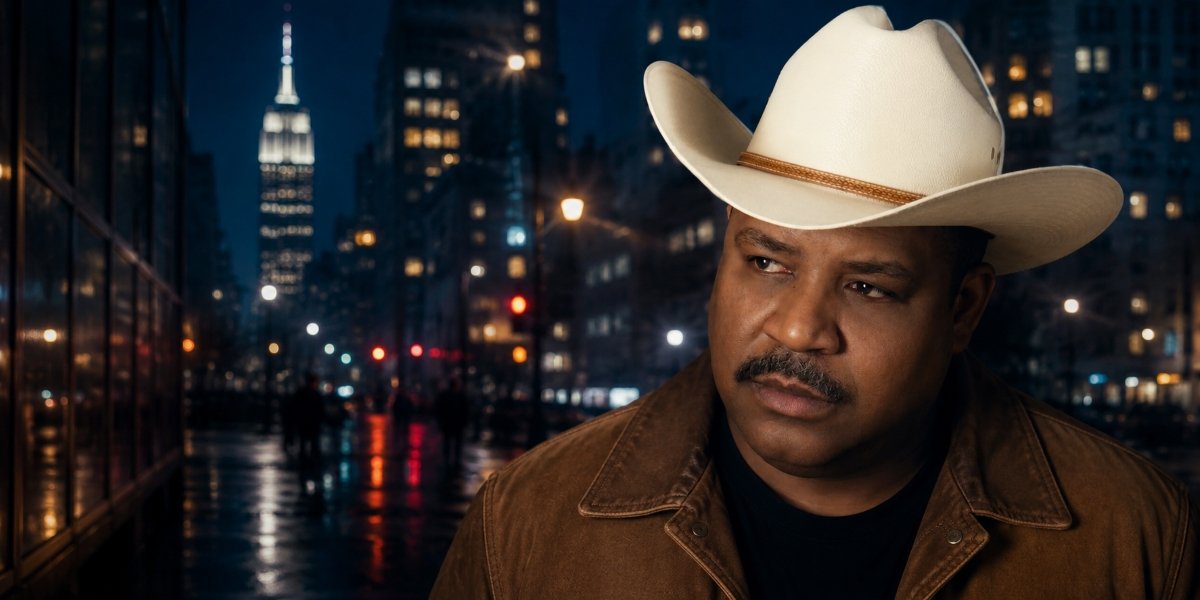

By Jordan Whitmore
New York has always made room for artists with an unmistakable point of view. From the songwriters of the Brill Building and the provocateurs of CBGB to the innovators who shaped jazz, hip-hop, Broadway and beyond, the city’s musical history belongs to creators who refused to disappear into the crowd. Michael Coleman, artistic director ofSee Your Shadow, understands the value of cultivating that kind of identity.
For Coleman, artistic longevity begins with a recognizable standard—one that audiences can trust regardless of where a particular song may fall stylistically.
“Branding has been at the forefront of See Your Shadow, and it comes from the material itself,” Coleman says. “Whenever anyone sees the See Your Shadow logo on a project, they know they can expect top-notch quality art that has meaning.”
That commitment is evident in “Another Saturday,” a narrative-driven single centered on loneliness, regret and the uncertain search for a new identity. Its protagonist moves among strangers while wrestling with feelings that remain invisible to those around her. Although the song was not written specifically about New York, its emotional landscape feels perfectly suited to a late-night Manhattan setting, where millions of people can share the same sidewalks while inhabiting entirely separate worlds.
“A person can be extremely lonely in the midst of a crowd,” Coleman explains. “That would definitely be magnified in a city like New York.”
Coleman believes that loneliness can sometimes be interrupted by the smallest gesture: a smile, a nod, a passing hello or an unexpected compliment. Such moments may seem insignificant, but to someone feeling unseen, acknowledgment can alter the course of an entire day.
That sensitivity to overlooked details is central to Coleman’s songwriting. Like many great New York storytellers, he finds extraordinary narratives inside ordinary lives. He watches people closely, searching for subtle behaviors, emotional currents and fragments of conversation that might reveal something larger.
“When I am people-watching, I am drawn to things that make me chuckle or a vibe that I can feel off of a person,” he says. “It’s kind of like a sixth sense.”
A hurried commuter in Grand Central Terminal, a solitary figure holding a drink in a neighborhood bar or someone navigating the sensory overload of Times Square could all provide creative sparks. Coleman notices how people assemble their clothing, how they order a drink and whether they command the space around them or attempt to vanish inside it. These seemingly minor choices can expose character, confidence, fear and longing.
That instinct for observation has helped See Your Shadow build a catalog that connects through storytelling rather than strict adherence to industry formulas. The collective’s “Network of Stars” approach allows Coleman to bring together the performers best suited to each project’s artistic vision. It also allows See Your Shadow to move freely across musical boundaries.
Coleman credits that independence with making him a stronger writer and producer. Without the pressure to follow Nashville’s conventional playbook, he has been able to take creative risks, including combining country and western music with hip-hop on “Like a Kid Again.”
“That could have never been created if I was chasing the traditionalism of the industry,” he says.
The freedom to experiment has not always been welcomed. Coleman remembers receiving criticism from country-music colleagues after producing his first non-country project. His answer was straightforward: he considered himself an artist before he considered himself a representative of any genre.
“Genres can be a useful framework, but artists have to be careful of labels and being pigeonholed,” he says. “I am an artist first and foremost and not limited by what art I may want to create.”
That philosophy has helped See Your Shadow secure eight consecutive chart-topping singles while maintaining its outsider identity. Instead of waiting for an established industry structure to grant permission, Coleman has built his own creative community—an approach familiar to generations of independent New York artists.
“Another Saturday” may be the clearest example yet of Coleman’s cinematic instincts. Since its release, listeners have repeatedly suggested that the song feels like a film waiting to happen. Coleman agrees and has considered developing its premise into a screenplay.
In his imagined New York version, the protagonist would awaken at the point geographically and emotionally farthest from her authentic self. Over the next 24 hours, she would cross the city while slowly finding her way home. Each encounter would restore a missing piece of who she once was—or awaken someone entirely new.
Whether heard as a country song, envisioned as a Manhattan short film or understood as a universal portrait of isolation, “Another Saturday” succeeds because it invites active listening. Coleman says he would recognize its impact on an unfamiliar New York audience simply by watching their faces.
“There is a certain demeanor people have when they are actively listening,” he says. “That is how you know you have them hooked.”
In a city famous for its noise, that kind of attentive silence might be the most meaningful response of all.