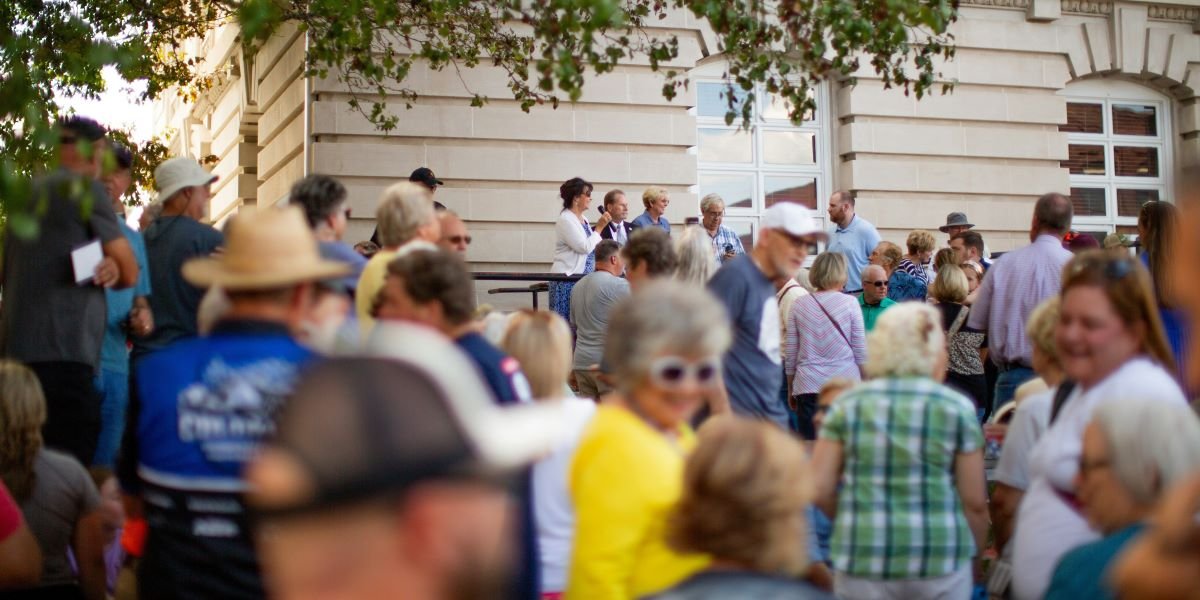

New York City closes its grandest avenue to traffic and opens its grandest museums for free on Tuesday, June 9, when the 48th annual Museum Mile Festival transforms a stretch of Upper Fifth Avenue into a three-hour celebration of art and street life. From 6 to 9 p.m., the corridor between 82nd and 110th Streets becomes car-free, and eight of the city’s leading cultural institutions waive admission for anyone who shows up.
The lineup of participating museums reads like a survey of the city’s collecting ambitions: the Metropolitan Museum of Art, the Solomon R. Guggenheim Museum, Cooper Hewitt Smithsonian Design Museum, the Jewish Museum, the Museum of the City of New York, El Museo del Barrio, the Africa Center, and Neue Galerie New York. More than 20 organizations participate in total, including neighborhood partners such as the Church of the Heavenly Rest, Asia Society, and 92NY, which present outdoor programming along the route. The opening ceremony begins at 5:45 p.m. at El Museo del Barrio.
A Tradition Built on Access
The festival has run since 1978, when a coalition of institutions launched it to widen public awareness of the cultural treasures clustered along this stretch of the Upper East Side. Nearly five decades later, the formula has barely changed because it has barely needed to: free entry, a closed avenue, live performances, and an audience that has grown into the millions over the event’s history.
The accessibility angle is not incidental; it is the entire point. General admission to the Met runs $30, the Guggenheim $28, with the smaller institutions charging their own daily fees year-round. For one evening, those barriers drop entirely. That matters in a city where the True Cost of Living Measure released this spring found that a majority of New Yorkers struggle to cover basic needs, and where a family outing to a single museum can carry a real price. The Museum Mile Festival removes the cost calculation from the cultural equation, and the crowds it draws suggest the appetite for that kind of access remains strong.
Inside the buildings, visitors get more than open doors. The Met is presenting current exhibitions including Raphael: Sublime Poetry, Musical Bodies, and Costume Art, and plans a performance on its iconic front steps to close the night. The Museum of the City of New York opens its run of The Occupied City and Another Wonderland. Neue Galerie, though its galleries are closed for a renovation that runs through autumn 2026, joins with an outdoor pop-up exploring the architecture and history of its landmark building.
One Night in a Crowded June
What makes the 2026 edition distinct is less the festival itself than its place on the calendar. June has become the most concentrated month of free cultural programming the city offers, and the Museum Mile Festival sits near its center.

Lincoln Center’s Summer for the City opens the following day, June 10, and runs through August 8 with hundreds of performances that are free or choose-what-you-pay. Now in its fifth year, the series has drawn more than 1.6 million visitors since 2022, and the 2026 edition leans hard into dance, anchored by the inaugural Lincoln Center Contemporary Dance Festival and a new outdoor series on Hearst Plaza. The Blue Note Jazz Festival, meanwhile, threads live music across venues from June into July, adding another layer to a month already dense with options.
Taken together, the programming sketches a particular vision of summer in New York, one where the city’s cultural infrastructure functions as public space rather than ticketed attraction. The institutions absorb the cost; the public gets the avenue.
A Welcome Mat for a Bigger Summer
The timing also positions the festival as an opening act for the busiest tourism stretch the city has seen in years. The 2026 FIFA World Cup kicks off two days after Museum Mile, with the New York and New Jersey region hosting matches at MetLife Stadium and bracing for well over a million visitors across the tournament. For travelers arriving early, a car-free Fifth Avenue with eight free museums is a striking introduction to the city, the kind of first night that does more to sell New York than any advertising campaign.
That convergence gives the festival a dual role this year. For residents, it remains the neighborhood block party it has always been, a chance to wander into the Guggenheim on a whim or catch a performance on the Met steps. For the wave of international visitors heading toward the World Cup, it doubles as a calling card, evidence that the city’s cultural wealth is not locked behind admission desks.
The festival happens rain or shine, requires no registration, and asks nothing of attendees beyond showing up. On June 9, the only thing standing between a New Yorker and a world-class collection is the walk up Fifth Avenue.