By: William Jones
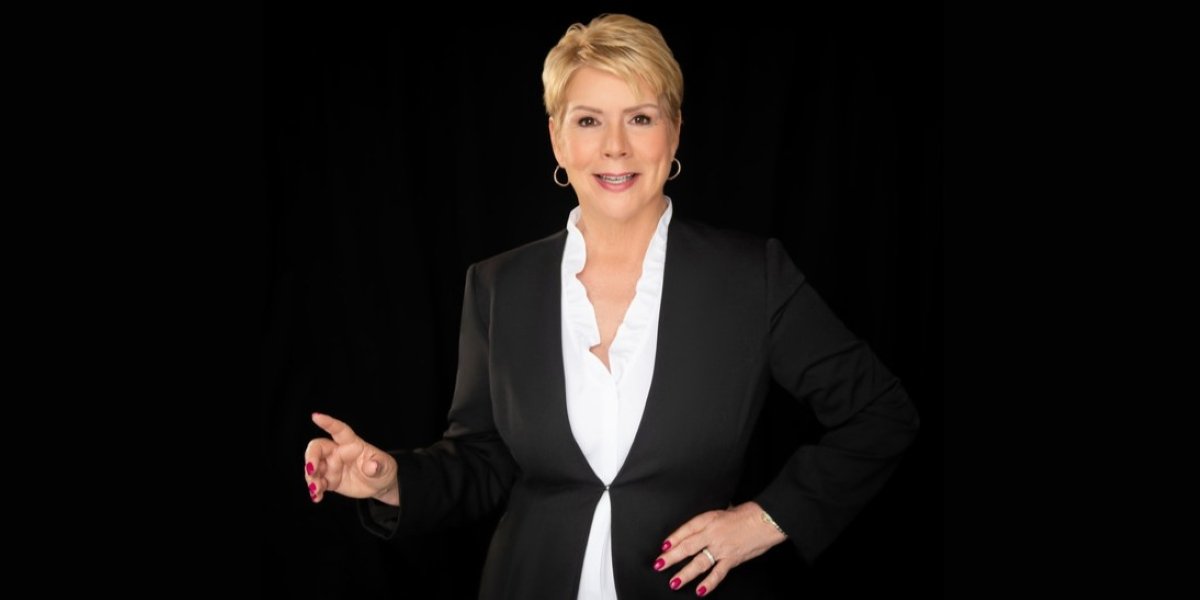
Allison Charney has spent her life on some of the world’s most prestigious stages, from Carnegie Hall to Lincoln Center, but for the acclaimed soprano, no place fuels her artistry quite like New York City.
“For me, New York City is so many things,” she reflects. “First of all, it’s my home, my center, my roots. In fact, I live at the same bus stop now as when I grew up. So, much of it really does feel like a small town to me, and there is something very comforting about that.”
Beyond its personal significance, the city offers a unique kind of electricity that only New Yorkers can bring. “NYC as a city is, of course, pulsing with energy, excitement, and the people in it, whether visiting or native New Yorkers, are eager. They are eager to be entertained, eager to eat the best foods, see the best theater, hear the best music, and on and on. So when you’re performing in front of a New York City audience, it’s always such an invigorating feeling.”
Honoring Lineage While Innovating
Opera, as Charney notes, is “tradition-heavy,” but she doesn’t see tradition and innovation as opposites. “It’s interesting. I don’t think of these things as contradictory to one another. There is no doubt that opera, and, really, all classical music, is tradition-heavy. Lineage is really important in classical music,” she explains, tracing her own musical heritage back through her professor, Luise Vosgerchian, to Nadia Boulanger to Gabriel Fauré himself.
“So, just being a part of that line gives me a great lineage and also a great responsibility to continue the traditions bestowed upon me by my teacher. That said, each of those incredible musicians was 100% groundbreaking in their times…and they would expect nothing less of me. In fact, part of the way they taught was to inspire innovation and deep connections with the audience, so in being reverent for the traditions they taught, I would have to make space for great innovation.”
A Mother’s Dream, A Daughter’s Mission

Her new album, ALIKE, is perhaps her most personal work yet. It’s a project inspired by her mother’s childhood and her lifelong commitment to empathy.
“I have always understood the incredible power of music to bring people together, to make people feel, and, often, to make people remember,” Charney says. “My inspiration for ALIKE – My Mother’s Dream, was borne out of necessity. I, like most people I know, am so deeply upset by the way the world is functioning right now. And the problems seem so enormous, it’s almost easier to do absolutely nothing at all to help right the ship. After all, what one person could possibly do enough to effect change?”
Her answer: contribute a “drop in the bucket.” “There is no need to take on the enormity of conflict here in the United States and across the world. But there is an obligation to take on just a drop. Imagine how hopeful the world could be if we each took just a little time to perform an act of kindness. And, my hope is that if my drop in the bucket inspires anyone else to put in their bucket, and then their drop inspires someone else to put in their drop. And so on and so on until finally the bucket overflows, overwhelming the Earth with all of that collective, but individual, goodness.”
The album’s title pays tribute to a formative letter written to her mother by her Uncle Everett while he was stationed in a foxhole in Europe, cigar in hand. In smoke rings, he imagined his niece Nancy and a little German girl “playing and dancing and singing with joy,” dreaming that they would grow up “happy and safe and loving each other as friends.”
“This album is my attempt to pay tribute to the lessons she teaches us all every day by her example to strive to find what makes us alike as human beings and not focus on what divides us.”
The Invisible Thread
For Charney, performance is never a one-way act. “I think I learned in the pandemic that if there is no one there to sing for, the singing becomes pretty irrelevant. Making music is absolutely about more than yourself. I mean, especially as a singer that can get a bit confused, since the singing literally comes from yourself. However, at the end of the day, you are not making music so that you, the musician, can feel. It is so that the audience can do so. That is your highest obligation,” she says.
Moments with audience members affirm that purpose. “When someone comes backstage with tears in their eyes, to tell me that they’ve never been to the opera before, never thought they knew enough to appreciate opera, but after hearing Madama Butterfly ‘they couldn’t stop bawling,’ that’s when I know I’ve done my job.”
Embracing Change Without Losing the Core

In a digital age defined by endless content and shrinking attention spans, Charney believes classical music must adapt. “Oh boy. It’s tough. I actually think we need to adjust a bit for the times in classical music. I’m afraid the attention span ship has sailed, and it’s very, very hard, nearly impossible, to imagine getting it back to port. And, truthfully, I’m not sure we’re the worse for it,” she says.
She calls for performers and composers to embrace efficiency: “As a performer, cut out some repeats. As much as you love the second time through something, it’s not worth losing your audience over. Skip the repeats. Composers, edit edit edit. Get someone to listen. Someone who is an expert at the instrument for which you’re writing. Anything to make sure you can make your musical point as efficiently as possible.”
For Charney, vulnerability isn’t a weakness; it’s the essence of performance. “Any sign of humanity is a strength on stage. What could be more human than being vulnerable? That said, everything is a risk on stage. Just walking out on stage is a risk.”
A Life Without Alternatives
When asked what she might have done if not a performer, her answer is firm. “Young, talented people often ask me if they should be musicians. My answer is almost always the same: If you can imagine yourself doing anything else with your life, anything at all, run, don’t walk to do that thing. You should only be a musician, only live a life of uncertainty and instability and financial insecurity, if there is literally nothing else you can imagine doing. I chose being a performing singer. I truly can’t imagine another option.”
And to her younger self? She’d offer reassurance and a breathing trick. “When I look back at that Allison now, I wish I could tell her it’s going to be alright, not that every performance is going to be flawless….but that we’re going to be okay. We’re going to do our best and strive to improve each and every time we step out on stage…but that we do really and truly have something to say with our music…something to give to the audience…so that level of debilitating fear is just pointless.”