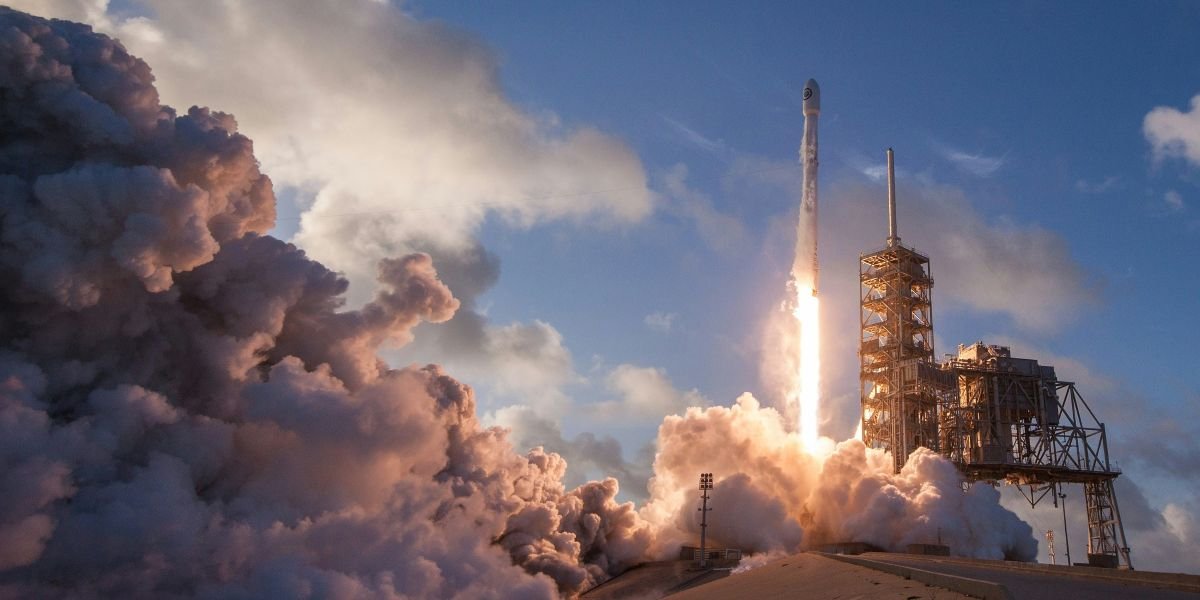

When NASA’s Space Launch System lifted off from Kennedy Space Center on the evening of April 1, 2026, the moment carried weight that reached well beyond Florida. Across social media, in boardrooms, and in the kind of casual group chats that New Yorkers run on, a consensus formed quickly: something genuinely significant had just happened.
Artemis II is a crewed lunar flyby mission that carries NASA astronauts Reid Wiseman, Victor Glover, and Christina Koch, along with Canadian Space Agency astronaut Jeremy Hansen, on a free-return trajectory around the Moon and back to Earth — the first crewed mission beyond low Earth orbit since Apollo 17 in December 1972. For New York’s cultural and business communities, the launch was not simply a science story. It was an event with implications that stretched into territory the city cares about deeply: representation, commerce, and the competitive shape of the next economy.
Obama’s Response and the Cultural Moment
Among the public figures who responded to the launch, former President Barack Obama drew attention with a post on X describing the mission as “inspiring.” Obama praised the mission, noting that the space program has always captured something essential about reaching beyond what people thought was possible and expressing hope that the four astronauts would inspire a new generation to follow in their footsteps.
That kind of cultural resonance was built into the crew itself from the moment the mission launched. On the mission’s first day, Victor Glover became the first person of color, Christina Koch the first woman, and Jeremy Hansen the first non-U.S. citizen to travel beyond low Earth orbit. These are not footnote-level achievements. They are the kind of firsts that New York — a city that has long seen itself as a proving ground for what the country can become — responds to with genuine recognition.
Glover’s milestone carries particular cultural significance in a year when conversations about representation in science, technology, and public institutions remain active and contested. New York’s media infrastructure, advocacy organizations, and civic leaders were quick to acknowledge the moment. The crew’s records are also projected to extend further: the mission is expected to set several human spaceflight records, including distance from Earth — about 4,700 miles beyond the Moon — and an atmospheric reentry speed of roughly 25,000 miles per hour.
The Business Figure at the Center
For New York’s business community, the Artemis II story has a specific human anchor: NASA Administrator Jared Isaacman, whose professional biography reads like a case study in the kind of entrepreneurial arc the city has long celebrated.
Isaacman founded the payment processing firm now known as Shift4 Payments as a teenager out of his parents’ New Jersey basement. The company, which went public in 2020, processes payments for one in three restaurants and 40 percent of hotels across the United States. Shift4 trades on the New York Stock Exchange under the ticker FOUR, giving it a direct Wall Street connection that matters to how the financial community engages with the space economy narrative Isaacman now leads.
Isaacman has served as the 15th administrator of NASA since December 2025, confirmed by the Senate following a nomination by President Donald Trump. His path to the role was unconventional even by the standards of a city that admires the unconventional. He flew to space twice on private missions, commanded Inspiration4 — the first all-civilian spaceflight — and led Polaris Dawn, during which he became the first private citizen to perform a spacewalk.
When Isaacman stepped into the NASA Administrator role, Shift4 lost its “controlled company” status on the New York Stock Exchange as a result of his departure from the board, triggering a governance restructuring at the publicly traded firm. The episode illustrated, in concrete terms, how tightly the space economy has become woven into the financial infrastructure that New York runs on.
The Commercial Stakes
Isaacman has been consistent in framing the Artemis program not purely as scientific achievement but as commercial foundation. NASA describes the Artemis II mission as helping test the systems and hardware needed to continue sending astronauts on increasingly difficult missions to explore the Moon for scientific discovery, economic benefits, and to build toward the first crewed missions to Mars.
The mission occurs during what analysts describe as a space economy transition period, with intensifying international competition driving unprecedented innovation. The space economy is projected to exceed one trillion dollars by 2030, with satellite infrastructure, space-based data centers, and resource extraction creating new economic opportunities.
Unlike the Apollo program, which aimed for short stays on the moon, Artemis is working toward a long-term presence at a lunar base in the south polar region, where deposits of ice can provide drinkable water, breathable oxygen, and oxygen-hydrogen rocket fuel. The progression is structured: Artemis II is the crewed test flight, Artemis III is scheduled for 2027, and lunar landings are planned for Artemis IV and V in 2028 and annually thereafter. Each step represents a layer of commercial infrastructure being built and tested.
For New York’s investment community, that timeline translates into a multiyear pipeline of contractual, technological, and economic activity. Blue Origin, whose founder Jeff Bezos has deep connections to New York’s financial and cultural networks, holds a lunar lander contract with NASA alongside SpaceX. The competitive dynamic between those two companies alone represents a significant portion of what the next phase of the space economy will look like.
What the Launch Signals to New York
New York does not watch space missions passively. The city has aerospace contractors, university research programs, financial analysts covering publicly traded space companies, and a media industry that shapes how national moments get interpreted. When a mission of this profile launches successfully, the response across those sectors is not just cultural pride — it is an assessment of what comes next commercially and institutionally.
The Artemis program flies under the framework of 60 countries that are signatories to the Artemis Accords, an international pact whose members commit to supporting the peaceful exploration of space and contributing funding, modules, and astronauts to the Artemis effort. That multilateral structure has implications for how international capital flows into space-related ventures — and for which cities and financial centers position themselves as nodes in that ecosystem.
For now, the four astronauts aboard the Orion spacecraft named Integrity are mid-journey, en route to a lunar flyby scheduled for April 6. Splashdown in the Pacific Ocean off San Diego is planned for April 10. New York will be watching.